CM Mann Deploys 1,708 Block Coordinators in Punjab Anti-Drug Drive
Synopsis
Punjab's Chief Minister's Office says 1,708 Block Coordinators and more than 1.25 lakh Village Protection Committee members are actively working under CM Bhagwant Mann's directions to raise awareness about drug abuse, promote treatment and rehabilitation, and strengthen community vigilance against trafficking across the state.
Key Takeaways
1,708 Block Coordinators are deployed across Punjab under CM Bhagwant Mann 's directions as part of the state's anti-drug programme.
More than 1.25 lakh Village Protection Committee members are working alongside coordinators at the grassroots level.
The network focuses on three mandates: raising awareness, promoting treatment and rehabilitation, and strengthening community vigilance against drug trafficking.
Village Protection Committees were constituted after the AAP government took office in March 2022 as part of its declared 'war on drugs.' Punjab 's border geography with Pakistan makes it a high-priority state for narcotics control, with high rates of opiate and synthetic drug use recorded for over two decades.
The two-tier block-coordinator and village-committee structure represents a community mobilisation approach layered over conventional police enforcement.
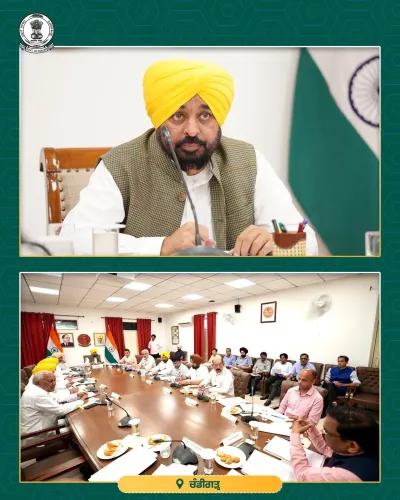
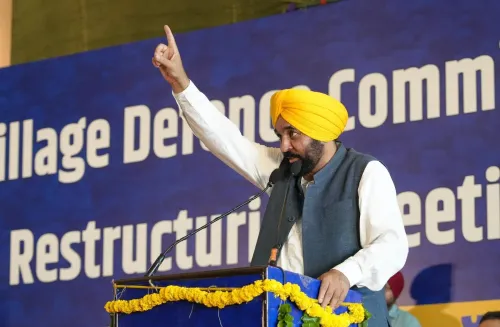
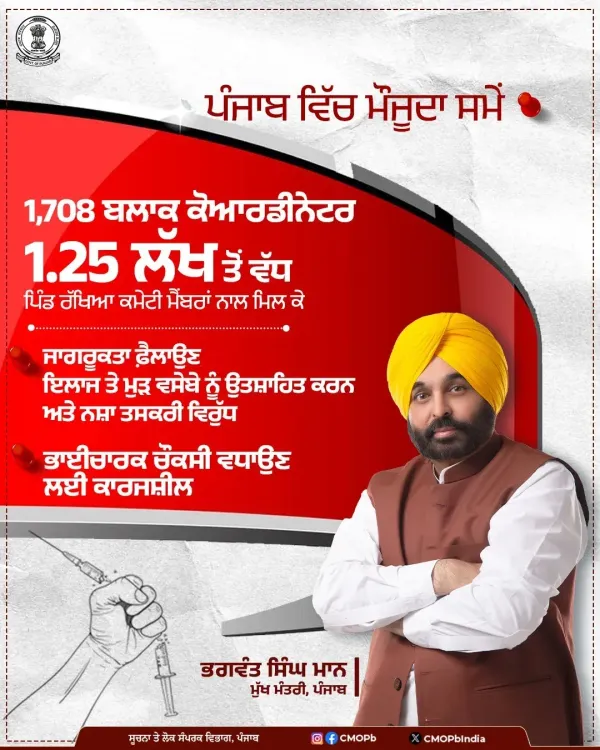
The Chief Minister's Office of Punjab announced on Monday, 13 July 2026 that 1,708 Block Coordinators are actively working across the state alongside more than 1.25 lakh Village Protection Committee members to combat drug abuse, promote rehabilitation, and strengthen community vigilance against drug trafficking — all under the direct directions of Chief Minister Bhagwant Singh Mann.
Context
The official post, shared in both Punjabi and English, states that the network of coordinators and village-level members is ਜਾਗਰੂਕਤਾ ਫ਼ੈਲਾਉਣ (raising awareness), promoting treatment and rehabilitation, and building community-level vigilance against trafficking. The scale — over 1.25 lakh grassroots members — signals a deliberate push to embed anti-drug work at the village level rather than relying solely on police enforcement.
Punjab, which shares a long international border with Pakistan, has recorded high rates of opiate and synthetic drug use for more than two decades, making anti-narcotics governance a perennial political and public-health priority in the state.
Policy Backdrop
When the Aam Aadmi Party came to power in March 2022, one of its first governance orders was to constitute village-level anti-drug committees and appoint block coordinators as the backbone of a declared 'war on drugs.' The move built on earlier de-addiction infrastructure expanded between 2017 and 2021, but shifted the emphasis from centralised de-addiction centres toward decentralised community mobilisation.
Village Protection Committees are community-level bodies tasked with monitoring drug abuse, supporting families seeking rehabilitation, and reporting trafficking activity to authorities. Placing 1,708 Block Coordinators above them creates a two-tier grassroots architecture that links village-level intelligence to block-level administration.
Stakeholders and Impact
The primary beneficiaries are rural youth and families affected by addiction — demographics that have borne the heaviest social cost of Punjab's drug crisis. Village Protection Committee members serve as trusted local interlocutors, which policy practitioners argue lowers the stigma barrier for families seeking treatment.
Community-committee models similar to Punjab's have been adopted in other border and transit states facing synthetic-drug proliferation, suggesting the approach is gaining traction as a complement to law-enforcement crackdowns. The dual mandate — awareness and rehabilitation alongside vigilance against trafficking — attempts to address both demand reduction and supply disruption simultaneously.
What's Next
Observers will watch for the rollout of additional rehabilitation beds and any amendments to the Punjab Village Protection Committees rules in the next legislative session. The effectiveness of the block-coordinator network will likely be assessed through treatment uptake figures and trafficking-report data in the months ahead.
If the community-mobilisation layer demonstrates measurable results, the Mann government is expected to deepen investment in the model — potentially expanding coordinator headcount and integrating digital reporting tools to accelerate ground-level response.
Point of View
The Mann administration is positioning itself as pursuing a public-health-first approach, a framing that contrasts with the enforcement-heavy rhetoric of previous governments. However, the real test will be outcome data: treatment uptake, relapse rates, and trafficking seizures at the village level, none of which the post addresses. The model's success or failure will have direct implications for AAP's electoral credibility in a state where the drug crisis has been a defining issue for nearly a generation.
NationPress
12 Oct 2026
Frequently Asked Questions
What are Village Protection Committees in Punjab?
Village Protection Committees are community-level bodies constituted in Punjab villages to monitor drug abuse, support families seeking rehabilitation, and report drug trafficking to authorities. They were set up under the AAP government's anti-drug programme after it came to power in March 2022.
How many Block Coordinators are working on Punjab's anti-drug programme?
As of July 2026, 1,708 Block Coordinators are deployed across Punjab under the directions of Chief Minister Bhagwant Mann to coordinate anti-drug awareness, rehabilitation promotion, and community vigilance efforts.
What is CM Bhagwant Mann's anti-drug policy in Punjab?
CM Bhagwant Mann has made the 'war on drugs' a core governance priority since taking office in March 2022. His administration constituted village-level protection committees and appointed block coordinators to build a two-tier grassroots network focused on awareness, treatment, rehabilitation, and trafficking vigilance.
Why is drug abuse such a serious problem in Punjab?
Punjab shares a long international border with Pakistan and has recorded high rates of opiate and synthetic drug use for over two decades. Its border geography makes it a key transit route for narcotics, which has fuelled addiction among rural youth and become a major social and political issue.
What does the Punjab government plan to do next on drug rehabilitation?
Observers expect the Punjab government to expand rehabilitation bed capacity and potentially amend Village Protection Committee rules in the next legislative session. Integrating digital reporting tools for the block-coordinator network is also being watched as a possible next step.