Punjab gets 1,626 investment proposals worth ₹32,110 crore in 6 months; defence next frontier
Synopsis
Punjab logged 1,626 investment proposals worth ₹32,110 crore and over 91,000 jobs in just six months — and Industries Minister Aman Arora is now pointing the state's precision engineering clusters squarely at defence and aerospace, backed by a new industrial policy that offers incentives up to 125% of capital investment and a 45-day single-window approval system.
Key Takeaways
Punjab received 1,626 investment proposals worth ₹32,110 crore , projecting 91,236 jobs , in the first six months of the current fiscal year.
Industries Minister Aman Arora inaugurated the 9th CII Manufacturing Excellence Exposition in Chandigarh on 13 October 2026 alongside former Air Chief Marshal B.S.
The state's Industrial and Business Development Policy 2026 offers incentives up to 125% of capital investment in priority sectors including defence, aerospace, EVs, and electronics.
The revamped FastTrack Punjab portal provides time-bound approvals within 45 working days , with auto-escalation for delays.
Vendor development talks at the expo aim to integrate Punjab's MSMEs into defence and aerospace supply chains.
The 2026 policy was shaped through 24 sector committees drawn from industry stakeholders.
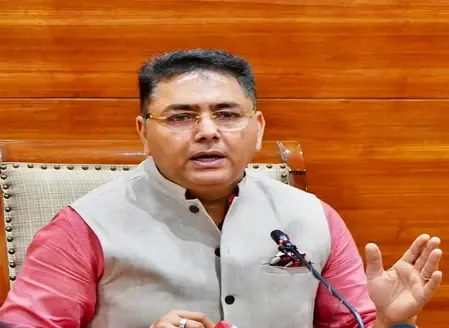
Punjab's Industries and Commerce Minister Aman Arora on Tuesday, 13 October 2026, revealed that the state has received 1,626 investment proposals worth ₹32,110 crore — projected to generate 91,236 jobs — in the first six months of the current fiscal year. Speaking at the inauguration of the 9th CII Manufacturing Excellence Exposition in Chandigarh, Arora declared that defence and aerospace represent the next major growth frontier for Punjab's engineering sector.
Key Announcements at the CII Expo
Arora inaugurated the exposition alongside former Air Chief Marshal B.S. Dhanoa (retd.). After touring the exhibition floor, the minister said it was 'encouraging to see products, machines and solutions made by the state's units,' adding that manufacturing excellence today 'means better quality, less waste, timely delivery, competitive pricing and adoption of new technology on the shop floor.'
The expo also facilitated vendor development talks between Invest Punjab and local engineering units, which Arora described as a key step toward integrating Punjab's MSMEs into defence and aerospace supply chains. He urged large companies and public sector undertakings to increase sourcing from the state's small and medium enterprises.
Industrial Policy and the FastTrack Portal
The minister highlighted two key enablers driving the investment momentum. First, the revamped FastTrack Punjab single-window portal, which offers online processing of all permissions with a 45-working-day time-bound approval mechanism, officer-specific disposal, auto-escalation, and show-cause notices for delays. Second, the Industrial and Business Development Policy of 2026, which offers incentives of up to 125 per cent of capital investment in priority sectors including auto components, electric vehicles, defence and aerospace, electronics, textiles, food processing, and sports goods.
Why Punjab's Manufacturing Base Is Well-Placed
Punjab's manufacturing economy spans auto parts, tractors, bicycles, hand tools, sports goods, hosiery, and steel products — industries with established precision engineering capabilities. Arora argued this makes the state's units naturally suited for the more exacting standards of the defence and aerospace sector. 'Every proposal means a new or bigger factory, more jobs and more business for local suppliers,' he said.
Notably, the 2026 industrial policy was shaped through 24 sector committees drawn from industry itself. 'No state or society can survive without industry. That's why we framed the policy through 24 sector committees — the person facing the problem has the best solution. Industry itself decided what the policy should be,' Arora said, underlining a consultative approach that differs from top-down policymaking.
The Bigger Picture for Punjab's Economy
This comes amid a broader national push to localise defence manufacturing under initiatives like 'Make in India' and the Defence Acquisition Procedure framework, which mandates increasing levels of indigenous content in procurement. Punjab's precision engineering clusters — particularly in Ludhiana and Jalandhar — are reportedly already producing components for larger OEMs and are now being positioned for direct vendor relationships with defence and aerospace firms. The state's pitch is both economic and strategic, with the Centre's emphasis on Atmanirbhar Bharat providing a favourable policy tailwind. How quickly Punjab converts expo-level conversations into confirmed supply agreements will determine whether the defence opportunity translates from ambition to verified orders.
Point of View
110 crore figure is impressive for a half-year period, but the more significant signal is the deliberate pivot toward defence and aerospace — sectors that demand far higher precision, certification, and compliance than Punjab's traditional auto-parts and hand-tools clusters. The 125% capital-incentive offer is competitive, but the real test is whether Invest Punjab can convert vendor-development conversations at an expo into long-term OEM contracts, which typically take years of qualification. The 24-sector-committee model for policy design is worth watching as a governance experiment — but consultation only delivers value if the resulting incentives are both funded and disbursed without bureaucratic friction, something previous state industrial policies have struggled with.
NationPress
13 Oct 2026
Frequently Asked Questions
How many investment proposals has Punjab received in the first half of FY2026?
Punjab has received 1,626 investment proposals worth ₹32,110 crore , projected to generate 91,236 jobs , in the first six months of the current fiscal year, according to Industries Minister Aman Arora.
What is the Industrial and Business Development Policy of 2026?
It is Punjab's new industrial incentive framework that offers benefits of up to 125% of capital investment in priority sectors including auto components, EVs, defence and aerospace, electronics, textiles, food processing, and sports goods. The policy was formulated with input from 24 industry sector committees.
What is the FastTrack Punjab portal?
FastTrack Punjab is a revamped single-window online portal that provides time-bound approvals within 45 working days , with officer-specific disposal, auto-escalation for pending files, and show-cause notices for delays — designed to speed up industrial clearances in the state.
Why are defence and aerospace highlighted as opportunities for Punjab?
Punjab has established precision engineering clusters in cities like Ludhiana and Jalandhar that already produce components for larger manufacturers. Minister Arora said these capabilities make the state's units well-suited to meet the exacting standards of defence and aerospace supply chains, a sector that is expanding under national indigenisation mandates.
What was the 9th CII Manufacturing Excellence Exposition about?
The 9th CII Manufacturing Excellence Exposition was held in Chandigarh on 13 October 2026 , showcasing products, machines, and solutions developed by Punjab-based manufacturing units. It also served as a platform for vendor development talks facilitated by Invest Punjab to connect local MSMEs with defence and aerospace companies.