Punjab Govt Pays Tribute to Guru Ka Bagh Morcha Martyrs
Synopsis
The Punjab Government led by Chief Minister Bhagwant Singh Mann paid tribute to all martyrs of the Guru Ka Bagh Morcha, the landmark 1922 non-violent Sikh agitation near Amritsar that helped secure the Sikh Gurdwaras Act of 1925.
Key Takeaways
The Chief Minister's Office of Punjab posted an official tribute to all martyrs of the Guru Ka Bagh Morcha on 8 August 2026 .
The Guru Ka Bagh Morcha was a non-violent Sikh agitation that took place in 1922 near Amritsar , resisting British-backed control of a religious shrine.
The morcha was part of the broader Sikh Gurdwara Reform Movement , which culminated in the Sikh Gurdwaras Act of 1925 .
The Act transferred control of historic Sikh shrines to the elected Shiromani Gurdwara Parbandhak Committee (SGPC) .
Punjab governments have a long-standing tradition of issuing formal tributes to martyrs of early 20th-century Sikh reform movements.
More than a century after Sikh reformers faced colonial batons without raising a hand in return, Chief Minister Bhagwant Singh Mann's government paused on Saturday, 8 August 2026 to honour every martyr of the Guru Ka Bagh Morcha — the 1922 agitation that shook the moral authority of British rule in Punjab.
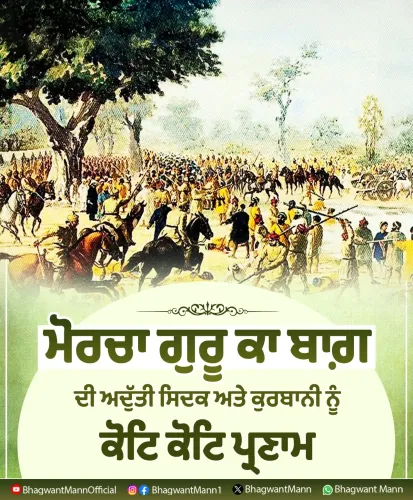
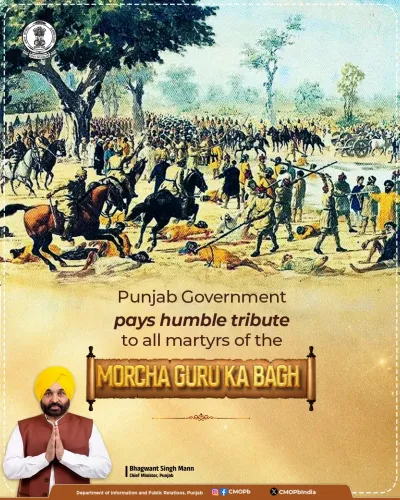
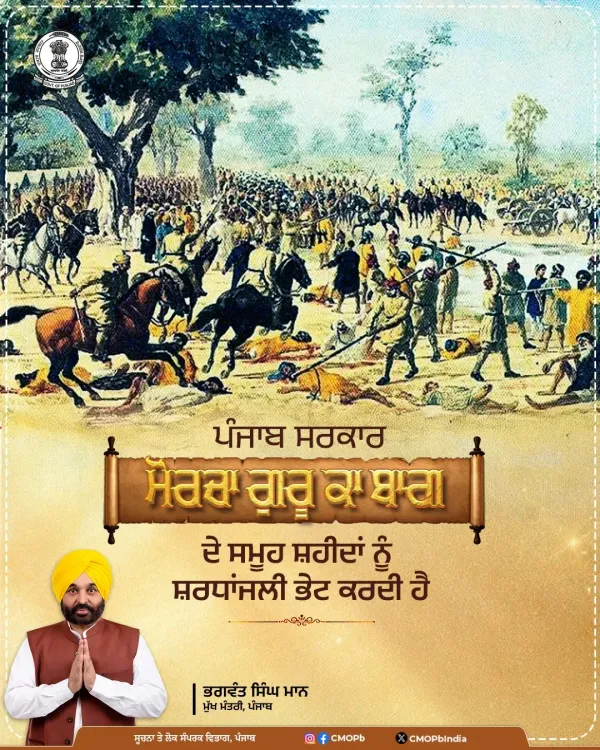
The Chief Minister's Office of Punjab posted its tribute in Punjabi, declaring: 'ਮੁੱਖ ਮੰਤਰੀ ਭਗਵੰਤ ਸਿੰਘ ਮਾਨ ਦੀ ਅਗਵਾਈ ਵਾਲੀ ਪੰਜਾਬ ਸਰਕਾਰ 'ਮੋਰਚਾ ਗੁਰੂ ਕਾ ਬਾਗ' ਦੇ ਸਮੂਹ ਸ਼ਹੀਦਾਂ ਨੂੰ ਸ਼ਰਧਾਂਜਲੀ ਭੇਟ ਕਰਦੀ ਹੈ।' ('The Punjab Government led by Chief Minister Bhagwant Singh Mann pays tribute to all the martyrs of the Guru Ka Bagh Morcha.')
The Morcha that rewrote the rules of resistance
The Guru Ka Bagh Morcha erupted in 1922 near Amritsar when Sikh reformers sought the right to cut timber from land adjoining the Guru Ka Bagh shrine — land the British-backed mahants (hereditary priests) claimed as their own. Day after day, unarmed jathas (volunteer bands) walked into police lathis and were beaten to the ground. Day after day, they did not flinch or retaliate. The spectacle of non-violent suffering drew international attention and became one of the most vivid moral indictments of colonial authority in pre-independence India.
The agitation was a defining chapter of the broader Sikh Gurdwara Reform Movement, which ultimately forced the colonial legislature to pass the Sikh Gurdwaras Act of 1925 — transferring control of historic Sikh shrines from hereditary priests to an elected representative body, the Shiromani Gurdwara Parbandhak Committee (SGPC).
A state's annual covenant with its history
Punjab governments across party lines have long maintained the tradition of issuing formal tributes to martyrs of the early 20th-century Sikh reform movements. For the Aam Aadmi Party administration under CM Mann — which has frequently invoked Punjab's distinct identity and history — such commemorations carry both cultural and political resonance within the state's Sikh-majority electorate.
The August–September window holds particular significance in the calendar of remembrance for these events, with the Guru Ka Bagh standoff having unfolded across several weeks of that period in 1922. The tribute, paired with an image posted by the official handle, keeps the memory of those weeks alive in institutional memory.
Over a hundred years on, the martyrs of Guru Ka Bagh remain a reminder that the most durable victories are sometimes won without a single blow struck in anger.
Point of View
Invoking the memory of non-violent resistance against colonial authority also carries a subtle contemporary resonance — it frames the AAP government as a custodian of Punjab's distinct cultural and religious heritage. Such commemorations, while ceremonial in nature, serve as soft political signals to the state's Sikh-majority electorate. They also underscore how the Gurdwara Reform Movement's legacy, codified in the 1925 Act, continues to shape the institutional and political landscape of Punjab a century later.
NationPress
22 Sept 2026
Frequently Asked Questions
What was the Guru Ka Bagh Morcha?
The Guru Ka Bagh Morcha was a non-violent Sikh agitation in 1922 near Amritsar, in which unarmed volunteers faced police lathis to assert Sikh control over land adjoining the Guru Ka Bagh shrine, which was then held by British-backed hereditary priests.
Why is the Guru Ka Bagh Morcha historically significant?
The morcha was a pivotal chapter in the Sikh Gurdwara Reform Movement, and the moral force of its non-violent resistance helped pressure the colonial government into passing the Sikh Gurdwaras Act of 1925, which transferred control of historic Sikh shrines to the elected SGPC.
Who are the martyrs of the Guru Ka Bagh Morcha?
The martyrs refer to Sikh volunteers who participated in the 1922 agitation and suffered injuries or death at the hands of colonial police while peacefully asserting their religious rights.
Why did the Punjab government pay tribute to the Guru Ka Bagh Morcha martyrs?
The Chief Minister's Office of Punjab, led by CM Bhagwant Singh Mann, issued the tribute as part of the state government's long-standing practice of officially commemorating martyrs of early 20th-century Sikh reform movements, particularly around the August-September period associated with the 1922 events.
What was the Sikh Gurdwaras Act of 1925?
The Sikh Gurdwaras Act of 1925 was legislation passed by the colonial government that transferred management of historic Sikh shrines from hereditary priests to the Shiromani Gurdwara Parbandhak Committee (SGPC), a democratically elected body representing the Sikh community.