CM Rio meets Customary Law Committee to chart Nagaland's legal future
Synopsis
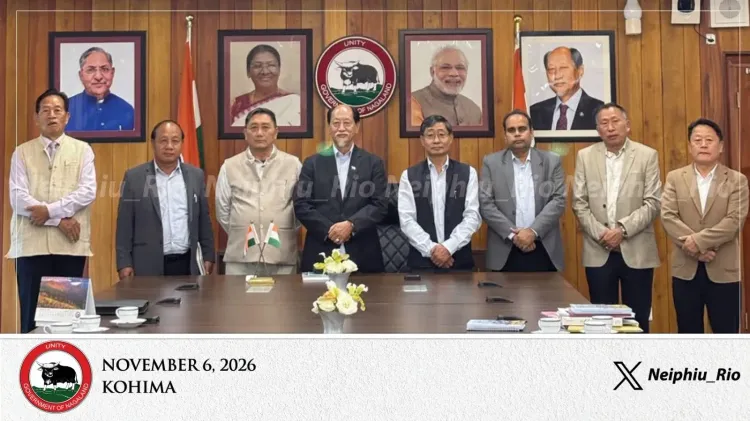
Nagaland Chief Minister Neiphiu Rio met the Committee on Customary Law on November 6 to review the state's customary legal framework. Anchored in Article 371A of the Constitution, the consultation aims to balance preservation of Naga traditions with administrative modernisation and equity concerns.
Key Takeaways
CM Neiphiu Rio held a formal meeting with the Committee on Customary Law on November 6, 2026 .
The deliberation focused on the existing customary law framework in Nagaland and its future direction.
Article 371A of the Indian Constitution, enacted in 1963 , protects Naga customary law — including land rights, inheritance and social practices — from parliamentary override.
Nagaland operates a dual legal system combining formal Indian law with traditional customary councils and dispute resolution mechanisms.
Recurring issues such as codification and gender equity in customary inheritance practices remain central to these periodic reviews.
Formal committee recommendations could be tabled before the Nagaland Legislative Assembly for follow-up action.
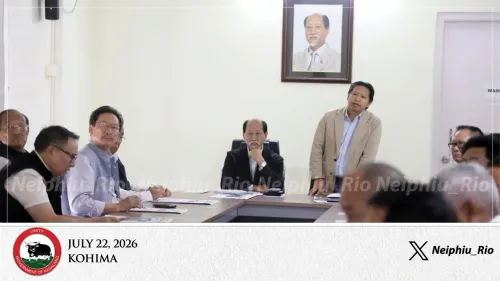
Nagaland Chief Minister Neiphiu Rio sat down with the state's Committee on Customary Law on Friday, November 6, to deliberate on the existing legal framework governing Naga customary practices — and, crucially, where it needs to go from here. The meeting signals an active state-level push to reconcile ancient tradition with the administrative demands of a rapidly evolving society.
Rio stated that the consultation was aimed at 'preserving the unique traditions and customary practices of the Naga people' while charting a 'way forward' for the framework. The choice of that phrase — way forward — matters. It is not the language of a government content to leave things untouched.
Article 371A: the constitutional bedrock at stake
Nagaland's customary legal system rests on one of the most distinctive provisions in the Indian Constitution. Article 371A, written into law at the time of Nagaland's statehood in 1963, explicitly shields Naga customary law from parliamentary override in core areas — land ownership, inheritance rights, and social practices among them. It is a constitutional guarantee unlike almost anything else in the Indian federal structure.
That protection has meant Nagaland operates a parallel legal ecosystem: formal Indian law runs alongside a web of customary councils and village-level dispute resolution mechanisms that predate the state itself. Periodic reviews — like the one Rio convened — exist precisely because that dual system throws up real friction points, particularly around questions of gender equity and codification.
Why codification and gender equity keep returning to the table
Successive state governments have grappled with the same recurring tension: how much of customary law should be written down, standardised, and made predictable — and how much codification quietly erodes the living, oral character that makes it distinctly Naga? Layered on top is pressure from women's groups and civil society to revisit inheritance and succession customs that have historically disadvantaged women.
These are not new debates. But their persistence on the government's agenda — and the fact that a committee dedicated to customary law exists at the CM level — reflects how seriously Nagaland treats the institutional preservation of its tribal governance architecture. The state is not simply deferring to Delhi's legal framework; it is actively managing its own.
What the Nagaland Assembly could see next
Any formal recommendations that emerge from Friday's deliberations could feed into the Nagaland Legislative Assembly — either as a discussion item or the foundation for future state legislation. The assembly remains the arena where the competing pulls of tradition, modernity, and constitutional obligation will ultimately have to be squared.
Naga customary law is not a museum piece — it is a living system that tens of thousands of people navigate every day. How CM Rio's government shapes its next chapter will determine whether that system bends toward equity and clarity, or holds the line on a tradition that is itself a form of sovereignty.
Point of View
Any recalibration of customary law touches the unresolved Naga political settlement, where questions of identity, land and self-governance are inseparable from the peace process. How Rio's government frames its recommendations — reform versus preservation — will reveal which political constituency it is most anxious not to lose.
NationPress
6 Nov 2026
Frequently Asked Questions
What is the Committee on Customary Law in Nagaland?
It is a state-level body tasked with reviewing and advising on Nagaland's customary legal framework — the system of Naga tribal laws governing land, inheritance, social practices and dispute resolution that runs alongside formal Indian law.
What does Article 371A say about Naga customary law?
Article 371A of the Indian Constitution, included at the time of Nagaland's statehood in 1963, protects Naga customary law and practices in areas such as land ownership, inheritance and social customs from being overridden by Acts of Parliament without the Nagaland Legislative Assembly's consent.
Why is customary law such a sensitive issue in Nagaland?
Naga customary law is a living system practiced across hundreds of villages, deeply tied to tribal identity and self-governance. Debates over codification and gender equity — particularly around women's inheritance rights — make any review politically and socially complex.
What could come out of CM Rio's meeting with the customary law committee?
The committee could issue formal recommendations on potential reforms — including codification, dispute resolution procedures, or gender-equity provisions — which may then be taken up for discussion in the Nagaland Legislative Assembly.
Who is Neiphiu Rio and which party does he represent?
Neiphiu Rio is the Chief Minister of Nagaland and the leader of the Nationalist Democratic Progressive Party (NDPP). He has served multiple terms as chief minister and is one of the most prominent political figures in the Northeast.