CM Bhagwant Mann pays tribute to Guru Ka Bagh Morcha martyrs
Synopsis
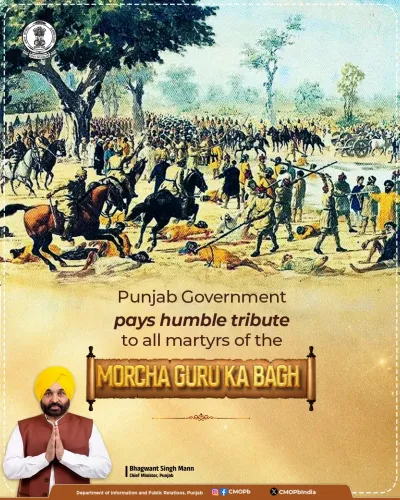
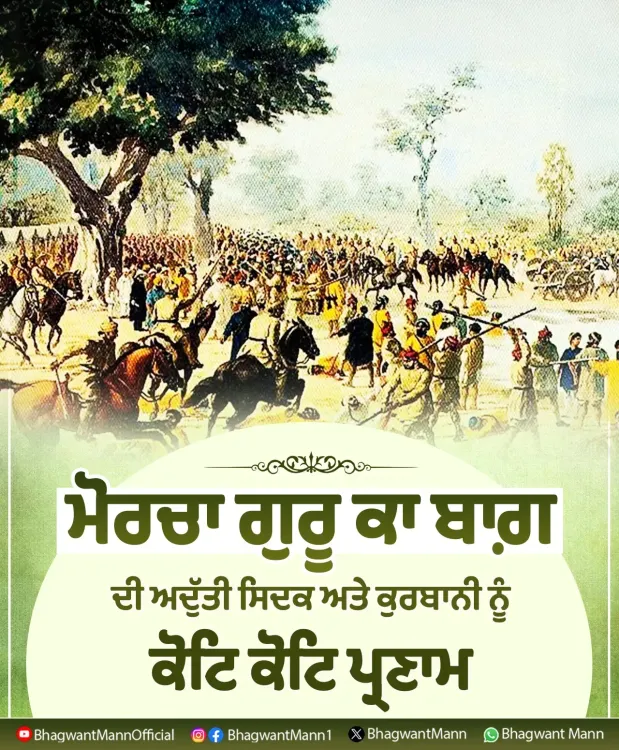
Punjab Chief Minister Bhagwant Mann offered 'a million salutations' to the martyrs of the 1922 Guru Ka Bagh Morcha, honouring Akali Sikhs who endured colonial lathi charges without retaliation and calling their peaceful struggle a timeless guide for standing by truth.
Key Takeaways
Bhagwant Mann posted a tribute on August 8, 2026 commemorating the martyrs and fighters of the Guru Ka Bagh Morcha .
The Guru Ka Bagh Morcha was a 1922 non-violent Akali Sikh agitation near Amritsar against British colonial restrictions on a gurdwara grove.
Mann described the struggle as inscribed on the 'golden pages of Sikh history' and offered koti-koti pranaam — a million salutations — to those who sacrificed.
The morcha was a defining episode of the broader Gurdwara Reform Movement led by the Akali Dal and the SGPC .
Punjab Chief Ministers have a long tradition of publicly marking early 20th-century Sikh resistance movements around anniversary dates.
A century after Sikh warriors stood unarmed before colonial batons and refused to break, Punjab Chief Minister Bhagwant Mann on Saturday, August 8, 2026 bowed to their memory — invoking the Guru Ka Bagh Morcha of 1922 as an eternal torch of peaceful resistance.
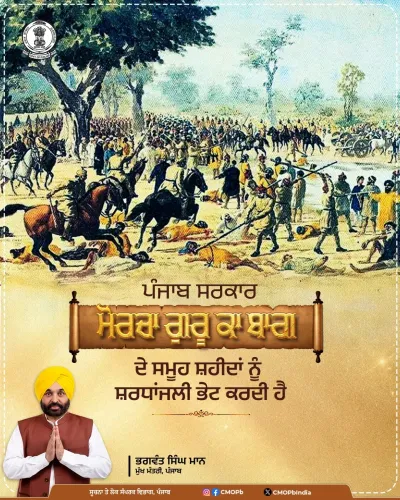
Posting in Punjabi, Mann offered what he called koti-koti pranaam — 'a million salutations' — to the martyrs and warrior-protesters whose names are inscribed, in his words, on the 'golden pages of Sikh history.' He wrote that this non-violent struggle against tyranny 'will always inspire us to stand firm for truth and justice.'
What the Guru Ka Bagh Morcha was — and why it still resonates
The Guru Ka Bagh Morcha was a landmark agitation launched in 1922 near Amritsar, when Akali Sikhs peacefully defied British colonial orders that barred them from cutting wood in a grove attached to a historic gurdwara. Day after day, unarmed jathas — volunteer bands — marched forward and absorbed brutal lathi charges without retaliating. The images of disciplined, non-violent suffering drew international attention and became one of the most powerful moral episodes of the broader Gurdwara Reform Movement.
That movement, spearheaded by the Akali Dal and the Shiromani Gurdwara Parbandhak Committee (SGPC), sought to wrest control of Sikh shrines from British-backed mahants and restore them to the community. Guru Ka Bagh was its most viscerally remembered chapter — a test of faith held under open skies, measured in bruises and unbroken resolve.
A Chief Minister's recurring salute to Sikh resistance
Mann's tribute follows a well-established tradition among Punjab Chief Ministers of publicly marking early twentieth-century Sikh struggles, particularly those that blended religious identity with resistance to authority. For Mann and the Aam Aadmi Party, invoking these episodes also carries a present-tense message: that the spirit of peaceful, principled defiance remains a living political value, not merely an archived one.
The Guru Ka Bagh Morcha anniversary draws annual observances across the Sikh community, and state governments have periodically supported preservation and commemoration at related historical sites.
Over a hundred years on, the morcha's central image — ordinary people absorbing violence without answering it — remains one of the most quietly devastating arguments against colonial power ever made on Indian soil. Mann's salute reminds Punjab that the argument has not expired.
Point of View
Principled Sikh resistance. For the Aam Aadmi Party — a party that built its national brand on non-violent protest — invoking a morcha defined by unarmed endurance under colonial batons is not neutral history; it is a deliberate alignment of legacy. It also keeps AAP competitive on the terrain of Sikh sentiment, where the Akali Dal has historically held the strongest claim. Watch whether the tribute is accompanied by any state-level commemorative action, which would signal policy intent beyond symbolism.
NationPress
22 Sept 2026
Frequently Asked Questions
What was the Guru Ka Bagh Morcha?
The Guru Ka Bagh Morcha was a non-violent Sikh agitation in 1922 near Amritsar, in which Akali volunteers peacefully defied British orders restricting access to a grove attached to a gurdwara, enduring lathi charges without retaliation as part of the larger Gurdwara Reform Movement.
Why did Bhagwant Mann pay tribute to the Guru Ka Bagh Morcha?
Punjab Chief Minister Bhagwant Mann posted a tribute on August 8, 2026, honouring the martyrs and fighters of the 1922 morcha, calling their peaceful resistance an enduring inspiration to stand for truth and justice.
Who led the Guru Ka Bagh Morcha?
The morcha was part of the Gurdwara Reform Movement led by the Akali Dal and the Shiromani Gurdwara Parbandhak Committee (SGPC), which sought to restore Sikh shrines from British-backed control to the Sikh community.
What does 'koti-koti pranaam' mean?
'Koti-koti pranaam' is a Punjabi and Hindi phrase meaning 'a million salutations' or 'deepest respects repeated countless times,' used to express profound reverence.
What is the significance of the Guru Ka Bagh Morcha in Sikh history?
The Guru Ka Bagh Morcha is remembered as one of the most powerful episodes of non-violent Sikh resistance against colonial authority, where unarmed jathas absorbed brutal lathi charges without retaliating, drawing wide moral attention and strengthening the Gurdwara Reform Movement.