Punjab Police marks 150 days of Gangstran Te Vaar with 558 raids
Synopsis
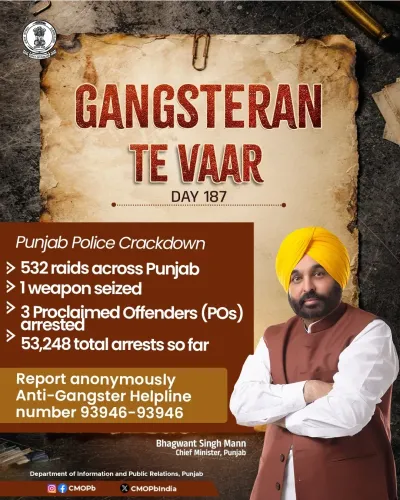
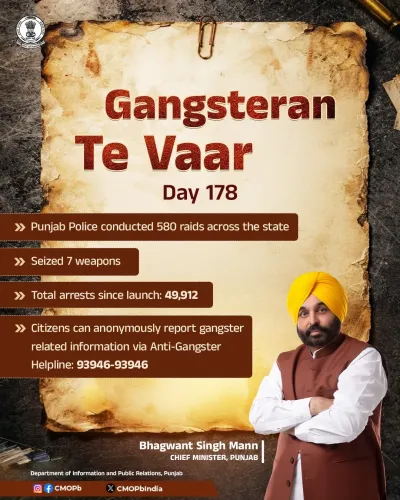
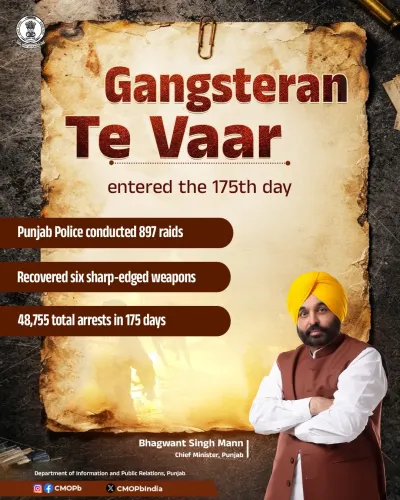
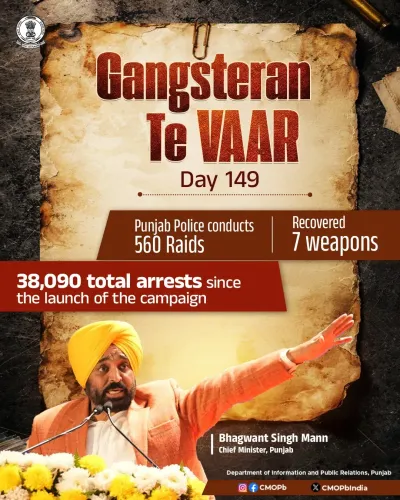
Punjab Police completed 150 days of the 'Gangstran Te Vaar' anti-gangster campaign on June 20, 2026, conducting 558 raids in a single day and pushing total arrests since the drive's launch to 38,390, the Chief Minister's Office of Punjab announced.
Key Takeaways
The 'Gangstran Te Vaar' campaign by Punjab Police reached its 150th day on June 20, 2026 .
558 raids were conducted on Day 150 at locations identified as linked to gangster associates across Punjab .
Total arrests since the campaign's launch have reached 38,390 , with one weapon recovered on Day 150.
The campaign was launched by the AAP government under Chief Minister Bhagwant Mann following the 2022 Punjab assembly elections .
The operation uses intelligence-led mapping of gangster networks to drive targeted, sustained enforcement action.
Continued prosecution outcomes and potential legislative action on organised crime will determine the campaign's long-term impact.
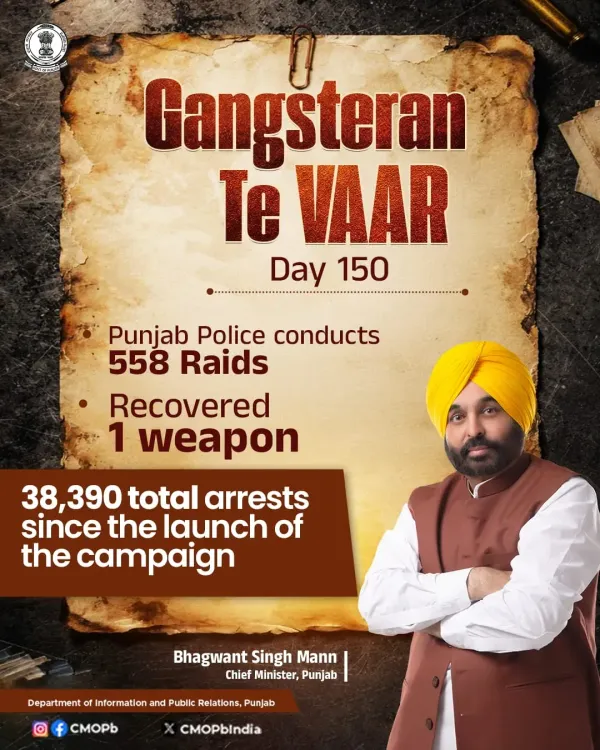
The Chief Minister's Office of Punjab announced on Saturday, June 20, 2026, that the state's decisive anti-gangster drive, 'Gangstran Te Vaar', has completed 150 days, with Punjab Police conducting 558 raids at identified and mapped locations linked to associates of gangsters across the state.
On Day 150, police teams arrested individuals with one weapon, taking the total number of arrests to 38,390 since the campaign's launch. The milestone underscores the sustained, data-driven tempo of the operation, which has maintained near-daily enforcement activity across Punjab.
Context
The 'Gangstran Te Vaar' campaign — loosely translated as 'Strike Against Gangsters' — was initiated by the Aam Aadmi Party-led government of Punjab under Chief Minister Bhagwant Mann following the party's landslide victory in the 2022 assembly elections. The drive was framed as a decisive response to the state's long-standing challenges of organised crime, extortion rackets, and cross-border gang networks.
Punjab has historically grappled with recurring cycles of gang violence, narcotics trafficking, and targeted killings, often with alleged linkages to operatives based abroad. The current campaign represents one of the most sustained crackdowns in the state's recent policing history.
Policy Backdrop
The AAP government made dismantling gangster syndicates a central plank of its governance agenda after 2022, pairing law-enforcement action with intelligence-led mapping of criminal networks and their associates. The approach — identifying, mapping, and then raiding locations linked to gang associates — reflects a shift toward structured, data-backed policing rather than reactive enforcement.
Over 150 days, Punjab Police has maintained an average of more than 3.7 raids per day based on the figures shared by the CMO, with cumulative arrests crossing the 38,000 mark. The seizure of weapons alongside suspects has been a consistent feature of the operation, aimed at disrupting the supply of arms to criminal networks.
Stakeholders and Impact
The primary targets of the campaign are individuals identified as associates or facilitators of active gangster networks operating within and beyond Punjab. Residents of the state — particularly in districts with historically high gang activity — stand to benefit from reduced extortion threats and gang-related violence if the campaign's momentum is sustained.
Civil liberties observers and legal experts have, in broader national discourse, flagged the importance of ensuring that large-scale raid-and-arrest campaigns adhere to due process, though no specific concerns have been formally raised about this operation in publicly available information. The scale of 38,390 arrests makes judicial and custodial oversight a matter of ongoing institutional importance.
What's Next
Punjab Police is expected to continue releasing periodic crime statistics as the campaign progresses beyond the 150-day mark. Analysts will watch whether the government tables legislative measures on organised crime in the Punjab Vidhan Sabha to complement the enforcement push with structural legal reforms.
The trajectory of the campaign — and whether arrest volumes translate into successful prosecutions — will be a key indicator of its long-term effectiveness in dismantling gang infrastructure across the state.
Point of View
390 arrests is politically significant for AAP, which staked credibility on law-and-order reform after 2022. However, the sheer volume of arrests also raises the question of whether the justice system can process cases at this scale without bottlenecks that could undermine convictions. The campaign's true test will come when prosecution data is made public, since arrests alone do not measure the depth of disruption to gang infrastructure.
NationPress
18 Sept 2026
Frequently Asked Questions
What is the Gangstran Te Vaar campaign in Punjab?
'Gangstran Te Vaar' — meaning 'Strike Against Gangsters' — is a sustained anti-gangster operation launched by the AAP-led Punjab government under Chief Minister Bhagwant Mann after the 2022 assembly elections, targeting organised crime networks, their associates, and the arms and narcotics supply chains that support them.
How many arrests have been made in Punjab's Gangstran Te Vaar campaign?
As of Day 150 of the campaign on June 20, 2026, total arrests have reached 38,390 since the drive's launch, according to the Chief Minister's Office of Punjab.
How many raids did Punjab Police conduct on Day 150 of Gangstran Te Vaar?
Punjab Police conducted 558 raids at identified and mapped locations linked to gangster associates across the state on Day 150 of the campaign.
Who launched the Gangstran Te Vaar campaign in Punjab?
The campaign was launched by the Aam Aadmi Party government of Punjab under Chief Minister Bhagwant Mann, which prioritised action against gangster syndicates and drug networks as a core governance commitment after winning the 2022 Punjab assembly elections.
What is the significance of the 150-day mark in Punjab's anti-gangster drive?
The 150-day mark demonstrates that the Punjab government has maintained a consistent, high-tempo enforcement operation over several months, distinguishing it from shorter-duration crackdowns seen under previous state administrations.