Punjab Police Conducts 557 Raids on Day 141 of Gangsteran Te Vaar
Synopsis
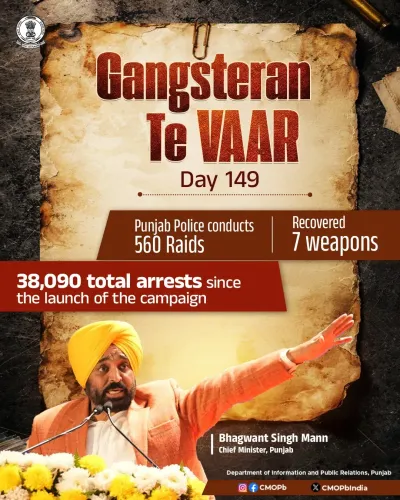
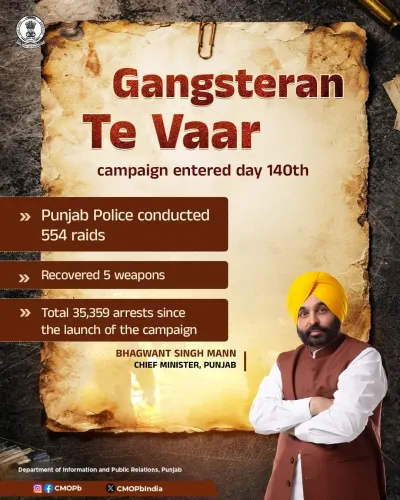
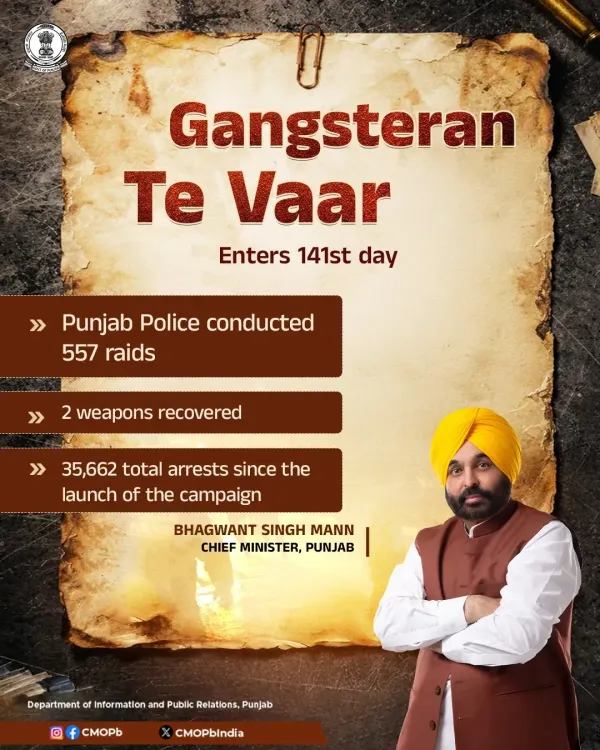
Punjab Police conducted 557 raids on the 141st day of the 'Gangsteran Te Vaar' campaign, arresting individuals and recovering two weapons. The cumulative arrest tally since the drive's launch now stands at 35,662, the Chief Minister's Office announced on June 11, 2026.
Key Takeaways
557 raids were conducted on Day 141 of the 'Gangsteran Te Vaar' campaign on June 11, 2026 .
Raids targeted identified and mapped locations linked to associates of gangsters across Punjab .
Police recovered two weapons during the latest round of operations.
Total arrests since the campaign's launch have reached 35,662 .
The drive is part of the Bhagwant Mann government's sustained, intelligence-led approach to dismantling organised crime networks.
The campaign reflects a broader strategy targeting gangster associates and infrastructure , not just principal offenders.
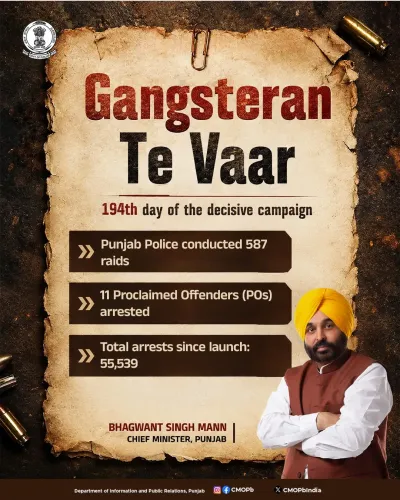
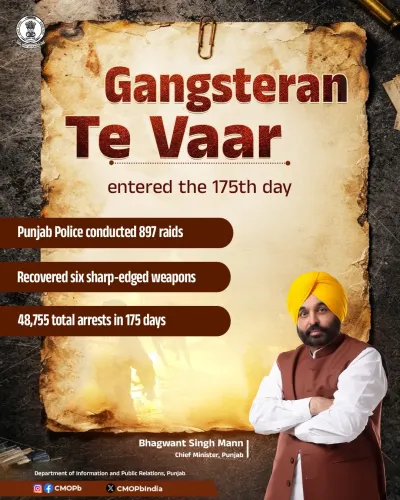
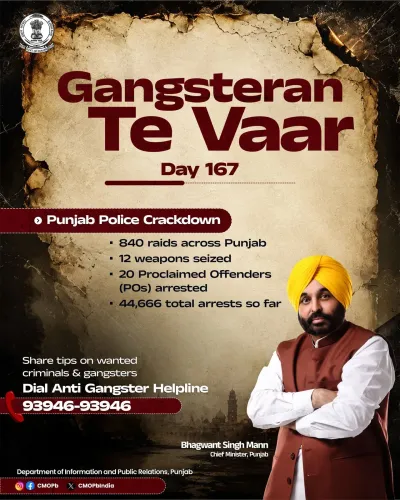
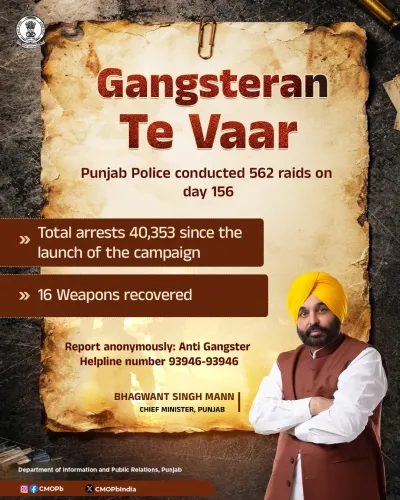
The Chief Minister's Office of Punjab announced on Thursday, June 11, 2026 that the state's flagship anti-gangster drive, 'Gangsteran Te Vaar', has entered its 141st day with Punjab Police conducting 557 raids at identified and mapped locations linked to associates of gangsters across the state.
What the Latest Operation Covered
According to the official post, police teams carried out the raids at locations specifically identified and mapped as being connected to gangster networks. Officers arrested individuals and recovered two weapons during the operation. The cumulative arrest count since the campaign's launch has now reached 35,662.
The CMO's post stated: 'As the decisive Gangsteran Te Vaar campaign enters its 141st day, Punjab Police conducted 557 raids at identified and mapped locations linked to associates of gangsters across the state.'
Context
Punjab has faced entrenched challenges from organised crime, extortion rackets, and drug-related gang violence for decades. The state's position as a border region has historically made it vulnerable to transnational smuggling syndicates and cross-border criminal networks.
The Aam Aadmi Party government, which came to power in March 2022 under Chief Minister Bhagwant Mann, made law-and-order reform a central plank of its governance agenda. The 'Gangsteran Te Vaar' campaign is among the most sustained and publicly tracked anti-organised crime drives the state has seen, with the government releasing regular operational data to signal accountability.
Policy Backdrop
The campaign reflects a broader shift in Punjab's policing strategy — from reactive, encounter-based responses to intelligence-led, network-dismantling operations. By targeting associates of gangsters alongside principals, the drive aims to degrade the logistical and financial infrastructure that sustains organised crime rather than simply removing individual actors.
This approach mirrors strategies adopted in other Indian border states, where governments have sought to address internal security threats through sustained, data-driven crackdowns rather than episodic raids. The consistent daily reporting of arrest figures and raid counts is itself a governance signal, designed to demonstrate operational continuity to the public.
Stakeholders and Impact
The primary beneficiaries of a successful campaign are Punjab's residents, particularly communities in districts historically affected by gang extortion and drug-linked violence. Businesses and local administrations in these areas have long faced intimidation from organised crime networks.
For the state's criminal networks, the sustained pressure of daily raids targeting associates — not just known gangsters — represents a structural threat to their operational capacity. The recovery of weapons, even in small numbers, is significant given the role illegal arms play in sustaining gang hierarchies.
What's Next
The government is expected to continue releasing periodic operational updates as the campaign progresses. Analysts and opposition parties will likely scrutinise whether the high arrest numbers translate into durable reductions in crime rates and successful prosecutions.
Legislative measures — such as stricter bail provisions or property-attachment rules targeting gangster assets — could emerge as the next policy frontier if the operational campaign is seen to require legal reinforcement. The 141-day milestone suggests the drive has moved well beyond a short-term political announcement into an institutionalised policing priority.
Point of View
662 arrests over 141 days signals institutional commitment, but the campaign's long-term value will be judged by crime-rate trends and conviction outcomes, not arrest tallies alone. The focus on mapping and raiding associates' locations suggests the state is attempting to disrupt criminal ecosystems structurally, a more sophisticated approach than earlier crackdowns. If sustained, it could set a template for other states grappling with organised crime in border regions.
NationPress
19 Sept 2026
Frequently Asked Questions
What is the Gangsteran Te Vaar campaign in Punjab?
'Gangsteran Te Vaar' is a statewide anti-gangster operation launched by the Punjab Police under the Bhagwant Mann government, targeting criminal networks, their associates, and illegal weapons through sustained intelligence-led raids and arrests.
How many arrests have been made in the Gangsteran Te Vaar campaign?
As of June 11, 2026 — the campaign's 141st day — a total of 35,662 arrests have been made since the drive was launched.
How many raids did Punjab Police conduct on June 11, 2026?
Punjab Police conducted 557 raids on June 11, 2026, targeting identified and mapped locations linked to associates of gangsters across the state.
Who launched the Gangsteran Te Vaar anti-gangster drive in Punjab?
The campaign was launched by the Punjab Police under the state government led by Chief Minister Bhagwant Mann , who took office in March 2022 and has prioritised sustained action against organised crime.
What weapons were recovered in the latest Gangsteran Te Vaar raids?
During the 557 raids conducted on Day 141 of the campaign, police recovered two weapons , though the specific types were not detailed in the official announcement.