Punjab Police hits Day 572 of 'Yudh Nashian Virudh', arrests near 80,000
Synopsis
Punjab Police marked Day 572 of 'Yudh Nashian Virudh' on 25 September 2026, seizing 7.3 kg heroin, 72 kg poppy husk and more, pushing total arrests to 79,873. Twenty-two persons were referred to de-addiction and rehabilitation treatment on the same day.
Key Takeaways
Punjab Police completed 572 consecutive days of the 'Yudh Nashian Virudh' anti-drug drive as of 25 September 2026 .
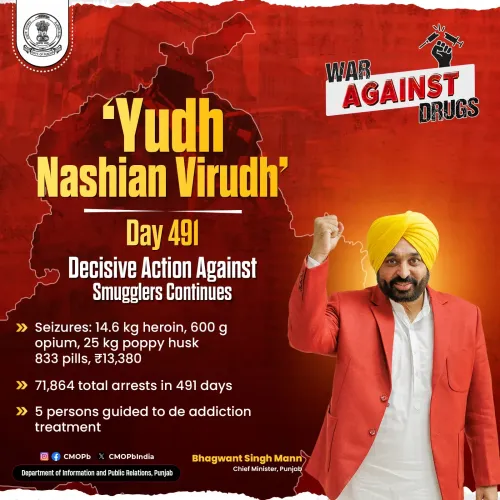
Single-day seizures included 7.3 kg heroin , 6.3 kg ganja , 72 kg poppy husk , 1,159 intoxicant pills , and ₹42,420 in drug money.
Cumulative drug smuggler arrests under the campaign have reached 79,873 over 572 days.
22 individuals were convinced to voluntarily enter de-addiction and rehabilitation treatment on this single day.
The campaign combines enforcement with outreach, reflecting a dual supply-suppression and demand-reduction strategy.
The near- 80,000 arrest milestone raises questions about conviction rates and long-term rehabilitation outcomes going forward.
Nearly 80,000 drug smugglers arrested, tonnes of contraband seized, and 22 more people steered toward rehabilitation on a single day — Punjab's 'Yudh Nashian Virudh' campaign crossed its 572nd consecutive day on Friday, 25 September 2026, with the Chief Minister's Office of Punjab posting the latest operational tally on X.
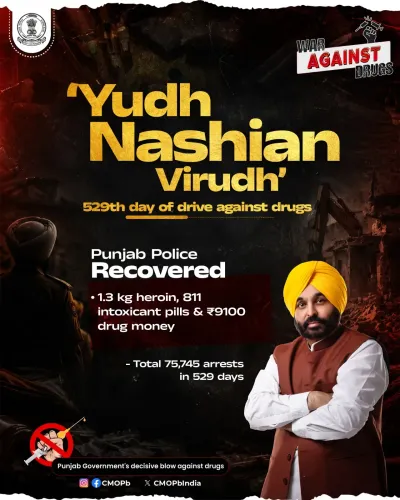
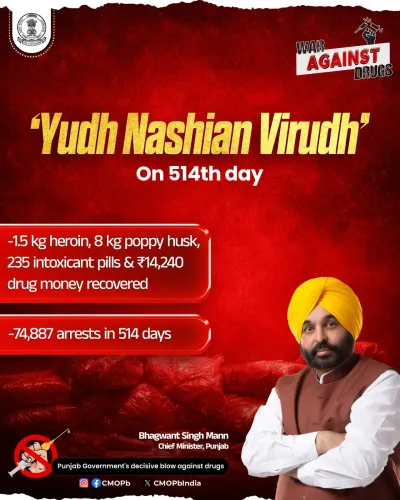
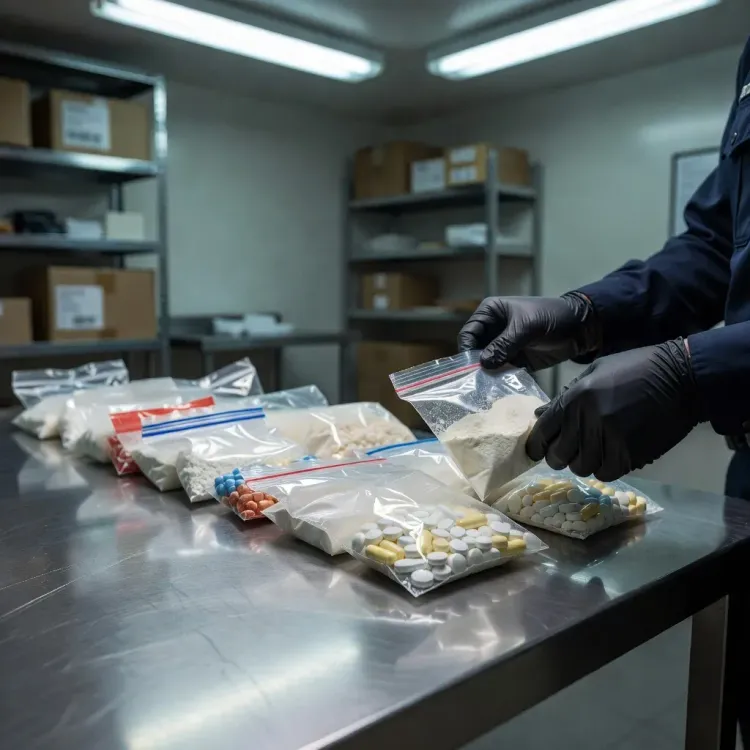
In the latest 24-hour push, Punjab Police teams recovered 7.3 kg heroin, 6.3 kg ganja, 72 kg poppy husk, 1,159 intoxicant pills, and ₹42,420 in drug money from arrested smugglers. The cumulative arrest count now stands at 79,873 since the drive began — a number that puts it among the most sustained enforcement campaigns the state has mounted in recent memory.
What one day's seizure says about Punjab's drug pipeline
The mix of contraband — heroin alongside poppy husk and synthetic pills — mirrors a supply chain that has evolved over two decades. Punjab, which shares a border with Pakistan, has long been identified as a primary entry corridor for Afghan-origin heroin moving into the Indian heartland. The poppy husk and pharmaceutical tablets in Friday's haul signal that local cultivation byproducts and diverted medicines continue to feed demand even as cross-border flows are intercepted.
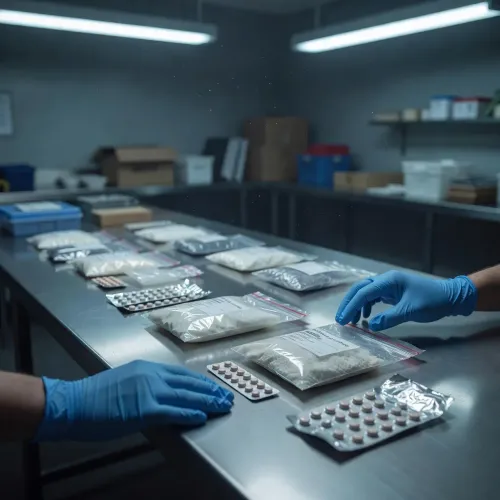
Each category of seizure tells a different story: the heroin points to organised trafficking networks; the poppy husk reflects rural consumption patterns in agricultural belts; the intoxicant pills indicate the parallel problem of prescription-drug abuse among younger users.
De-addiction: the quieter front of the war
Buried in the numbers — but arguably the most consequential figure — is this: 22 individuals were persuaded on Friday alone to voluntarily enter de-addiction and rehabilitation treatment. Under the Yudh Nashian Virudh framework, enforcement teams are paired with outreach mandates, requiring officers to not just arrest suppliers but actively refer users toward treatment.
This dual-track approach — crack down on supply, rehabilitate demand — reflects a policy shift that Punjab governments have attempted in varying degrees over the past decade, acknowledging that policing alone cannot resolve a public-health crisis. Getting a user to voluntarily walk into a rehab centre is, in many ways, harder than executing a raid.
572 days and counting — what the streak means
Sustained daily enforcement over nearly 19 months is operationally demanding. Police forces can sustain short, headline-grabbing blitzes with relative ease; maintaining daily documented action — with publicly reported seizure figures — over a year and a half requires institutional structure rather than episodic political will. The CMO Punjab's practice of posting daily tallies on X also creates a public accountability loop: the numbers are on record, comparable, and impossible to quietly revise.
With the cumulative arrest figure closing in on 80,000, the next milestone — and the scrutiny it invites around conviction rates and long-term rehabilitation outcomes — is not far off.
Point of View
Daily-accountability enforcement, with public data serving as a de facto audit trail. The inclusion of rehabilitation referrals alongside arrest figures signals that the Bhagwant Mann government understands the political limits of a purely punitive narrative in a state where drug-affected families are a significant vote bloc. Sustaining this cadence for nearly 19 months is operationally credible, but the campaign's true test will come when conviction rates and post-rehabilitation relapse data become available. The approaching 80,000-arrest milestone will invite exactly that scrutiny.
NationPress
25 Sept 2026
Frequently Asked Questions
What is 'Yudh Nashian Virudh' in Punjab?
'Yudh Nashian Virudh' — meaning 'War Against Drugs' — is an ongoing anti-narcotics campaign run by the Punjab government and Punjab Police, involving daily arrests of drug smugglers, contraband seizures, and referrals of drug users to de-addiction and rehabilitation centres.
How many drug smugglers have been arrested in Punjab's anti-drug drive so far?
As of 25 September 2026 — Day 572 of the campaign — a total of 79,873 drug smugglers have been arrested under the 'Yudh Nashian Virudh' drive.
What drugs were seized by Punjab Police on 25 September 2026?
On Day 572, Punjab Police seized 7.3 kg heroin , 6.3 kg ganja , 72 kg poppy husk , 1,159 intoxicant pills , and ₹42,420 in drug money from arrested smugglers.
Why is Punjab particularly vulnerable to drug trafficking?
Punjab shares an international border with Pakistan, which has historically made it a major entry corridor for Afghan-origin heroin. The state has also seen high rates of prescription-drug diversion and local poppy cultivation byproduct abuse, creating a multi-layered drug problem over more than two decades.
Does the Punjab anti-drug campaign include rehabilitation, or is it only enforcement?
The campaign includes both. Punjab Police teams are mandated to refer drug users to de-addiction and rehabilitation treatment alongside making arrests. On 25 September 2026 alone, 22 persons were persuaded to voluntarily undergo rehabilitation.