Punjab Police seizes 12.4 kg heroin on day 448 of Yudh Nashian Virudh
Synopsis
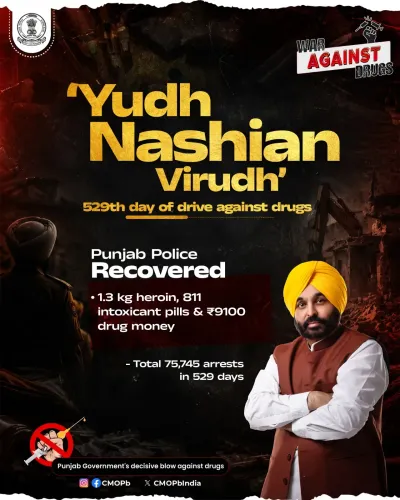
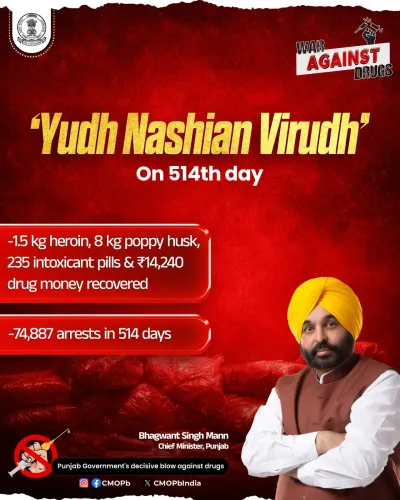
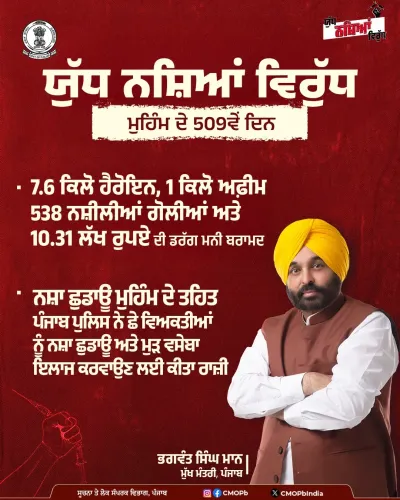
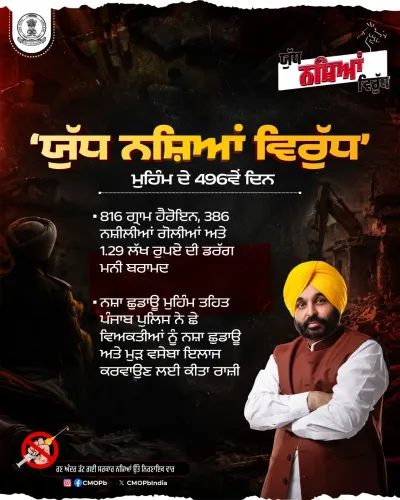
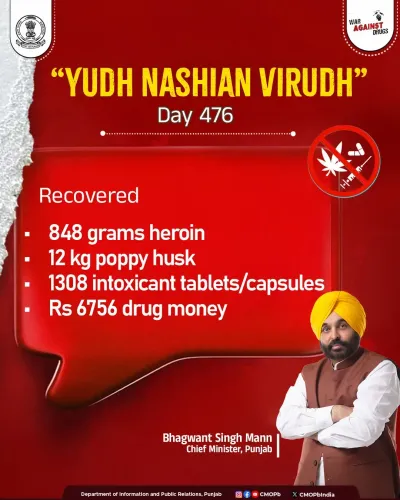
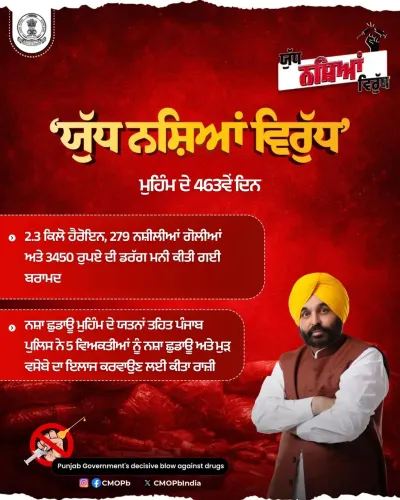
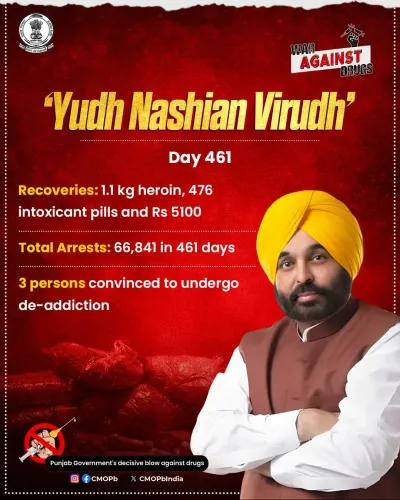
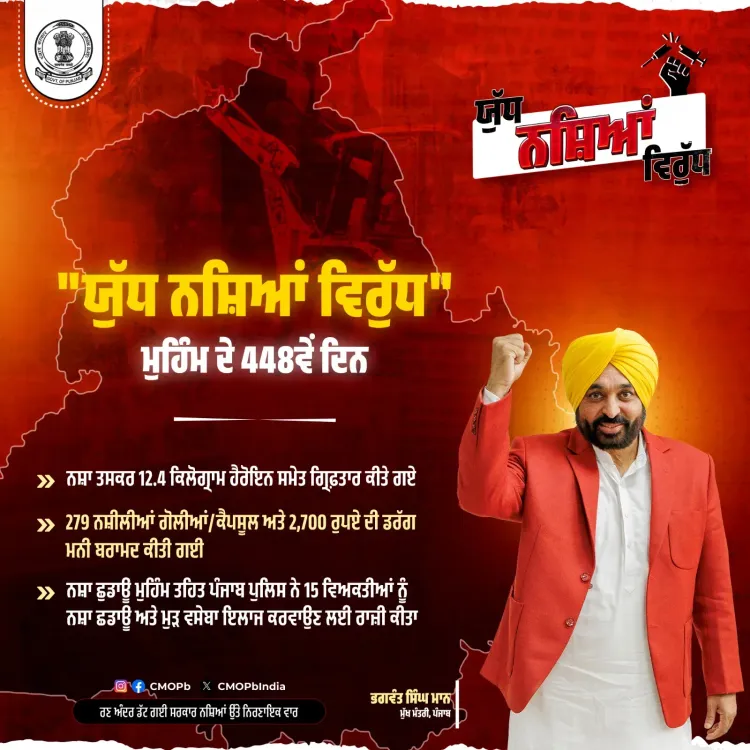
Punjab Police sustained its Yudh Nashian Virudh anti-drug campaign into its 448th day on 24 May 2026, seizing 12.4 kg of heroin, 279 intoxicant tablets, and Rs 2,700 in drug money. Total arrests since the campaign began now stand at 65,306.
Key Takeaways
Day 448 of the Yudh Nashian Virudh campaign was reported by the CMO Punjab on 24 May 2026 .
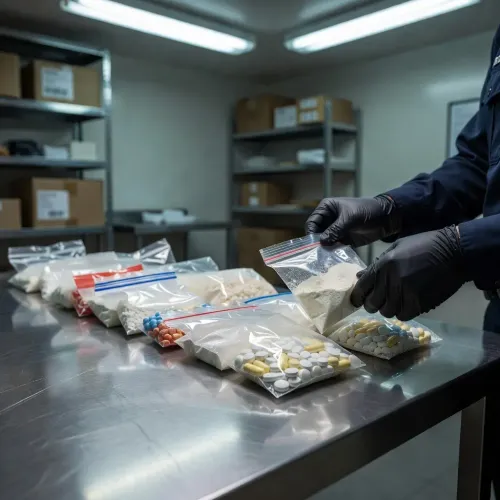
Punjab Police recovered 12.4 kg of heroin and 279 intoxicant tablets/capsules in the latest operation.
Rs 2,700 in drug money was also seized from arrested traffickers.
Cumulative arrests since the campaign's launch have reached 65,306 over 448 days .
The campaign was launched in 2022 under Chief Minister Bhagwant Mann as a daily-reporting enforcement drive.
Enforcement targets both cross-border heroin networks and local synthetic drug distribution.
The Chief Minister's Office of Punjab announced on Sunday, 24 May 2026 that Punjab Police has sustained its anti-narcotics campaign Yudh Nashian Virudh ('War Against Drugs') into its 448th consecutive day, recovering 12.4 kg of heroin, 279 intoxicant tablets and capsules, and Rs 2,700 in drug money from arrested smugglers. The cumulative tally of drug traffickers arrested since the campaign began has now reached 65,306.
Context
The CMO Punjab post states: 'Punjab Police teams have continued its drive against drugs Yudh Nashian Virudh for the 448th day. With this, the number of total drug smugglers arrested has reached 65,306 in 448 days.' The daily disclosure is part of a structured public-reporting mechanism the state government uses to demonstrate operational continuity and accountability on narcotics enforcement.
Sunday's seizure — 12.4 kilograms of heroin alongside nearly 279 pills and capsules — reflects the mix of opioid and synthetic substances that enforcement teams routinely encounter across Punjab's districts. The recovery of Rs 2,700 in drug money, though a small sum, is consistent with the campaign's practice of documenting even street-level cash seizures to build a complete evidentiary picture.
Policy Backdrop
The Yudh Nashian Virudh campaign was launched in 2022 by the government of Chief Minister Bhagwant Mann as a flagship law-enforcement response to Punjab's long-standing narcotics crisis. The state has grappled with elevated rates of opioid and synthetic drug abuse for over a decade, a problem that has drawn sustained political attention across successive administrations.
The current drive is distinguished by its daily public reporting cadence: arrest and seizure figures are released each day, creating a rolling accountability record. Cumulative numbers — now exceeding 65,000 arrests across 448 days — are cited by the state as evidence of uninterrupted operational pressure on trafficking networks, both cross-border and local.
Stakeholders and Impact
The primary beneficiaries of sustained enforcement are Punjab's youth and families affected by addiction, communities that have borne the social and economic costs of the drug trade for years. Repeated heroin seizures also signal continued pressure on supply chains that are believed to run through the state's porous border with Pakistan.
Critics and civil-society groups have long argued that enforcement alone is insufficient and must be paired with robust rehabilitation infrastructure. The state's focus on arrest and seizure metrics, while demonstrating police activity, leaves open questions about treatment capacity and long-term demand reduction — areas that advocacy groups continue to press the government on.
What's Next
Observers will watch for the release of monthly consolidated seizure data, which typically provides a more granular breakdown by district and drug type. Any legislative proposals to amend Punjab's excise or police acts — aimed at imposing harsher penalties on traffickers — would mark a significant escalation of the policy beyond enforcement into the legal framework. As the campaign crosses the 450-day threshold in the coming days, the government is expected to highlight the milestone as a measure of political will on what remains one of Punjab's most sensitive governance challenges.
Point of View
000 cumulative arrests is a number designed for public consumption, signalling scale and persistence to an electorate that has long demanded accountability on drugs. However, the campaign's credibility will increasingly depend on complementary data: conviction rates, rehabilitation admissions, and evidence of disrupted supply chains rather than street-level arrests alone. Without that fuller picture, the daily scoreboard risks becoming a metric of activity rather than of lasting impact.
NationPress
25 Sept 2026
Frequently Asked Questions
What is the Yudh Nashian Virudh campaign in Punjab?
Yudh Nashian Virudh ('War Against Drugs') is a statewide anti-narcotics enforcement campaign launched by the Punjab government in 2022 under Chief Minister Bhagwant Mann. It involves daily police operations to arrest drug smugglers and seize contraband, with results reported publicly each day.
How many drug smugglers have been arrested in Punjab's anti-drug drive?
As of day 448 of the campaign, 65,306 drug smugglers have been arrested in total since the Yudh Nashian Virudh drive began.
What was seized by Punjab Police on day 448 of the anti-drug campaign?
On the 448th day of the campaign, Punjab Police recovered 12.4 kg of heroin , 279 intoxicant tablets and capsules , and Rs 2,700 in drug money from arrested traffickers.
Who is leading Punjab's war on drugs?
The campaign is directed by the Punjab government under Chief Minister Bhagwant Mann , with Punjab Police conducting daily field operations across the state.
Why is Punjab particularly affected by drug smuggling?
Punjab has experienced elevated rates of opioid and synthetic drug abuse for over a decade, partly attributed to its geographic proximity to cross-border trafficking routes. Successive governments have treated narcotics control as a priority law-and-order and public health issue.