Punjab CMO: Libraries Now Weapons in Drug War
Synopsis
Punjab's Chief Minister's Office says libraries set up inside government de-addiction centres under the Yudh Nashian Virudh campaign are helping patients manage cravings and build recovery routines. Driven by the Leadership in Mental Health Programme fellowship, the initiative now covers 10 districts with a target of reaching over 80 per cent of centres by end-2026.
Key Takeaways
Libraries have been installed in government de-addiction and rehabilitation centres across 10 districts of Punjab.
The initiative operates under the Yudh Nashian Virudh ('War Against Drugs') campaign of the Punjab Government.
The Leadership in Mental Health Programme — a fellowship for young professionals — is responsible for setting up, refurbishing and maintaining the libraries.
Libraries are intended to help recovering addicts cope with cravings, improve mental well-being and establish positive daily routines.
The state plans to extend the library programme to more than 80 per cent of all de-addiction and rehabilitation centres by the end of 2026 .
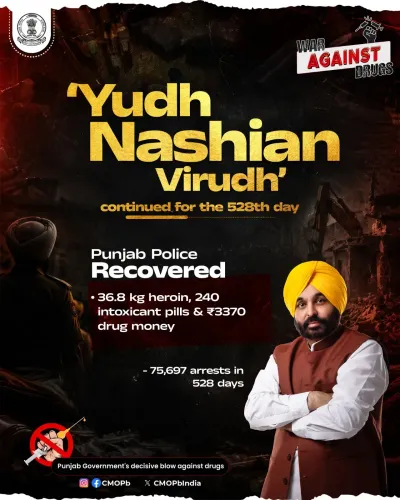
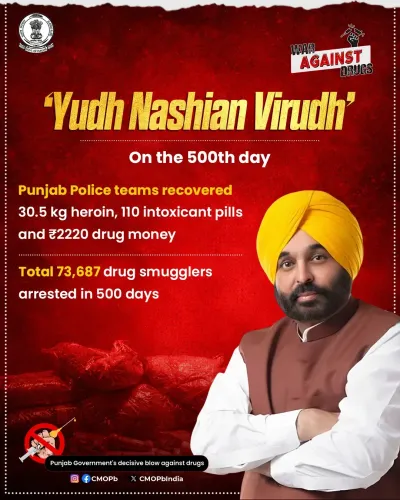
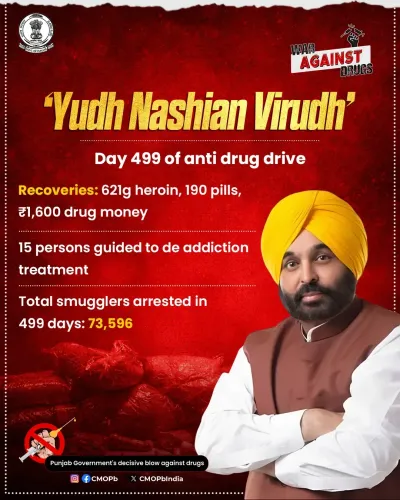
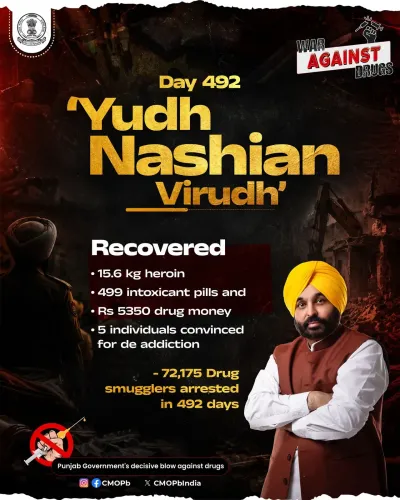
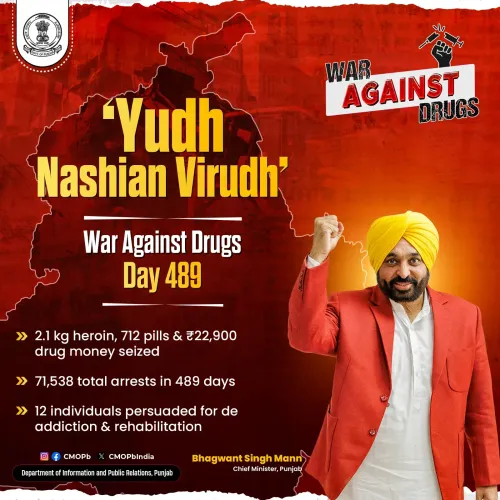
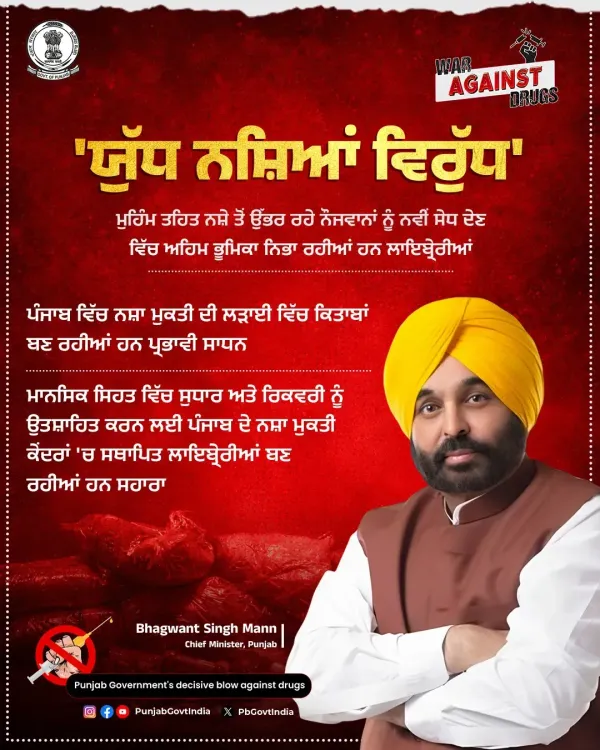
The Chief Minister's Office of Punjab announced on Thursday, 18 June 2026 that libraries installed inside government-run de-addiction and rehabilitation centres are playing a measurable role in the state's ongoing anti-drug campaign, Yudh Nashian Virudh ('War Against Drugs').
The post states that the libraries are helping recovering addicts 'cope with cravings, improve mental well-being and build positive routines during recovery.' The initiative is being driven through Punjab's Leadership in Mental Health Programme, a fellowship that embeds young professionals inside state rehabilitation facilities to support non-clinical recovery tools.
Context
Punjab has recorded persistently elevated rates of opioid and synthetic drug dependence compared with national averages for more than two decades. Successive state governments have responded by expanding the network of government de-addiction and rehabilitation centres across the state, building an infrastructure that now serves as the backbone for newer psychosocial interventions.
The current Yudh Nashian Virudh campaign represents the latest layer of that effort, combining enforcement, clinical treatment and structured non-clinical supports. Libraries inside rehab centres are one such support, designed to occupy and redirect the minds of patients during the most vulnerable phases of withdrawal and early recovery.
Policy Backdrop
The Leadership in Mental Health Programme is a fellowship model that recruits young professionals and connects them with the state's anti-addiction infrastructure. Fellows are responsible for setting up, refurbishing and maintaining library facilities within government centres — work that sits at the intersection of mental health, literacy and public-health delivery.
According to the official post, fellows have already supported library initiatives in government facilities across 10 districts. The state has set a target to extend the programme to more than 80 per cent of all de-addiction and rehabilitation centres by the end of 2026. This fellowship model mirrors a broader pattern seen in high-burden northern states, where educated youth are increasingly deployed as front-line public-health workers in non-clinical roles.
Stakeholders and Impact
The primary beneficiaries are recovering addicts housed in government rehabilitation centres — a population that faces high relapse risk during unstructured hours in treatment. Structured reading and routine-building are recognised psychosocial tools for managing cravings and improving mental well-being without pharmacological intervention.
The secondary stakeholders are the young professional fellows themselves, who gain hands-on public-health experience while contributing to a state priority. Community members and families of patients stand to benefit indirectly if the intervention contributes to improved recovery outcomes and reduced relapse rates over time.
What's Next
The immediate milestone to watch is the roll-out of library facilities to the targeted 80-plus per cent of de-addiction and rehabilitation centres before the close of 2026. Whether the state publishes evaluation data — measuring metrics such as patient retention, relapse rates or mental-health scores — will determine how the initiative is assessed beyond its current phase.
The success or failure of the library model within Punjab's rehab network could influence whether other high-burden states adopt similar fellowship-driven, non-clinical support structures as a complement to medical treatment.
Point of View
Rather than replace, clinical treatment. The move is politically significant: by visibly engaging young professionals in the anti-drug effort, the government broadens both the workforce and the public narrative around rehabilitation. The 80 per cent coverage target by year-end is ambitious and will serve as a concrete accountability marker for the Yudh Nashian Virudh campaign's non-clinical arm. If evaluation data eventually links structured reading programmes to measurable reductions in relapse, Punjab could set a replicable template for other drug-affected northern states.
NationPress
19 Sept 2026
Frequently Asked Questions
What is the Yudh Nashian Virudh campaign in Punjab?
Yudh Nashian Virudh, meaning 'War Against Drugs,' is the Punjab Government's comprehensive anti-drug campaign that combines enforcement, clinical treatment at government de-addiction centres and psychosocial interventions such as the library initiative.
How are libraries helping drug addicts recover in Punjab?
Libraries set up inside government rehabilitation centres are helping recovering patients cope with cravings, improve mental well-being and build structured daily routines — non-clinical supports that complement medical treatment during recovery.
What is Punjab's Leadership in Mental Health Programme?
The Leadership in Mental Health Programme is a fellowship that connects young professionals with Punjab's anti-drug infrastructure. Fellows are responsible for setting up, refurbishing and maintaining library facilities inside government de-addiction and rehabilitation centres.
How many districts have the Punjab rehab library initiative so far?
According to the Chief Minister's Office, the library initiative has been supported in government facilities across 10 districts of Punjab, with plans to expand to more than 80 per cent of all de-addiction centres by end-2026.
Will Punjab expand libraries to all de-addiction centres?
The Punjab Government has stated a plan to extend the library programme to more than 80 per cent of government de-addiction and rehabilitation centres by the end of 2026, up from the current coverage of 10 districts.