Punjab CMO: Family Counselling Key to Drug Recovery
Synopsis
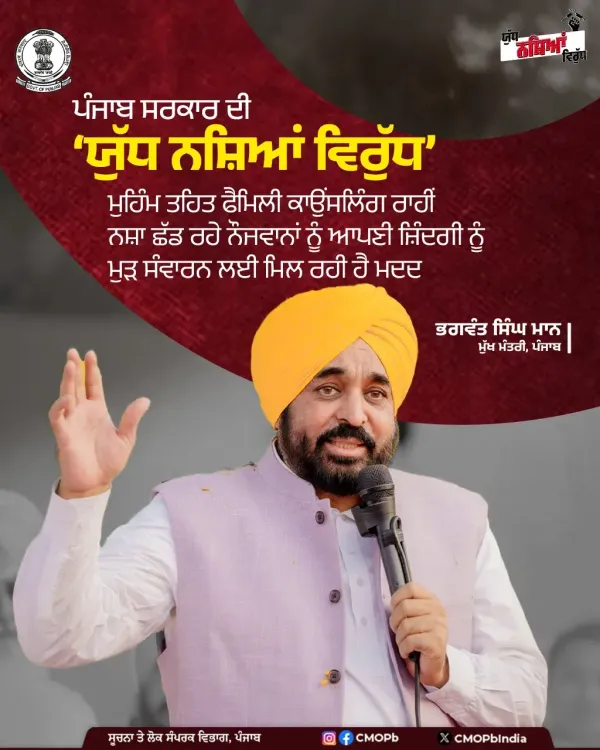
Punjab's Chief Minister's Office says family counselling has become a key part of drug recovery at de-addiction centres in 14 districts under the Yudh Nashian Virudh campaign, with parents, spouses, and children now actively involved in patients' treatment and rehabilitation.
Key Takeaways
The Punjab government's Yudh Nashian Virudh (War Against Drugs) campaign has made family counselling a formal component of drug recovery.
Family counselling is now operational at drug de-addiction and rehabilitation centres across 14 districts of Punjab.
Participation of parents, spouses, and children in the treatment process has increased significantly, according to counsellors at these centres.
The programme treats addiction as a family-wide issue , not solely an individual medical condition, aligning with international evidence-based practice.
Counselling sessions help family members understand addiction, provide emotional support, and help patients maintain a drug-free life after treatment.
The next milestone is potential expansion to remaining districts and formal integration of the programme into the Punjab state health budget .
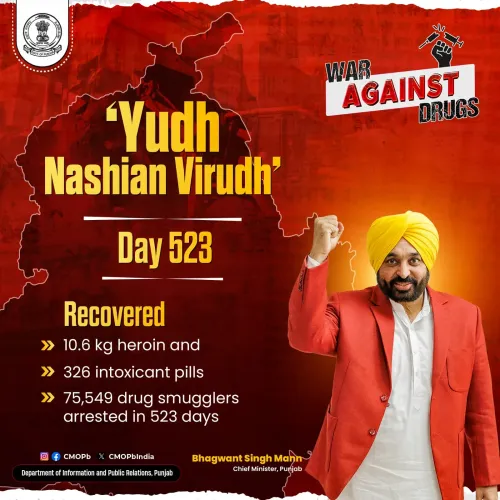
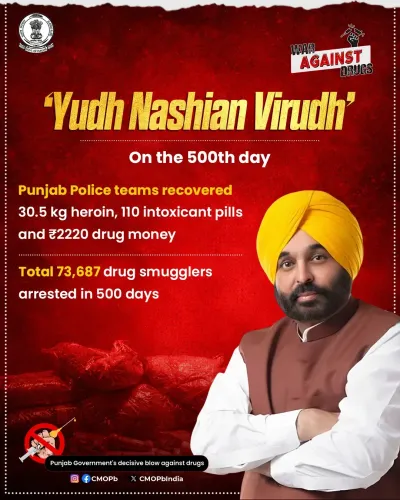
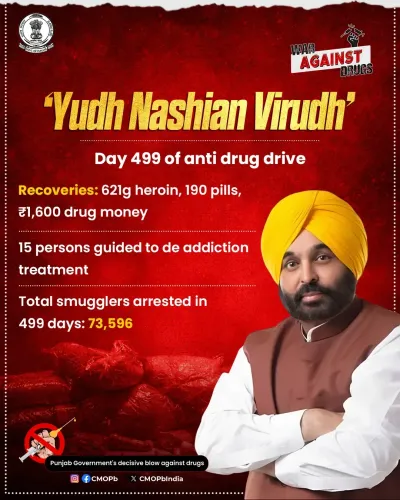
The Chief Minister's Office of Punjab announced on Sunday, 21 June 2026 that family counselling has become a central pillar of drug recovery efforts across 14 districts of the state, following the launch of the government's Yudh Nashian Virudh (War Against Drugs) campaign.
What the Post Says
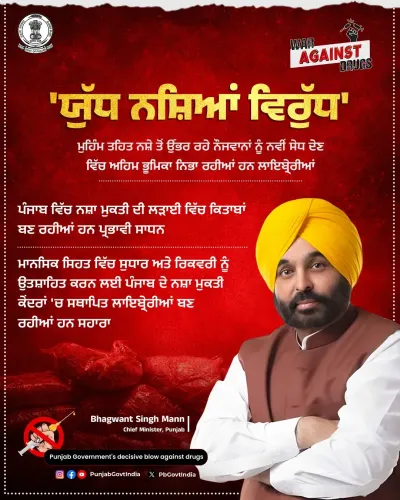
The official CMO Punjab account shared that de-addiction and rehabilitation centres across the 14 districts are now integrating structured family counselling into treatment protocols. Counsellors cited in the post note that participation by parents, spouses, and children in the recovery process has risen significantly. The post states directly: 'Drug addiction affects not only the individual but the entire family. Therefore, active family involvement is crucial for successful rehabilitation.' Through these sessions, family members are helped to understand the nature of addiction, provide emotional support, and reinforce a drug-free environment at home.
Context
Punjab has recorded persistently high per-capita rates of opiate and pharmaceutical drug dependence compared with other Indian states. Successive administrations since the mid-2010s have expanded dedicated de-addiction centres and outpatient clinics in response to high-profile surveys documenting widespread substance abuse, particularly opioid and synthetic drug use, across the state.
The Yudh Nashian Virudh campaign represents the current government's effort to combine supply-side enforcement with demand-reduction and rehabilitation measures. The inclusion of family counselling as a formal module marks an incremental shift from purely clinical detoxification models toward community-supported recovery frameworks.
Policy Backdrop
Family-based psychosocial interventions are internationally recognised as an evidence-supported complement to medical detoxification. Research consistently shows that patients with engaged family networks have stronger long-term recovery outcomes, reduced relapse rates, and better social reintegration. Punjab's adoption of this model aligns with broader global health guidance on treating addiction as a family and community issue rather than solely an individual medical condition.
Earlier state health missions in Punjab had piloted community-supported recovery modules, and the current rollout across 14 districts appears to build on those earlier frameworks. The government's stated rationale — that addiction is a problem for the entire family, not just the patient — reflects this shift in therapeutic philosophy.
Stakeholders and Impact
The primary beneficiaries are patients currently undergoing treatment at government-run de-addiction and rehabilitation centres, along with their immediate families. Counsellors at these centres are at the operational front line, facilitating sessions that bring together parents, spouses, and children as active participants in the recovery journey.
Broader communities in the 14 districts stand to benefit if family-led support structures reduce relapse rates and ease the social and economic burden that substance abuse places on households. Civil society organisations and health workers engaged in anti-drug outreach are also key stakeholders in sustaining this model beyond the clinical setting.
What's Next
Attention will now turn to whether the Punjab government releases district-wise recovery and relapse statistics to allow independent assessment of the counselling programme's effectiveness. A key question is whether the family-counselling module will be extended to the remaining districts not yet covered, and whether dedicated funding will be allocated within the state health budget to institutionalise the programme at scale.
Point of View
The government is attempting to reduce the stigma that has historically kept patients and their relatives away from state-run centres. The rollout across 14 districts, if followed by transparent outcome data, could set a replicable template for other high-prevalence states. However, the programme's long-term credibility will depend on whether the government backs the counselling infrastructure with sustained budget allocations rather than treating it as a campaign-cycle initiative.
NationPress
20 Sept 2026
Frequently Asked Questions
What is the Yudh Nashian Virudh campaign in Punjab?
Yudh Nashian Virudh , meaning 'War Against Drugs,' is a Punjab government campaign aimed at combating substance abuse through enforcement, awareness drives, and rehabilitation services including de-addiction centres across the state.
How many districts in Punjab have family counselling at de-addiction centres?
According to the Chief Minister's Office of Punjab, family counselling is currently available at drug de-addiction and rehabilitation centres across 14 districts of the state.
Why is family counselling important in drug de-addiction?
Counsellors at Punjab's rehabilitation centres say addiction affects not just the individual but the entire family. Family involvement helps patients understand their condition, receive emotional support, and maintain a drug-free life after treatment — outcomes supported by international health research.
Who participates in family counselling at Punjab's de-addiction centres?
The counselling sessions involve parents, spouses, and children of patients undergoing treatment, with their participation in the recovery process having increased significantly since the launch of the Yudh Nashian Virudh campaign.
Will Punjab expand the family counselling programme to more districts?
The government has not yet announced a formal timeline, but observers are watching for district-wise recovery data and cabinet decisions on scaling the family-counselling module to districts beyond the current 14 and integrating it into the state health budget.