CM Mann's Student Police Cadet Programme Gains Traction in Punjab
Synopsis
Punjab Police's Student Police Cadet programme, launched by CM Bhagwant Mann in August 2023, has completed 1,965 indoor and 698 outdoor classes across 280 selected schools, engaging nearly 11,200 students under DGP Gaurav Yadav's leadership.
Key Takeaways
The Student Police Cadet (SPC) programme was launched by CM Bhagwant Singh Mann on 22 August 2023 under Punjab Police's 'Youth Connectivity' initiative.
A total of 1,965 indoor classes and 698 outdoor classes have been conducted so far.
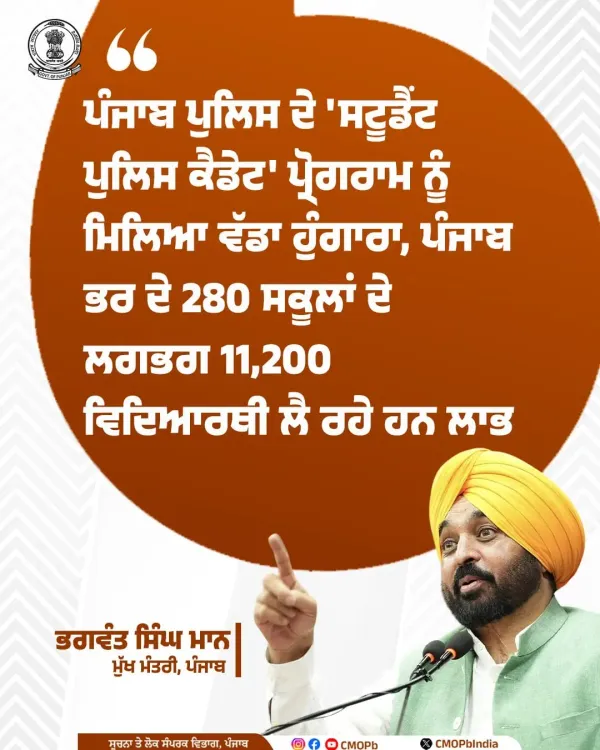
The programme currently covers 280 selected schools across Punjab, enrolling approximately 11,200 students .
Implementation is led by Director General of Police Gaurav Yadav .
The SPC model traces its lineage to a Kerala Police initiative launched in 2010 , subsequently adapted by multiple Indian states.
Possible expansion beyond the initial 280 schools is anticipated in the upcoming academic year, pending outcome evaluation.
The Chief Minister's Office of Punjab announced on Thursday, 11 June 2026 that the Student Police Cadet (SPC) programme, run under Punjab Police's Youth Connectivity initiative, is drawing strong enthusiasm from educational institutions across the state, with cumulative session counts and enrolment figures now made public.
Context
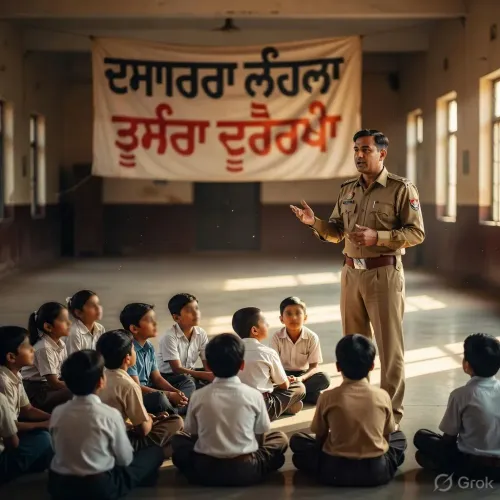
Chief Minister Bhagwant Singh Mann launched the Student Police Cadet (SPC) programme on 22 August 2023 as part of a broader push to bridge the gap between law enforcement and young citizens. The programme targets school-going adolescents, blending classroom instruction with hands-on outdoor activity to build civic awareness, discipline, and police-community trust.
The official post states: 'The SPC programme is receiving massive response from educational institutions across the state,' citing a combined tally of 1,965 indoor classes and 698 outdoor classes conducted so far.
Policy Backdrop
The Student Police Cadet model has a documented lineage in India. Kerala Police pioneered the format in 2010, designing structured cadet sessions to instil legal literacy, traffic safety awareness, and a sense of civic responsibility among students. The model was subsequently adapted by other states looking to institutionalise community-oriented policing at the grassroots level.
Punjab's adoption of the SPC framework fits into a wider pattern of state police forces launching cadet-style school programmes after 2022, reflecting a shift in policing philosophy toward preventive engagement rather than reactive enforcement. The Youth Connectivity banner under which the SPC operates signals the state government's intent to frame policing as a participatory, community-facing function.
Stakeholders and Impact
Under the leadership of Director General of Police Gaurav Yadav, the programme currently covers 280 selected schools across Punjab, enrolling approximately 11,200 schoolchildren. That translates to an average of 40 students per school, suggesting a focused, cohort-based selection model rather than a whole-school rollout.
The dual-format structure — indoor sessions covering conceptual and legal content alongside outdoor drills building physical discipline — mirrors the design of the Kerala original and aligns with national frameworks for school-based civic education. For students in a state that has grappled with drug abuse and organised crime pressures, early positive contact with law enforcement carries particular social significance.
What's Next
The government has not yet announced a formal expansion timeline, but the scale of institutional response cited in the post suggests a likely push to bring more schools into the programme in the coming academic year. Policymakers and education administrators will be watching for a structured outcome evaluation — tracking metrics such as student discipline, legal awareness scores, and community feedback — before any wider rollout is formalised.
How Punjab documents and publishes programme outcomes could also influence whether other Indian states accelerate their own SPC-style adoptions, making this initiative a potential reference point for community policing policy nationally.
Point of View
200 students across 280 schools within roughly three years — represents a meaningful, if still modest, footprint for a state-level community policing initiative. By anchoring the programme under the 'Youth Connectivity' brand, the Mann government is deliberately repositioning Punjab Police's public image at a moment when the force's credibility remains a live political variable. The Kerala-origin model lends the initiative institutional legitimacy, but Punjab's specific context — persistent concerns around youth drug exposure and law-and-order — gives the SPC rollout an urgency beyond routine civic education. The next test will be whether the government publishes verifiable outcome data, which would elevate this from a well-intentioned programme to a replicable policy model.
NationPress
26 Oct 2026
Frequently Asked Questions
What is the Student Police Cadet programme in Punjab?
The Student Police Cadet (SPC) programme is a school-based initiative run by Punjab Police under its 'Youth Connectivity' drive, combining indoor classroom sessions on civic and legal topics with outdoor discipline drills to build positive relationships between students and law enforcement.
When was the SPC programme launched in Punjab?
The programme was launched by Chief Minister Bhagwant Singh Mann on 22 August 2023.
How many students are enrolled in Punjab's SPC programme?
Approximately 11,200 schoolchildren from 280 selected schools across Punjab are currently enrolled in the programme.
How many classes have been held under the SPC programme?
As of the latest update, 1,965 indoor classes and 698 outdoor classes have been conducted under the programme.
Which state first started the Student Police Cadet model in India?
Kerala Police pioneered the Student Police Cadet model in 2010, and it has since been adapted by several other Indian states including Punjab.