Punjab leads India in maternal and child health: SRS data
Synopsis
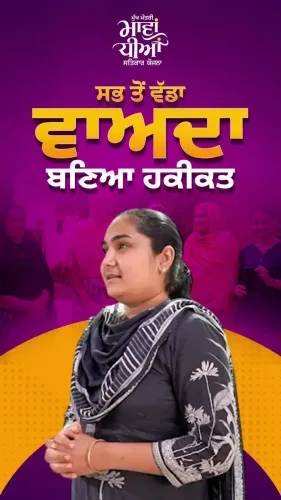
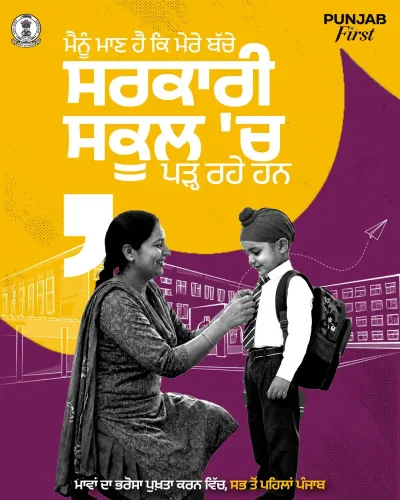
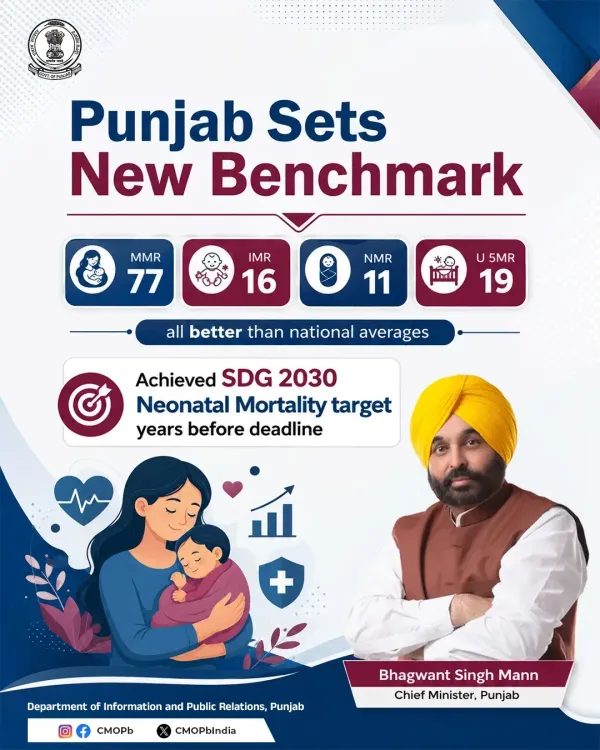
Punjab has surpassed national benchmarks on all major maternal and child health indicators, according to the latest Sample Registration System data cited by the Chief Minister's Office. The announcement credits CM Bhagwant Mann's government and its progressive healthcare initiatives for the state's top-ranked performance.
Key Takeaways
The Chief Minister's Office of Punjab announced on 23 May 2026 that Punjab leads India on all major maternal and child health indicators.
The claim is based on the latest Sample Registration System (SRS) data from the Registrar General of India , the central government's primary health-metrics authority.
CM Bhagwant Mann , heading the AAP government since March 2022 , has prioritised free medicines, diagnostics, and expanded primary health centres.
Key indicators tracked by the SRS include Infant Mortality Rate (IMR) , Maternal Mortality Ratio (MMR) , and institutional delivery rates.
Independent verification of the specific figures cited will depend on wider publication of the referenced SRS bulletin by the Registrar General of India .
The next SRS bulletin and Punjab's health budget allocations will be critical to assessing whether gains are sustained.
The Chief Minister's Office of Punjab announced on Saturday, 23 May 2026 that Punjab has surpassed India's national benchmarks across all major maternal and child health indicators, citing the latest Sample Registration System (SRS) data released by the Registrar General of India.
Context
The official CMO Punjab account credited the state's performance to the 'visionary leadership of Chief Minister Bhagwant Mann' and the government's 'progressive initiatives' in healthcare delivery. The claim positions Punjab as a 'national leader in healthcare delivery' — a significant assertion measured against the SRS, which is the central government's primary instrument for tracking state-level maternal and child health outcomes.
The Sample Registration System, administered by the Registrar General of India, has published annual state-wise bulletins since the 1990s, tracking indicators such as the Infant Mortality Rate (IMR), Maternal Mortality Ratio (MMR), and institutional delivery rates. These figures are widely used by state governments and policymakers to benchmark health system performance.
Policy Backdrop
Bhagwant Mann has led the Aam Aadmi Party (AAP) government in Punjab since March 2022, with health sector reform forming a central pillar of the administration's welfare agenda. The government has emphasised expansion of government-run diagnostic services, free medicines, and strengthened primary health centres — an approach mirroring the AAP model implemented earlier in Delhi.
At the national level, the Ayushman Bharat scheme, launched in 2018, extended health insurance coverage and primary care infrastructure across states including Punjab, providing a policy framework within which state-level improvements have been pursued. Competitive federalism in welfare delivery has prompted several states to cite SRS releases as evidence of governance effectiveness.
Stakeholders and Impact
The primary beneficiaries of improved maternal and child health indicators are mothers and infants across Punjab, particularly in rural and semi-urban areas where access to institutional delivery and postnatal care has historically been uneven. Stronger SRS rankings also carry political weight, reinforcing the AAP government's narrative of 'Delhi model' welfare replication at the state level.
State health departments, frontline health workers, and civil society organisations working on maternal health stand to see their efforts validated — or scrutinised — as the specific indicator values from the cited SRS bulletin enter public discourse. The announcement is also likely to inform upcoming Punjab health budget deliberations.
What's Next
Independent verification of the specific SRS figures referenced in the announcement will be possible once the Registrar General of India publishes or makes the cited bulletin widely accessible. Analysts and opposition parties are likely to examine the granular data to assess which indicators improved, by how much, and whether the gains are sustained across all districts of Punjab.
The next annual SRS bulletin release and Punjab's forthcoming health budget allocations will be closely watched as indicators of whether the state can consolidate and extend its reported gains in maternal and child health outcomes.
Point of View
Coming from an AAP government that has staked its identity on replicating Delhi's welfare model at the state level. Citing a central government data source — the Registrar General of India's SRS — rather than a state-commissioned study lends the claim institutional credibility, though independent scrutiny of the specific figures will be essential. The announcement fits a broader pattern of competitive federalism in which state governments use annual health data releases as governance report cards. If the figures hold under examination, they could strengthen the AAP's national narrative on public health delivery ahead of future electoral cycles.
NationPress
7 Oct 2026
Frequently Asked Questions
What does the Punjab government's SRS health claim mean?
The Chief Minister's Office of Punjab says the state has outperformed India's national averages on all major maternal and child health indicators — such as Infant Mortality Rate and Maternal Mortality Ratio — according to the latest Sample Registration System data from the Registrar General of India.
What is the Sample Registration System (SRS) in India?
The Sample Registration System is a large-scale demographic survey run by the Registrar General of India that produces annual state-wise estimates of birth rates, death rates, infant mortality, and maternal mortality, and is the government's primary source for tracking health outcomes across states.
How has Bhagwant Mann's government improved Punjab's healthcare?
The AAP government under CM Bhagwant Mann, in power since March 2022, has focused on expanding free diagnostic services, free medicines, and strengthening primary health centres — an approach modelled on AAP's governance record in Delhi.
Which health indicators does Punjab claim to lead India in?
The CMO Punjab announcement refers to 'all major maternal and child health indicators' as measured by the SRS, which typically includes the Infant Mortality Rate (IMR), Maternal Mortality Ratio (MMR), and institutional delivery rates, though specific figures require verification from the published SRS bulletin.
What is Ayushman Bharat and how does it relate to Punjab's health gains?
Ayushman Bharat, launched by the central government in 2018, expanded health insurance and primary care infrastructure across Indian states including Punjab, providing a national policy foundation on which state-level improvements have been built.