Punjab tops NITI Aayog School Education Index 2026
Synopsis
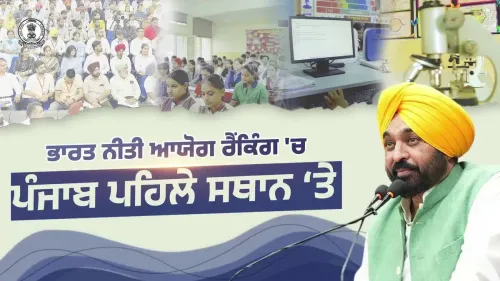
Punjab has claimed the top rank in the NITI Aayog School Education Quality Index 2026 under CM Bhagwant Mann, citing a turnaround from 8,000 wall-less schools in 2022 to 882 NEET qualifiers and the country's first mandatory AI curriculum from Classes I to XII.
Key Takeaways
Punjab has been ranked No.
1 in the NITI Aayog School Education Quality Index 2026 , according to the Chief Minister's Office.
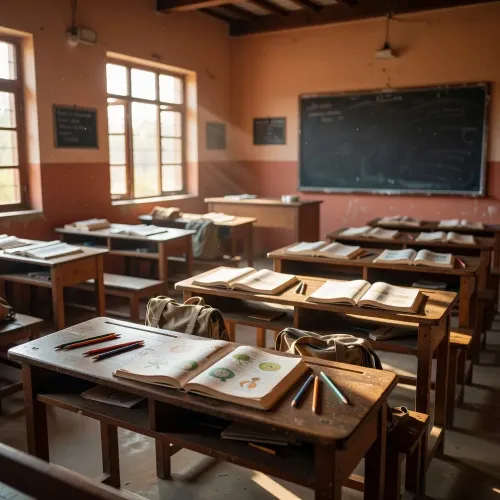
In 2022 , 8,000 government schools had no boundary walls and 4 lakh children sat on bare floors — the baseline the state claims to have transformed.
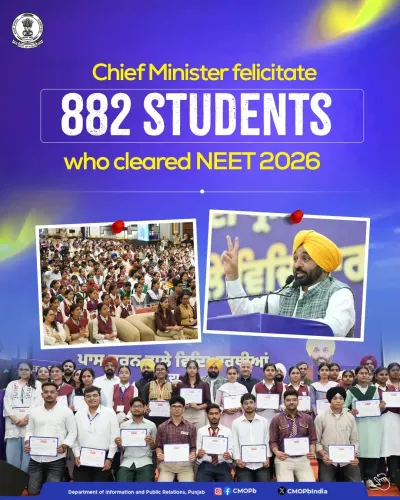
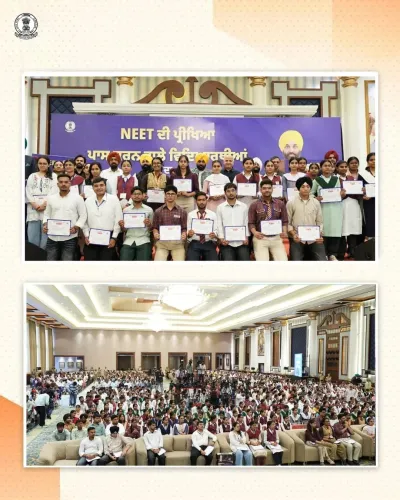
882 students from Punjab government schools have qualified for NEET , signalling improved science education in the public system.
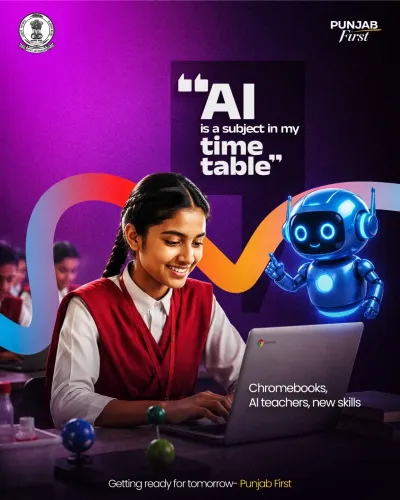
Punjab says it is the first state in India to introduce Artificial Intelligence as a core subject from Class I to Class XII .
The reforms are led by Chief Minister Bhagwant Mann of the Aam Aadmi Party , for whom education overhaul was a central 2022 election promise.
The practical test ahead includes teacher training, rural delivery of the AI curriculum, and independent verification of the ranking and NEET figures.
From classrooms without walls to the country's first AI curriculum spanning every grade — Punjab has just posted the most dramatic education turnaround in India's latest national ranking. The Chief Minister's Office of Punjab announced on Wednesday, 12 August 2026 that the state has secured the No. 1 rank in the NITI Aayog School Education Quality Index 2026, a benchmark that measures states on learning outcomes, infrastructure, equity, and access.
From bare floors to national gold: what the numbers say
The contrast the government draws is stark. In 2022, when Chief Minister Bhagwant Mann and the Aam Aadmi Party swept to power, 8,000 government schools lacked boundary walls and 4 lakh children sat on bare floors. Those figures, cited by the CMO, are the baseline against which the state now claims its turnaround. Today, the government says 882 students from government schools have qualified for NEET — a number that, if accurate, signals a shift in the quality of science education reaching Punjab's public-school students, who have historically been at a disadvantage in competitive entrance exams dominated by private-school alumni.
Punjab's AI-for-all gambit — Classes I to XII
The headline policy claim is the bolder one: Punjab says it is the first state in India to introduce Artificial Intelligence as a core subject across all school grades, from Class I through Class XII. That is not a pilot or an elective — it is a curriculum mandate covering the youngest learners all the way to board-exam students. The move aligns with the spirit of the National Education Policy 2020, which recommended technology integration and multidisciplinary learning, but Punjab's full-spectrum rollout goes further than most state implementations have dared. The practical test — teacher training, content quality, and rural delivery — will determine whether the policy lands or stays on paper.
Why the NITI Aayog index matters
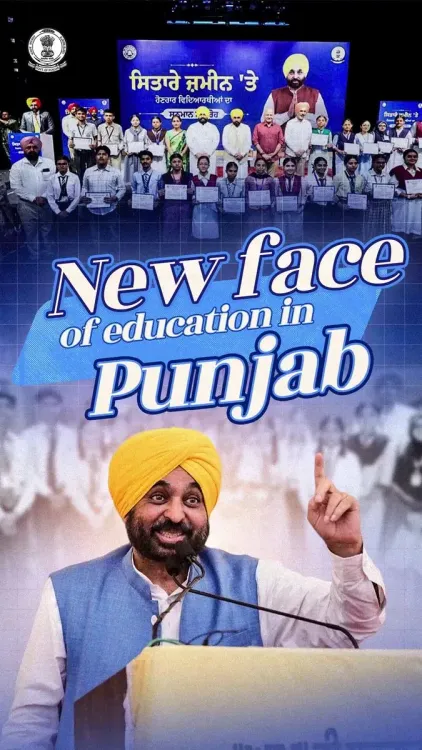
NITI Aayog, India's apex policy think tank, has used the School Education Quality Index to create competitive pressure among states since its first edition in 2019. Topping it carries real political and administrative weight — it signals to the Centre, to investors in human capital, and to parents that a state's government schools are worth trusting. Several states have leaned into the NEP 2020 era to climb these rankings; Punjab's jump to first place, if confirmed by the full index report, would mark the most visible result yet of that race. The hashtag #PunjabSikhyaKranti — 'Punjab Education Revolution' — captures exactly how the Mann government wants the moment read.
The next test is replication and transparency: independent verification of the NEET qualifier count, details of the AI curriculum's rollout in rural schools, and teacher training pipelines will tell the fuller story. Rankings are a snapshot; what comes after them is the real exam.
Point of View
Whose AAP government staked its 2022 mandate on replicating Delhi's school-reform model in a larger, more agrarian state. If independently verified, the ranking reframes the AAP governance narrative at a national level — demonstrating that the Delhi model can scale. The AI-curriculum mandate is the more consequential long-run bet: it positions Punjab's public-school students for a labour market being reshaped by automation, but its impact will hinge entirely on implementation depth, particularly in rural districts where teacher capacity is thinnest. The broader pattern is clear — NITI Aayog indices have become arenas of inter-state competition under NEP 2020, and states that can show both infrastructure fixes and curriculum innovation are winning the optics war even before learning outcomes fully catch up.
NationPress
12 Aug 2026
Frequently Asked Questions
What is the NITI Aayog School Education Quality Index?
The NITI Aayog School Education Quality Index is a ranking published by India's apex policy think tank that benchmarks states and union territories on school infrastructure, equity, access, and learning outcomes. Its first edition was released in 2019 and it is used to create competitive pressure among states to improve public education.
Which state ranked No. 1 in the NITI Aayog School Education Quality Index 2026?
Punjab ranked No. 1 in the NITI Aayog School Education Quality Index 2026, according to an announcement by the Chief Minister's Office of Punjab on 12 August 2026.
Is Punjab really the first state to introduce AI as a subject in schools from Class 1?
The Punjab government claims to be the first state in India to introduce Artificial Intelligence as a core subject from Classes I to XII across all government schools. Independent verification of this claim and details of the curriculum rollout are awaited.
How many NEET qualifiers came from Punjab government schools in 2026?
The Chief Minister's Office of Punjab states that 882 students from government schools have qualified for NEET. This figure has not yet been independently verified from public records.
What was the state of Punjab government schools in 2022 before Bhagwant Mann took over?
According to the CMO Punjab, in 2022 approximately 8,000 government schools had no boundary walls and around 4 lakh children were sitting on bare floors without proper furniture — figures the government cites as the baseline for its claimed turnaround.