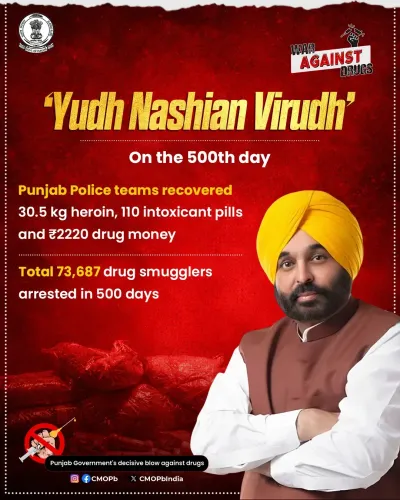
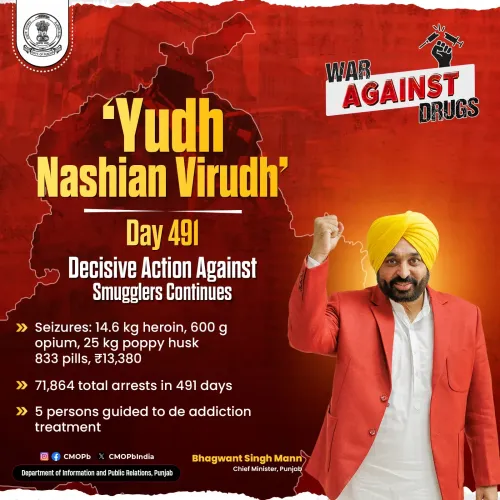
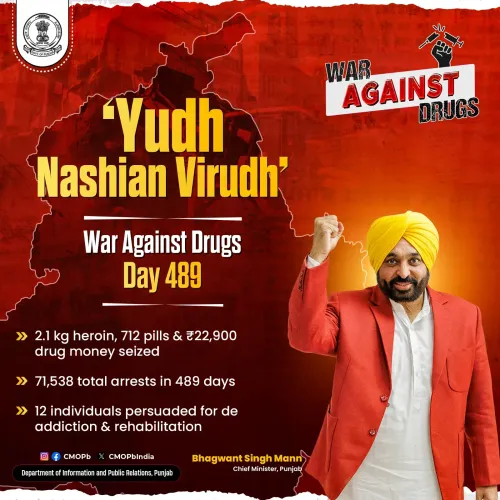
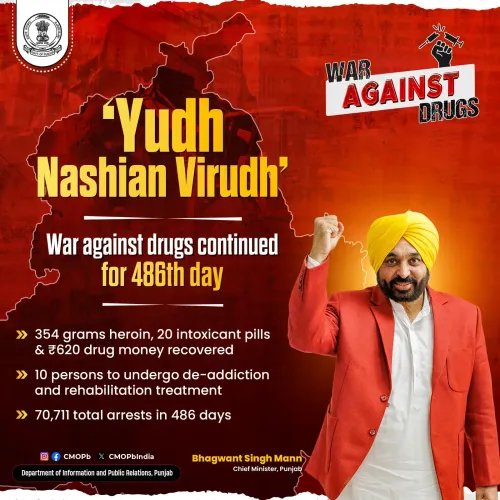
Punjab's 'Yudh Nashian Virudh' hits 17 months: 75,102 arrested, 3,472 kg heroin seized
Synopsis
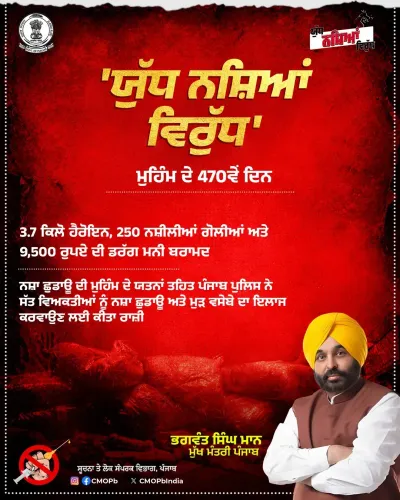
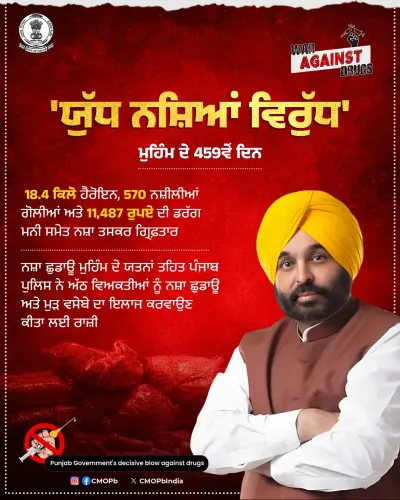
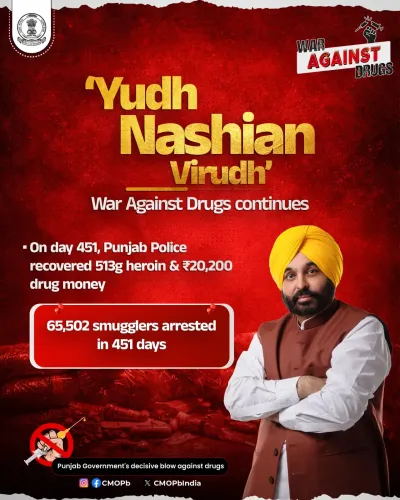
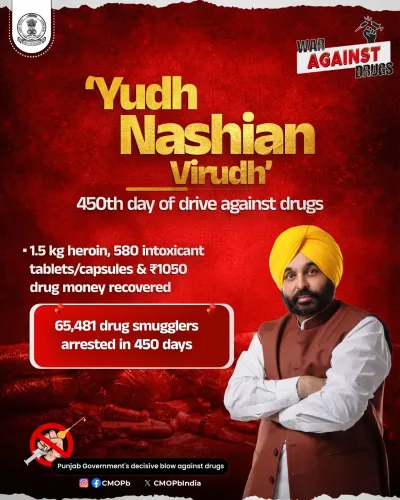
Punjab's 'Yudh Nashian Virudh' campaign, launched under CM Bhagwant Mann, has completed 17 months with 54,916 FIRs, 75,102 arrests, and seizures including 3,472 kg heroin, 871 kg opium, 60 kg ICE, and ₹21.64 crore in drug money.
Key Takeaways
54,916 FIRs registered under the Yudh Nashian Virudh campaign since March 1, 2025 .
75,102 drug smugglers arrested by Punjab Police over 17 months.
3,472 kg of heroin recovered — the single largest drug category by weight.
Seizures also include 871 kg opium , 425 quintals poppy husk , 1,193 kg ganja , 60 kg ICE , and 60.78 lakh intoxicant pills/tablets . ₹21.64 crore in drug money recovered, targeting financial networks behind the trade.
The campaign was launched on the directions of Chief Minister Bhagwant Mann of the Aam Aadmi Party government.
Seventeen months into a war that Punjab's government says it means to win, the numbers arriving from the state's police headquarters are striking. The Chief Minister's Office of Punjab announced on Saturday, August 1, 2026, that the anti-drug campaign Yudh Nashian Virudh ('War Against Drugs') — launched on the directions of Chief Minister Bhagwant Mann — has resulted in 54,916 FIRs, the arrest of 75,102 drug smugglers, and the recovery of 3,472 kg of heroin since March 1, 2025.
What Punjab Police seized: the full haul
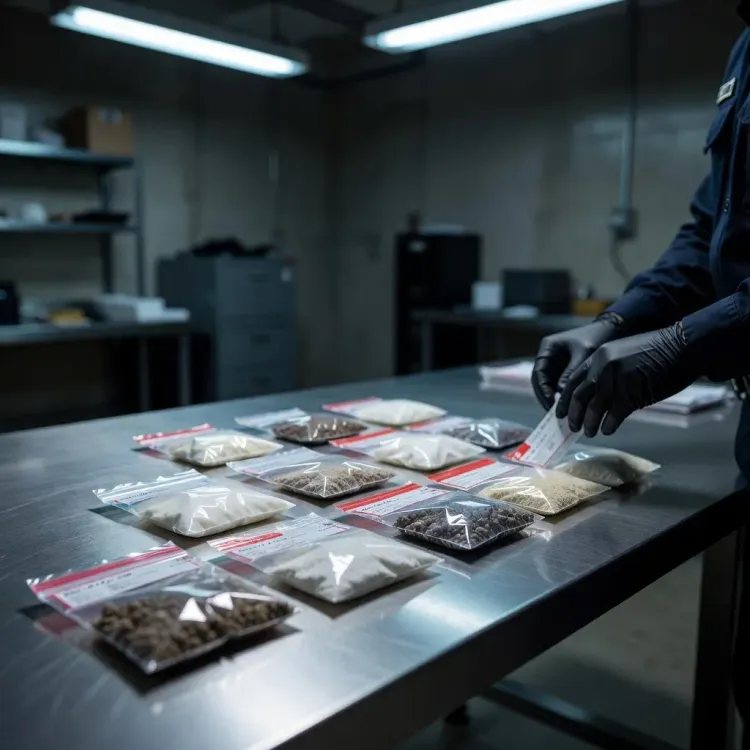
The heroin figure is only the headline number. Alongside it, Punjab Police have seized 871 kg of opium, 425 quintals of poppy husk, 86 kg of charas, 1,193 kg of ganja, and 60 kg of ICE (crystal methamphetamine) — pointing to a narcotics landscape that spans traditional opiates and synthetic stimulants. Authorities also recovered 60.78 lakh intoxicant pills and tablets and froze ₹21.64 crore in drug money, targeting the financial arteries of the trade alongside its supply chain.
Why Punjab is ground zero for India's drug crisis
Punjab's geography makes it structurally vulnerable. The state shares a long border with Pakistan, historically one of the most active corridors for heroin originating from the Golden Crescent — Afghanistan, Iran, and Pakistan — moving into India. Every administration since the 1980s has grappled with this reality, and every administration has, at some point, declared a crackdown. What distinguishes the current drive is the volume of case registration: 54,916 FIRs in seventeen months is a pace of enforcement that dwarfs many previous campaigns in sheer paperwork alone.
The scale of synthetic drug seizures — ICE and pharmaceutical tablets running into crores — also reflects a newer, uglier dimension of the problem. The trade has diversified well beyond heroin, with synthetic opioids and stimulants now reaching Punjab's towns and villages through distribution networks that are harder to trace than traditional border smuggling.
The gap between arrests and convictions
Raw enforcement numbers — FIRs filed, suspects arrested, kilograms seized — are the most visible metric of a drug war, but they are not the final one. The harder question, which the CMO's announcement does not address, is how many of those 75,102 arrests have translated into convictions, and how many of the seized networks have been permanently dismantled rather than temporarily disrupted. Rehabilitation infrastructure — treatment centres, de-addiction programmes, community support — is the other half of any durable anti-drug strategy, and it rarely makes the headline numbers.
For Punjab's youth, who remain the most exposed demographic in a state where drug dependency has been a documented social crisis for over a decade, the campaign's real success will be measured not in kilograms recovered but in lives redirected.
With Yudh Nashian Virudh now past its first full year, the Mann government has set a high benchmark for itself — the next test is whether the courts, the rehabilitation system, and the border agencies can consolidate what the police have started.
Point of View
Particularly ahead of any electoral cycle. However, the campaign's long-term legitimacy will hinge on conviction rates and rehabilitation outcomes: a pattern of high arrests followed by acquittals or bail has historically allowed drug networks to reconstitute. The synthetic drug dimension — ICE, pharmaceutical tablets — also suggests the trade is adapting faster than enforcement frameworks designed for traditional opiates.
NationPress
1 Aug 2026
Frequently Asked Questions
What is Yudh Nashian Virudh?
'Yudh Nashian Virudh' translates to 'War Against Drugs' in Punjabi. It is an anti-narcotics enforcement campaign launched by the Punjab government under Chief Minister Bhagwant Mann, initiated on March 1, 2025, targeting drug smuggling networks across the state.
How many drug smugglers have been arrested in Punjab's anti-drug campaign?
As of August 1, 2026, Punjab Police have arrested 75,102 drug smugglers since the launch of the Yudh Nashian Virudh campaign in March 2025.
How much heroin has Punjab Police seized in 2025 and 2026?
Punjab Police have recovered 3,472 kg of heroin since March 1, 2025, as part of the ongoing Yudh Nashian Virudh anti-drug drive.
What drugs were seized under Yudh Nashian Virudh besides heroin?
Besides 3,472 kg of heroin, seizures include 871 kg opium, 425 quintals poppy husk, 86 kg charas, 1,193 kg ganja, 60 kg ICE (crystal methamphetamine), and 60.78 lakh intoxicant pills and tablets.
How much drug money has been recovered in Punjab's crackdown?
Punjab Police have recovered ₹21.64 crore in drug money as part of the Yudh Nashian Virudh campaign, targeting the financial networks that sustain the drug trade.