Punjab CMO: Day 459 of Yudh Nashian Virudh nets 18.4 kg heroin
Synopsis
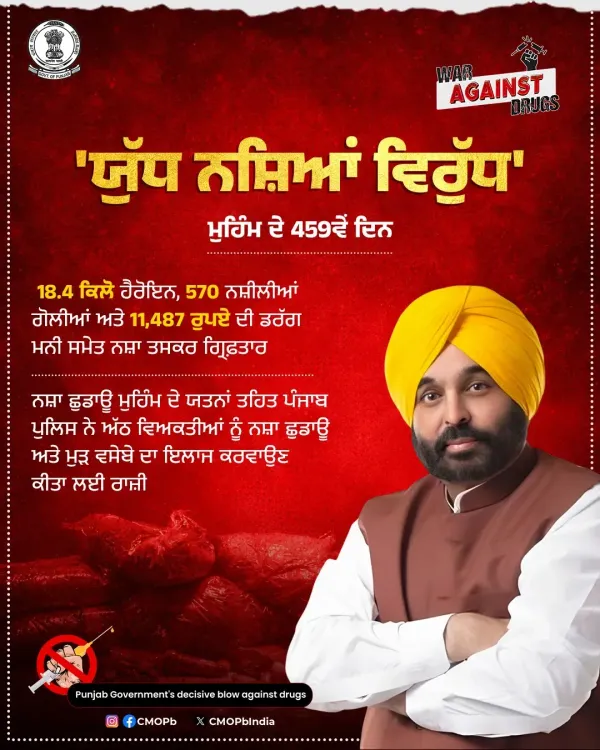
The Chief Minister's Office of Punjab reported that Day 459 of the Yudh Nashian Virudh anti-drug drive yielded 18.4 kg of heroin, 570 intoxicant tablets and ₹11,487 in drug money, pushing the cumulative number of smugglers arrested under the campaign to 66,473.
Key Takeaways
Day 459 of 'Yudh Nashian Virudh' produced a recovery of 18.4 kg heroin , 570 intoxicant tablets and ₹11,487 in drug money.
Cumulative arrests under the campaign have reached 66,473 , per the CMO post.
The drive, launched in 2022 , is the Punjab government's flagship police-led anti-narcotics push.
Daily updates from the CMO form part of a sustained public-communication strategy on enforcement.
Heroin remains the dominant contraband seized, reflecting Punjab's exposure to the Golden Crescent supply route.
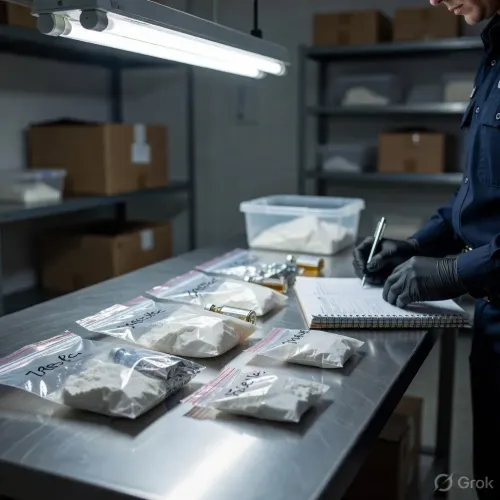
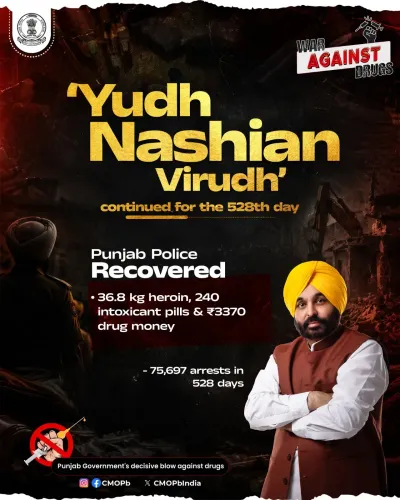
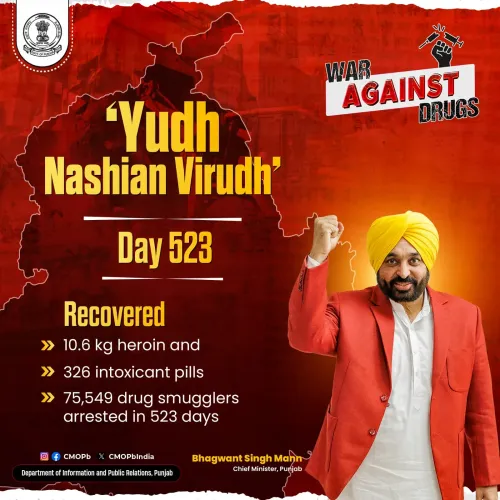
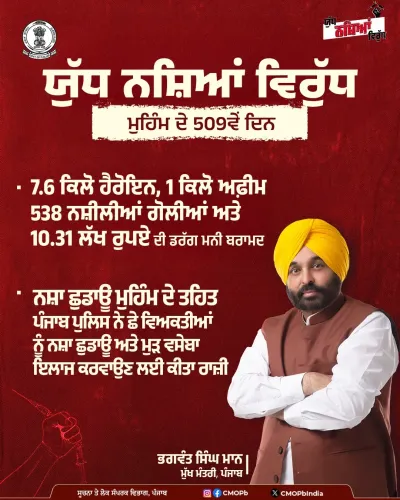
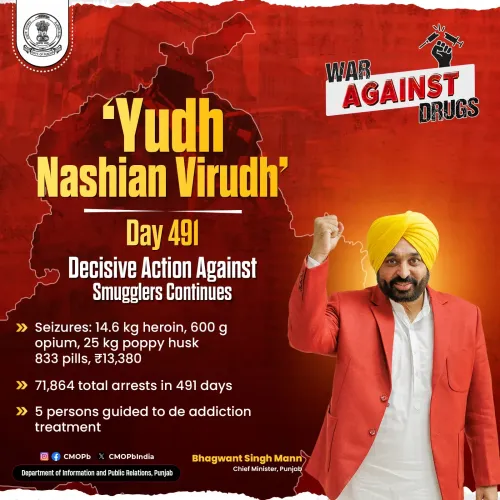
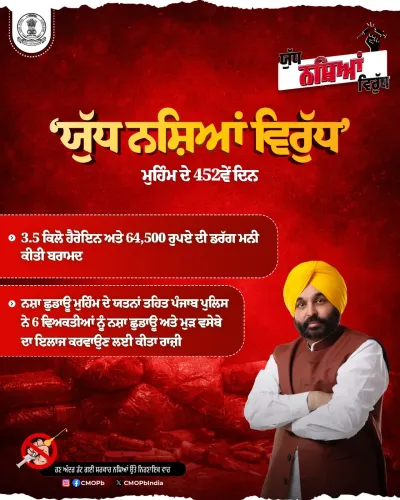
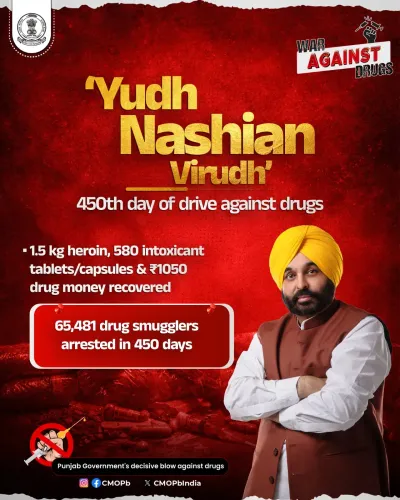
The Chief Minister's Office of Punjab on 4 June 2026 said that Punjab Police teams continued the statewide anti-narcotics drive 'Yudh Nashian Virudh' (War Against Drugs) on its 459th day, arresting drug smugglers and recovering 18.4 kg of heroin, 570 intoxicant tablets and ₹11,487 in drug money. With the latest action, the cumulative number of drug smugglers arrested under the campaign has reached 66,473, according to the post.
Context
In its update, the office stated that 'Police teams have continued its drive against drugs Yudh Nashian Virudh for 459th day,' adding that the recoveries were made from the possession of those arrested. The post was accompanied by the hashtags #ਯੁੱਧ_ਨਸ਼ਿਆਂ_ਵਿਰੁੱਧ (War Against Drugs) and #CMOPunjab, signalling continuity of the daily reporting format that the state government has adopted to publicise enforcement action.
The latest one-day haul is dominated by heroin, the opiate most commonly seized in Punjab due to its proximity to trafficking corridors originating in the wider region. The relatively small quantum of cash recovered, alongside a substantial heroin volume, suggests interdiction at the courier or street-supply layer rather than at a financial hub of the network.
Policy backdrop
The 'Yudh Nashian Virudh' campaign was launched by the Punjab government in 2022 as a sustained, police-led drive aimed at dismantling trafficking networks, seizing contraband and arresting smugglers across the state. It has since become the principal enforcement vehicle through which the government publicly tracks its anti-drug performance.
Punjab, which shares an international border with Pakistan, has for decades reported high volumes of heroin and synthetic-drug movement linked to the Golden Crescent supply route. Successive state administrations have responded with intensive enforcement pushes, but the persistence of inflows has kept narcotics at the centre of the state's political and public-health discourse.
The daily release of arrest and seizure figures forms part of a deliberate public communication strategy. By posting day-by-day numbers, the Chief Minister's Office is signalling that enforcement pressure is being maintained without interruption, and that aggregated outcomes such as the 66,473 arrests figure can be measured against the campaign's running day count.
Stakeholders and impact
The primary targets of the drive remain drug traffickers operating across Punjab's districts, while the principal beneficiary group, as framed by the government, is the state's youth, who have been disproportionately affected by substance abuse. Border districts and urban pockets with documented narcotics activity typically see concentrated enforcement under such campaigns.
For Punjab Police, the daily reporting cycle imposes a continuous operational tempo: station-level teams are expected to feed seizure and arrest data upward each day for consolidation by the state headquarters and onward release through the Chief Minister's Office. The format also creates a public benchmark against which subsequent days' performance is implicitly compared.
Civil-society observers and families of those affected by addiction tend to track such updates alongside parallel demands for de-addiction capacity, rehabilitation infrastructure and prosecution outcomes, which determine whether arrests translate into long-term disruption of supply.
What's next
Attention will turn to periodic consolidated disclosures by the state government on total seizures, prosecution and conviction outcomes under the campaign, as well as any complementary announcements on rehabilitation and de-addiction programmes. The trajectory of daily heroin recoveries in the coming weeks will indicate whether the supply pipeline into Punjab is tightening or merely shifting routes.
As the campaign extends beyond its 459th day, the political durability of 'Yudh Nashian Virudh' will increasingly be judged not only by arrest tallies but by visible reductions in street availability and demand-side indicators across the state.
Point of View
Allowing the Punjab government to project uninterrupted action on a chronic, emotive issue. The headline cumulative figure of 66,473 arrests in 459 days is striking, but its real test lies downstream in conviction rates and supply contraction. With heroin volumes still being seized in kilogram quantities, the campaign's narrative of pressure on traffickers will need to be matched by visible demand-side outcomes. The broader arc fits a pattern seen in border states, where enforcement intensity is consistently high yet structural inflow pressures persist.
NationPress
22 Sept 2026
Frequently Asked Questions
What is the Yudh Nashian Virudh campaign in Punjab?
It is a sustained anti-narcotics enforcement drive run by Punjab Police, launched by the state government in 2022 to target drug smugglers, seizures and trafficking networks across Punjab.
How much heroin was seized on Day 459 of the Punjab drug drive?
Police teams recovered 18.4 kg of heroin, along with 570 intoxicant tablets and ₹11,487 in drug money, according to the Chief Minister's Office of Punjab.
How many drug smugglers have been arrested under Yudh Nashian Virudh?
The Chief Minister's Office of Punjab stated that the cumulative number of drug smugglers arrested under the campaign has reached 66,473 in 459 days.
Why is Punjab a focus of anti-drug operations?
Punjab shares an international border with Pakistan and has long reported high volumes of heroin and synthetic-drug trafficking linked to the Golden Crescent route, prompting successive governments to run intensive enforcement campaigns.
What does the Punjab government plan next on the anti-drug front?
The state is expected to continue daily enforcement updates and may release periodic consolidated figures on seizures, convictions and any complementary rehabilitation or de-addiction initiatives.