Puri Backs Cabinet Nod for NIPU-2026 and Rail Projects
Synopsis
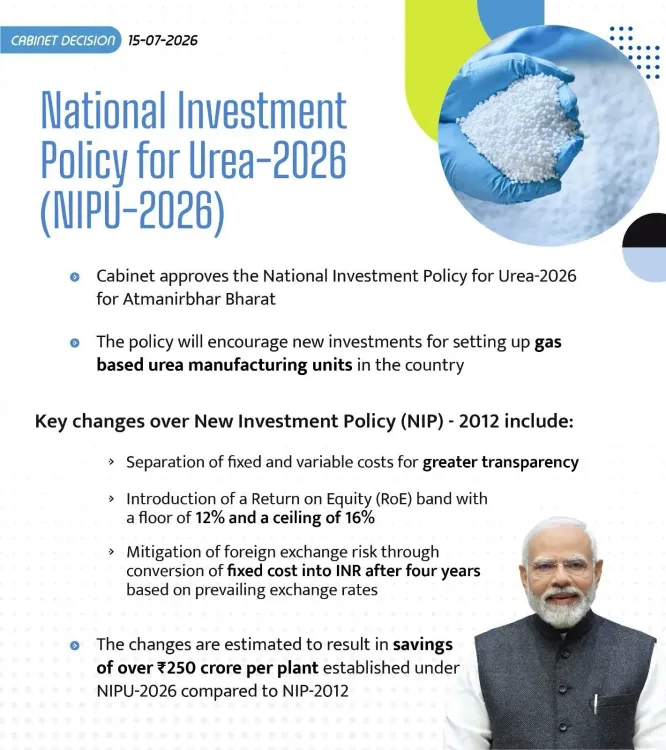
The Union Cabinet chaired by PM Modi approved NIPU-2026 to incentivise new gas-based urea plants and reduce import dependence, alongside two multi-tracking rail projects covering 145 km in Odisha and Jharkhand at a cost of Rs 3,907 crore — decisions Union Petroleum Minister Hardeep Singh Puri described as advancing Atmanirbhar Bharat, farmer welfare and modern infrastructure.
Key Takeaways
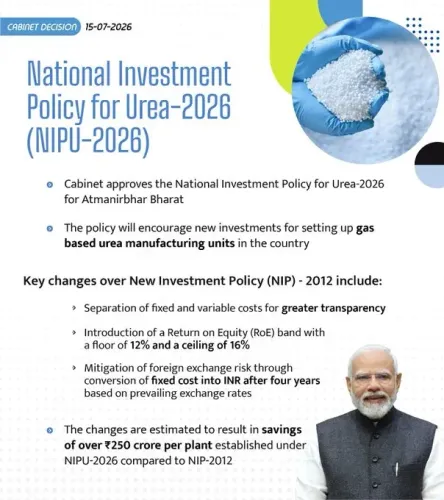
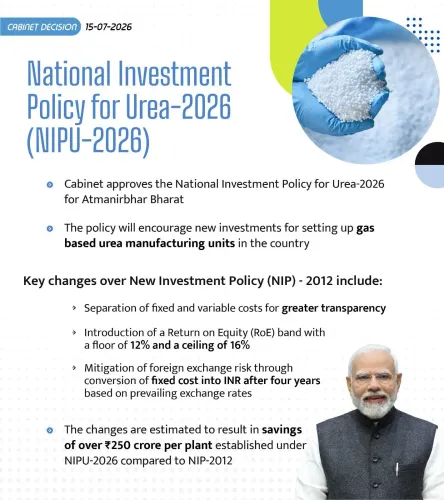
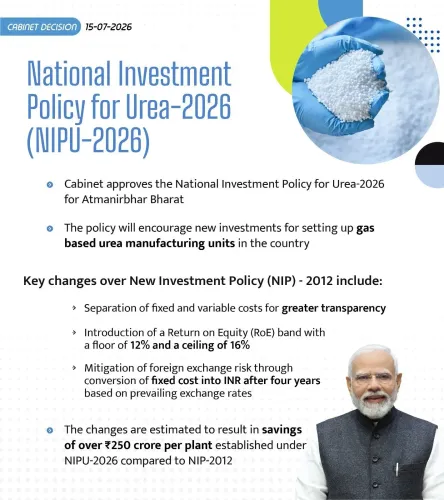
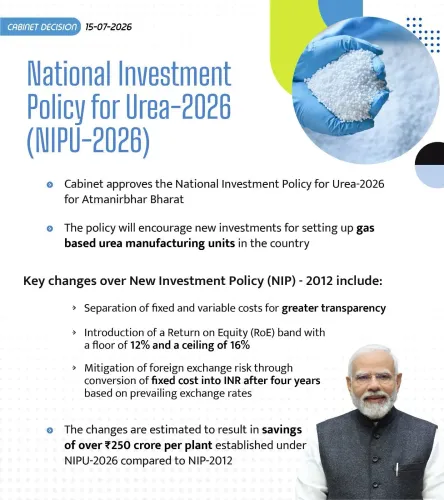
The Union Cabinet chaired by PM Narendra Modi approved the National Urea Investment Policy-2026 (NIPU-2026) on 15 July 2026 .
NIPU-2026 aims to incentivise new gas-based urea plants in India to cut import dependence and stabilise farm input costs.
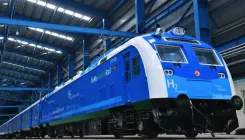
Two multi-tracking rail projects spanning approximately 145 km across four districts in Odisha and Jharkhand were also approved.
The rail projects carry a combined cost of approximately Rs 3,907 crore and will expand freight and passenger capacity in eastern India.
The decisions align with the Atmanirbhar Bharat framework and the PM Gati Shakti multimodal logistics vision.
Union Petroleum Minister Hardeep Singh Puri highlighted the approvals as giving 'new momentum' to farmer welfare and infrastructure development.
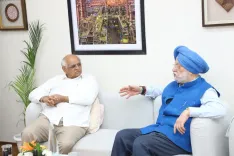
Union Petroleum Minister Hardeep Singh Puri on Wednesday, 15 July 2026 highlighted two major decisions taken by the Union Cabinet chaired by Prime Minister Narendra Modi, covering a new national urea investment policy and two multi-tracking rail projects in eastern India.
Context
Puri posted on X that the Cabinet decisions were aimed at giving 'new momentum to Atmanirbhar Bharat, farmer welfare and modern infrastructure' (aatmanirbhar Bharat, kisaan kalyaan aur aadhunik buniyaadi dhaanche ko nayi gati). The twin approvals span the fertilizer and railway sectors, two areas the government has repeatedly identified as critical to rural economic growth and industrial logistics.
Policy Backdrop
The Cabinet approved the National Urea Investment Policy-2026 (NIPU-2026), which is designed to incentivise the establishment of new gas-based urea plants within the country. The policy builds on a lineage that includes the New Urea Policy 2015, which sought to revive closed plants and attract fresh domestic manufacturing capacity, and the Atmanirbhar Bharat package of 2020, which explicitly targeted a reduction in import dependence across fertilizers and other strategic sectors. Domestic production currently meets roughly 70 per cent of India's urea demand, with imports filling the remaining gap — a structural vulnerability the new policy seeks to address.
On the infrastructure side, the Cabinet cleared two multi-tracking rail projects spanning approximately 145 kilometres across four districts in Odisha and Jharkhand, at a combined cost of approximately Rs 3,907 crore. Multi-tracking — the addition of parallel rail lines on existing corridors — is a priority under the National Infrastructure Pipeline launched in 2019, which specifically identified eastern mineral-bearing states as needing expanded rail capacity.
Stakeholders and Impact
For farmers, NIPU-2026 carries a direct implication: greater domestic urea output is expected to stabilise agricultural input costs and reduce the government's fertilizer subsidy burden, which has remained elevated due to global price volatility and import dependence. Puri noted that the policy would help 'stabilise agricultural costs and enhance the productivity of farmers' (krishi laagat ko sthir rakhne aur annadata ki utpaadakta badhane mein mahatvapurna madad milegi).
For Odisha and Jharkhand, the rail projects are expected to accelerate freight movement — particularly of coal, minerals and agricultural produce — while also improving passenger connectivity. The expansion aligns with the PM Gati Shakti multimodal logistics vision, which seeks to integrate road, rail and waterway networks to reduce logistics costs for industry and consumers alike. Residents of the four districts covered by the corridors stand to benefit from faster and more reliable train services.
What's Next
For NIPU-2026, the immediate milestones to watch are the issuance of expressions of interest or formal bids inviting private and public sector investment in new gas-based urea manufacturing facilities. The detailed financial architecture of the policy — including incentive structures and production-linked provisions — is expected to be published by the Ministry of Chemicals and Fertilizers in the coming weeks.
For the rail projects, the next steps involve publication of detailed project reports, land acquisition proceedings in the four districts, and the award of civil contracts by Indian Railways. Completion timelines and the precise alignment of the two corridors will be key disclosures that determine how quickly the promised economic benefits materialise for the region. If executed on schedule, the projects would mark a significant addition to eastern India's freight and passenger rail infrastructure.
Point of View
States rich in minerals and coal that are central to India's industrial freight calculus. Together, the decisions reinforce the government's Atmanirbhar Bharat narrative at a moment when domestic manufacturing and logistics capacity are being positioned as pillars of long-term economic resilience.
NationPress
15 Jul 2026
Frequently Asked Questions
What is NIPU-2026 and what does it do?
NIPU-2026, or the National Urea Investment Policy-2026, is a policy approved by the Union Cabinet to incentivise the establishment of new gas-based urea manufacturing plants in India, with the goal of increasing domestic production and reducing dependence on imported urea.
How much will the new rail projects in Odisha and Jharkhand cost?
The two multi-tracking rail projects approved by the Cabinet for four districts in Odisha and Jharkhand will cost approximately Rs 3,907 crore and will cover around 145 kilometres of new rail lines.
Why does India need more domestic urea production?
India currently imports roughly 30 per cent of its urea requirement, making it vulnerable to global price swings and adding to the government's fertilizer subsidy bill. Greater domestic capacity through gas-based plants is expected to stabilise farm input costs and reduce this dependence.
What is multi-tracking in railways?
Multi-tracking refers to the construction of additional parallel rail lines alongside existing tracks on a corridor, which increases the number of trains that can run simultaneously, reducing congestion and improving the speed and reliability of both freight and passenger services.
How do these Cabinet decisions relate to Atmanirbhar Bharat?
Both decisions directly advance the Atmanirbhar Bharat vision: NIPU-2026 reduces India's reliance on imported fertilizers, while the rail projects build domestic logistics infrastructure — both are core pillars of the self-reliance framework announced in 2020 .