Puri Hails India's 114-Medal Haul at Asian Para Games 2026
Synopsis
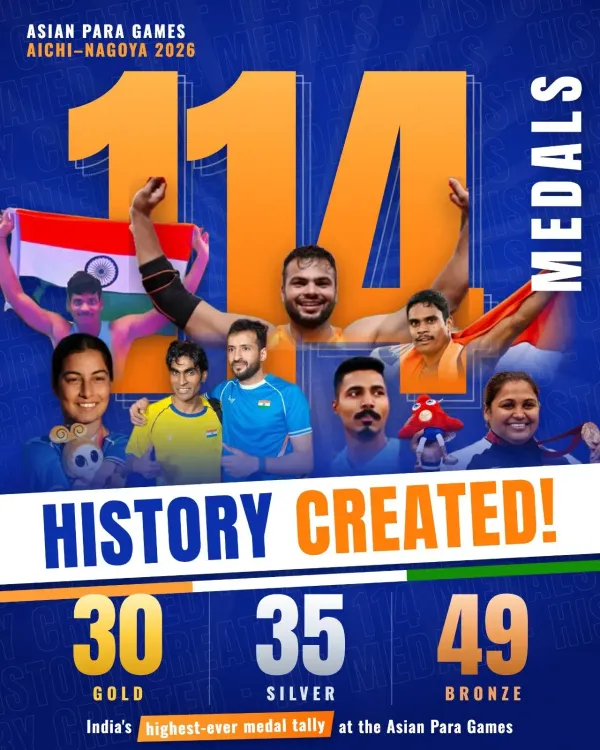
Union Petroleum Minister Hardeep Singh Puri celebrated India's 114-medal haul at the Asian Para Games 2026 in Aichi-Nagoya, calling it proof of an evolving sporting ecosystem and linking the achievement to PM Modi's Viksit Bharat vision and programmes like TOPS and Khelo India.
Key Takeaways
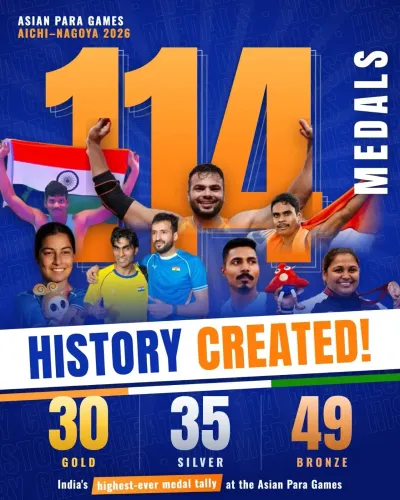
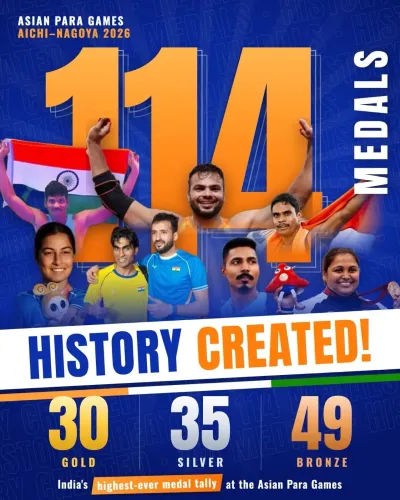
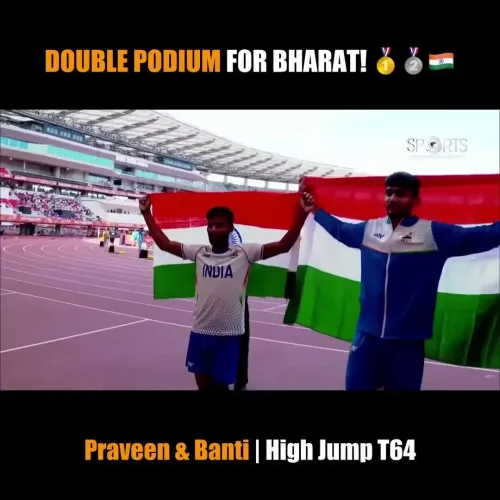
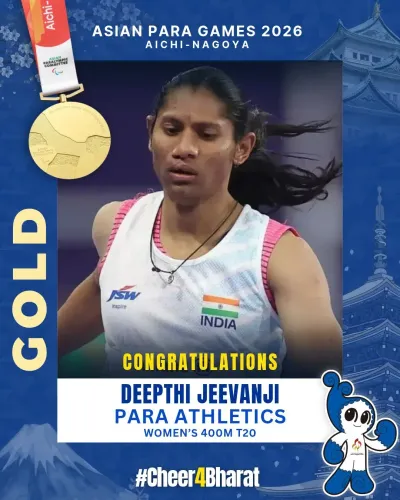
Union Petroleum Minister Hardeep Singh Puri praised India's 114-medal tally at the Asian Para Games 2026 held in Aichi-Nagoya .
Puri described each medal as a story of 'perseverance and aspiration,' highlighting the growth of India's para-sports ecosystem.
He credited Prime Minister Narendra Modi's leadership and linked the result to the #ViksitBharat national development framework.
Government programmes including the Target Olympic Podium Scheme (TOPS) (launched 2014 ) and Khelo India (launched 2017 ) form the policy backbone supporting elite para-athletes.
Puri noted Indian youth are exploring disciplines 'beyond traditional favourites,' reflecting broader diversification in the country's competitive para-sports footprint.
The Paralympic Committee of India and Ministry of Youth Affairs and Sports were both tagged in the post, signalling cross-institutional recognition.
A tally of 114 medals at the Asian Para Games 2026 in Aichi-Nagoya — and Union Petroleum Minister Hardeep Singh Puri wants every Indian to feel the weight of what that number represents. On Saturday, 24 October 2026, Puri took to X to celebrate what he called a 'momentous' achievement, framing each medal as a story of perseverance and aspiration from para athletes who are reshaping India's sporting identity.
114 Medals, One Collective Stride Forward
Puri's post did not just count medals — it contextualised them. 'Every medal in India's momentous Asian Para Games 2026 tally of 114 tells a story of perseverance, and aspiration,' he wrote, pointing to what he described as an evolving sporting ecosystem offering 'greater encouragement, better opportunities and growing support for athletes.' The message was directed at @PCI_IN_Official (the Paralympic Committee of India), the Ministry of Youth Affairs and Sports, and the Petroleum Sports Promotion Board — a signal of cross-institutional pride in the result.
The scale of the haul, if confirmed, would mark a significant benchmark for Indian para sport on the continental stage. India has recorded steady improvement at major multi-sport events over the past decade, driven partly by expanded government infrastructure and elite athlete support programmes.
The Policy Architecture Behind the Podiums
The achievement does not exist in a vacuum. Two central government programmes have quietly reshaped the pipeline for competitive athletes, including para-athletes, over the last decade. The Target Olympic Podium Scheme (TOPS), launched in 2014, provides structured financial and training support to elite competitors. The Khelo India programme, introduced in 2017, targets grassroots participation and talent identification — the very foundation from which a medal tally of this scale is built.
Puri explicitly credited Prime Minister Narendra Modi with providing the leadership framework, tying the result to the government's broader #ViksitBharat — or 'Developed India' — vision. 'India's talented and aspirational youth are powering our journey to the future,' he wrote. It is a formulation the ruling establishment has used consistently: sports success as proof of a national development arc, not merely a scoreboard moment.
Young Indians Crossing Into New Disciplines
One of the sharper observations in Puri's post was about discipline diversity. He noted that young Indians are 'exploring disciplines beyond the traditional favourites' — a pointed reference to the historical concentration of medal hopes in a narrow band of sports. A para-sports haul of this breadth, spanning multiple disciplines at a continental event, suggests that diversification is no longer just aspiration. It is result.
The Paralympic Committee of India has been instrumental in expanding India's competitive footprint across Paralympic-classified events, and the Ministry of Youth Affairs and Sports has increasingly aligned funding cycles with para-sport calendars. With the next Paralympic Games on the horizon, the question now is whether this continental momentum translates to a global podium push — and whether the policy architecture that built this tally gets the expansion it needs to go further.
One hundred and fourteen medals do not happen by accident. The infrastructure is working. The athletes are ready. The only question left is how high India is willing to aim.
Point of View
Even implicitly, the message positions para-sport success as policy validation ahead of the next Paralympic cycle. The emphasis on discipline diversification is also notable — it subtly shifts the frame from India as a narrow-sport medal-hunter to a maturing, broad-based sporting nation. With the Paralympic Games approaching, this kind of high-profile ministerial endorsement is likely to intensify pressure on the government to announce expanded funding or new training infrastructure to sustain the momentum.
NationPress
24 Oct 2026
Frequently Asked Questions
How many medals did India win at the Asian Para Games 2026?
According to Union Petroleum Minister Hardeep Singh Puri's post on 24 October 2026 , India won 114 medals at the Asian Para Games 2026 held in Aichi-Nagoya , Japan.
Where were the Asian Para Games 2026 held?
The Asian Para Games 2026 were held in Aichi-Nagoya , Japan.
What is the Khelo India programme?
The Khelo India programme, launched in 2017 , is a central government initiative aimed at promoting grassroots sports participation and identifying talent across disciplines and regions, including para-sports.
What is the Target Olympic Podium Scheme (TOPS)?
The Target Olympic Podium Scheme (TOPS) , launched in 2014 , provides structured financial and training support to elite Indian athletes — including para-athletes — to help them compete and medal at major international events.
What is Viksit Bharat and how is it linked to India's sports performance?
Viksit Bharat , meaning 'Developed India,' is PM Modi's overarching national vision for comprehensive development by 2047. The government frequently links sports achievements to this framework, positioning youth athletic success as evidence of inclusive national progress.