Puri flags Hormuz crisis resilience, unveils energy infra push
Synopsis
Union Petroleum Minister Hardeep Singh Puri, in a November 15 post, highlighted India's resilience during the Hormuz crisis and unveiled three Karnataka energy projects: an 80,000 MT underground LPG storage in Mangaluru, a 77,000 KL terminal at Devanagundi, and a 12.6-tonne daily CBG plant in Bengaluru.
Key Takeaways
Hardeep Singh Puri posted on November 15, 2026 crediting India's energy preparedness during the Strait of Hormuz crisis to a decade of infrastructure investment under PM Narendra Modi .
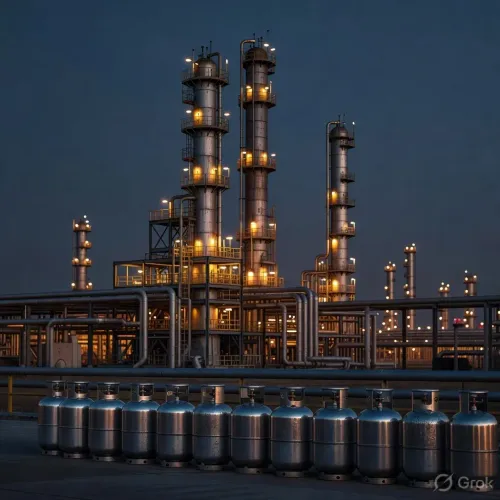
An 80,000 metric tonne underground LPG storage facility in Mangaluru is among the flagship projects highlighted.
A modern marketing terminal at Devanagundi with 77,000 KL capacity is set to strengthen downstream fuel distribution in southern India.
A Compressed Biogas (CBG) plant in Bengaluru will produce 12.6 tonnes of biogas per day , advancing the government's SATAT clean-energy scheme.
India's energy strategy combines conventional strategic petroleum reserves with renewable alternatives to reduce vulnerability to Middle East supply disruptions.
All three projects are located in Karnataka , reinforcing the state's role as a hub for India's integrated energy infrastructure.
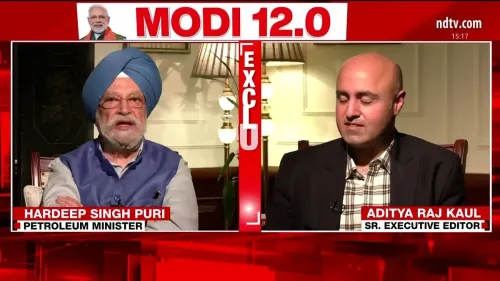
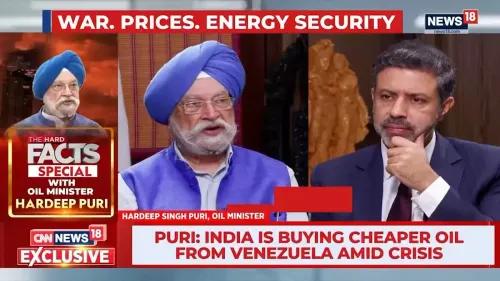
When the Strait of Hormuz tightened its grip on global oil flows, India did not flinch — and Union Petroleum Minister Hardeep Singh Puri wants the country to know exactly why. In a post on X on Sunday, November 15, 2026, Puri laid out a sweeping argument for India's energy preparedness, anchoring it in three major new infrastructure projects across Karnataka.
Puri's post, in Hindi, frames energy security as 'not merely about meeting today's needs, but a resolve to prepare the country in advance for the challenges ahead.' He credits Prime Minister Narendra Modi's 'visionary leadership' over the past decade for building the strategic muscle — energy infrastructure, storage capacity, and diversified sourcing — that allowed India to hold steady while other nations scrambled during the Hormuz crisis.
Three Karnataka projects at the centre of the announcement
The minister specifically highlights three initiatives. First, an 80,000 metric tonne underground LPG storage facility in Mangaluru — a coastal city that already anchors significant petroleum infrastructure on India's southwestern shore. Second, a modern marketing terminal at Devanagundi with a capacity of 77,000 kilolitres, designed to sharpen downstream distribution. Third, a Compressed Biogas (CBG) plant in Bengaluru capable of producing 12.6 tonnes of biogas per day — squarely in the clean-energy lane.
Together, Puri argues, these projects will make India's energy supply 'more secure, reliable, and sustainable' while giving fresh momentum to the country's clean energy future.
The Hormuz backdrop and India's strategic reserves logic
The Strait of Hormuz is the world's single most critical oil transit chokepoint — roughly 20 percent of global petroleum passes through it. Periodic tensions there, whether military or diplomatic, send tremors through energy markets worldwide. India, as one of the world's largest oil importers, has long been exposed to exactly this vulnerability.
India's response, built over the last decade, has been a layered one: underground Strategic Petroleum Reserves expanded through the 2010s to cushion against sudden supply cuts, combined with active diversification of crude import sources away from an over-reliance on any single region. The underground LPG storage at Mangaluru fits directly into this logic — keeping strategic stocks literally buried and insulated from above-ground disruptions.
The CBG thread: SATAT and the clean energy pivot
The Bengaluru biogas plant connects to a longer policy thread. The government's SATAT scheme — Sustainable Alternative Towards Affordable Transportation — was launched in 2018 to build a network of CBG plants that convert agricultural and municipal waste into compressed biogas for transport and industrial use. The Bengaluru plant's daily output of 12.6 tonnes represents both a local clean-energy asset and a proof-of-concept for scaling the model nationally.
The dual emphasis in Puri's post — conventional strategic storage alongside renewable biogas — reflects the broader balancing act India is performing: protecting hydrocarbon supply chains in the near term while building the infrastructure for a lower-carbon energy future.
Karnataka as India's energy infrastructure laboratory
That all three projects are located in Karnataka is itself notable. The state's geography — coastal access through Mangaluru, logistics connectivity through Bengaluru — makes it a natural testbed for integrated energy infrastructure. Mangaluru's port already serves as a critical node for petroleum imports; adding underground LPG storage deepens that strategic value considerably. The Devanagundi terminal, meanwhile, positions the region as a stronger distribution hub for southern India's fuel supply chain.
India is not just building storage. It is building the architecture of a country that intends to absorb the next global energy shock — whatever shape it takes — without breaking stride.
Point of View
Using real infrastructure milestones to build a narrative of strategic foresight ahead of what could be an upcoming policy review or budget cycle. The invocation of the Hormuz crisis as a stress-test India passed positions the Modi government's energy doctrine as battle-proven rather than theoretical. The simultaneous emphasis on fossil-fuel storage and clean biogas production signals that the government is managing two audiences at once: energy-security hawks and clean-transition advocates. If the three Karnataka projects are operationalised on schedule, they will constitute tangible evidence for that dual narrative — and Puri is clearly keen to get ahead of the story.
NationPress
15 Nov 2026
Frequently Asked Questions
What did Hardeep Singh Puri announce about energy infrastructure in November 2026?
Union Petroleum Minister Hardeep Singh Puri highlighted three new Karnataka-based energy infrastructure projects: an 80,000 metric tonne underground LPG storage facility in Mangaluru, a 77,000 KL marketing terminal at Devanagundi, and a 12.6-tonne-per-day Compressed Biogas plant in Bengaluru, citing them as pillars of India's energy security strategy.
How did India manage energy supply during the Strait of Hormuz crisis?
According to Minister Puri, India's advance preparation — including strategic storage capacity, diversified energy sources, and upgraded infrastructure built over the past decade — allowed the country to maintain stable energy supplies while other nations faced serious shortfalls during the Hormuz crisis.
What is the underground LPG storage facility in Mangaluru?
It is an 80,000 metric tonne capacity underground LPG storage centre in Mangaluru, Karnataka, designed to bolster India's strategic energy reserves and ensure supply resilience against global disruptions.
What is India's SATAT scheme and how does the Bengaluru CBG plant relate to it?
SATAT — Sustainable Alternative Towards Affordable Transportation — is a government scheme launched in 2018 to promote Compressed Biogas plants that convert waste into clean fuel. The Bengaluru CBG plant, producing 12.6 tonnes of biogas daily, is part of this national clean-energy push.
Why is Karnataka central to India's energy infrastructure expansion?
Karnataka combines coastal access through Mangaluru — a major petroleum import node — with the logistics connectivity of Bengaluru, making it a strategic location for integrating storage, distribution, and clean-energy production into a single regional energy hub.