Puri honours Azad Hind Fauj on its founding anniversary
Synopsis
Union Petroleum Minister Hardeep Singh Puri marked the 83rd anniversary of the Azad Hind Fauj's founding on 21 October 2026, saluting Netaji Subhas Chandra Bose and INA soldiers for inspiring India's freedom struggle with 'new courage and a new direction.'
Key Takeaways
Union Petroleum Minister Hardeep Singh Puri posted a Hindi tribute to the Azad Hind Fauj on 21 October 2026 .
The day marks the 83rd anniversary of Netaji Subhas Chandra Bose's proclamation of the Provisional Government of Azad Hind in Singapore in 1943 .
Puri credited the INA with giving the independence movement 'new courage, new energy, and a new direction for struggle.' He emphasised that the soldiers' sacrifice established dedication to national honour as the supreme virtue.
The 21 October commemoration is a standing feature of India's official calendar, observed by ministers across administrations.
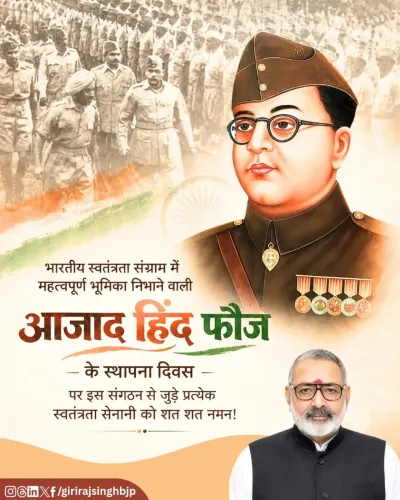
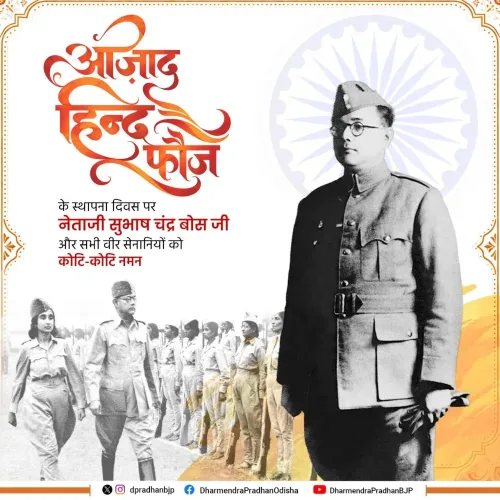
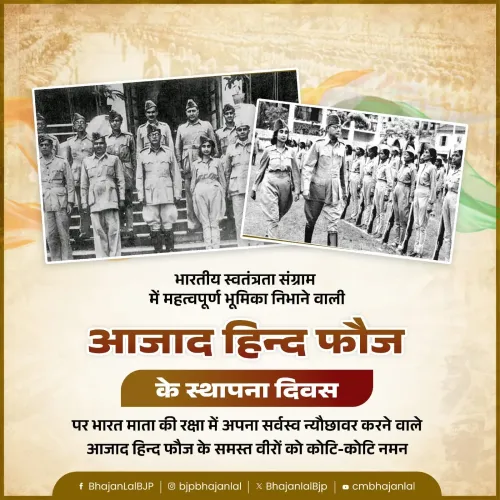
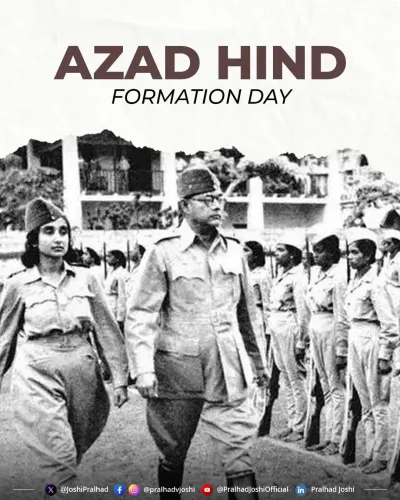
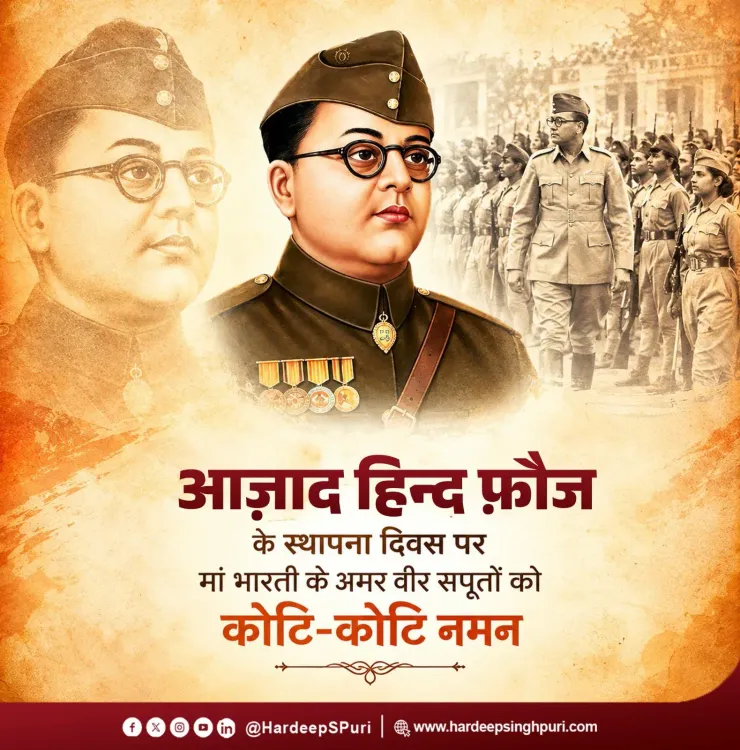
On the 83rd founding anniversary of the Azad Hind government, Union Petroleum Minister Hardeep Singh Puri paid tribute to the soldiers of the Indian National Army (INA), honouring their sacrifice and the indomitable spirit that redefined India's freedom struggle on 21 October 2026.
Posting in Hindi, Puri wrote: 'आजाद हिन्द फौज के स्थापना दिवस पर माँ भारती के वीर सपूतों को कोटि-कोटि नमन' — 'On the founding day of the Azad Hind Fauj, a million salutes to the brave sons of Mother India.' He invoked the legacy of Netaji Subhas Chandra Bose, crediting the INA with giving the independence movement 'new courage, new energy, and a new direction for struggle.'
The day Azad Hind was born — and why it still resonates
On 21 October 1943, Netaji proclaimed the Provisional Government of Azad Hind in Singapore, reorganising the Indian National Army into a disciplined fighting force drawn from Indian prisoners of war and the Indian diaspora across Southeast Asia. The declaration was an audacious act of defiance — a government-in-exile challenging the mightiest colonial empire of the 20th century. It gave the freedom struggle a new theatre, a new urgency, and a rallying cry — Jai Hind — that independent India would eventually adopt as its own.
Puri's tribute captured that dimension directly: 'Their lives teach us that dedication to the honour and freedom of the nation is paramount. The tale of their sacrifice and valour will remain immortal in India's history. Jai Hind!'
A standing date on the government's commemoration calendar
The 21 October anniversary has become a fixed point in India's official memory-keeping. Senior ministers and constitutional functionaries routinely mark the day with statements, wreath-laying, and archival events. The consistency of these tributes across successive administrations reflects a broader consensus: that the INA's armed resistance, long seen as a counterpoint to the mainstream non-violent movement, deserves equal standing in the national narrative. Puri's post is part of that continuing exercise in historical reclamation.
For the millions of families with ancestral ties to INA veterans — many from the Indian communities of Southeast Asia, Myanmar, and the Andaman Islands — the day carries a personal weight that no government resolution can fully capture. The soldiers Puri salutes fought, and often died, holding a vision of India they never lived to see.
Point of View
This commemorative practice has shifted the INA from a contested historical footnote to a celebrated mainstream symbol. The annual 21 October statements are, in this sense, as much a historiographical assertion as they are a ritual of remembrance.
NationPress
21 Oct 2026
Frequently Asked Questions
When was the Azad Hind Fauj founded?
The Provisional Government of Azad Hind was proclaimed by Netaji Subhas Chandra Bose on 21 October 1943 in Singapore, reorganising the Indian National Army under his direct command.
Why is 21 October significant for India?
21 October is observed as Azad Hind Fauj Sthapna Diwas (INA Founding Day), commemorating Netaji's proclamation of the government-in-exile that sought to liberate India from British rule through armed struggle.
Who was Netaji Subhas Chandra Bose?
Netaji Subhas Chandra Bose was a prominent Indian nationalist leader who led the Indian National Army and established the Provisional Government of Azad Hind in 1943, seeking to end British colonial rule through military means.
What did the Indian National Army fight for?
The Indian National Army (INA) , also called the Azad Hind Fauj , was composed largely of Indian prisoners of war and expatriates in Southeast Asia who fought to end British colonial rule in India during World War II.
What did Hardeep Singh Puri say about Azad Hind Fauj?
Union Petroleum Minister Hardeep Singh Puri credited the INA with giving India's freedom struggle 'new courage, new energy, and a new direction,' and said the soldiers' sacrifice will remain 'immortal in India's history.'