Puri Inaugurates ETM-2026, Lays Out India's Energy Security Gains
Synopsis
Union Petroleum Minister Hardeep Singh Puri inaugurated the 29th Energy Technology and Innovation Meet in Goa, outlining a decade of infrastructure gains — from 41-country crude sourcing to doubled fuel outlets — and flagging Samudra Manthan, E20 and GOBARdhan as India's next energy-security push.
Key Takeaways
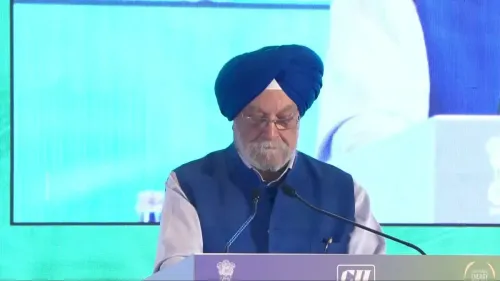
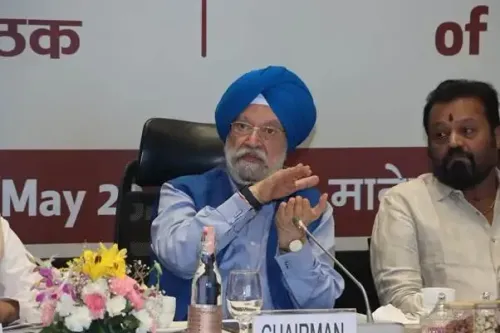
Puri inaugurated ETM-2026 in Goa on 27 October 2026 , addressing energy-sector leaders and industry captains.
India diversified crude sourcing from 27 to 41 countries and built 5.33 MT of strategic petroleum reserves over the past decade.
Refining capacity rose from 215 MMTPA to 267 MMTPA ; fuel outlets more than doubled from ~52,000 to over 100,000 .
Samudra Manthan opens nearly 1 million sq. km of previously 'No-Go' offshore areas for hydrocarbon exploration to cut import dependence.
E20 ethanol blending is reducing import bills while boosting farmer income; GOBARdhan converts organic waste into Compressed Biogas for rural energy.
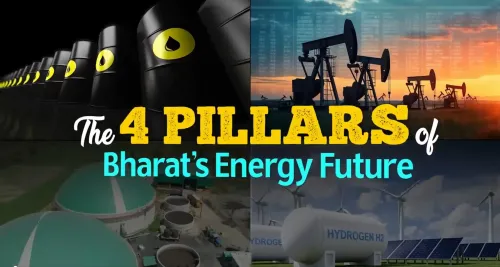
Puri stressed India's multi-pathway energy doctrine: secure, affordable, diversified and increasingly sustainable — not a single-fuel transition.
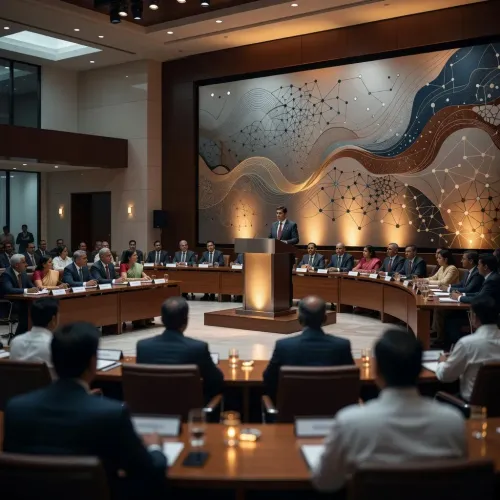
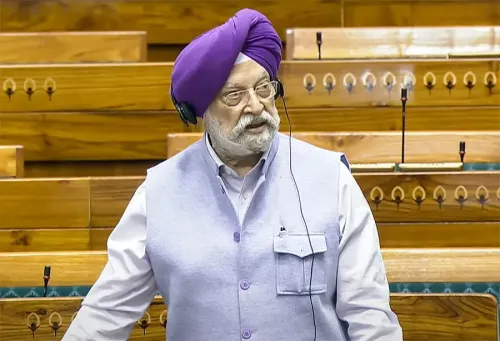
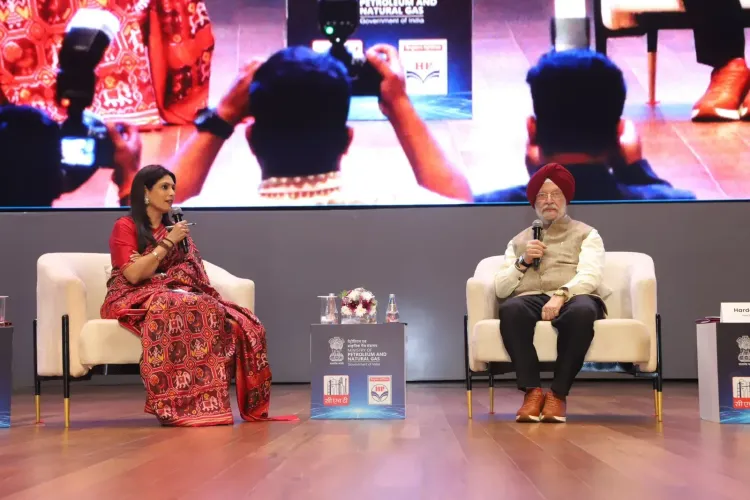
When global supply chains buckled and energy prices went haywire, Indian petrol pumps kept flowing and LPG cylinders kept arriving — and Union Petroleum Minister Hardeep Singh Puri used the inauguration of the 29th Energy Technology and Innovation Meet (ETM-2026) in Goa on Tuesday, 27 October 2026 to explain exactly how India pulled that off.
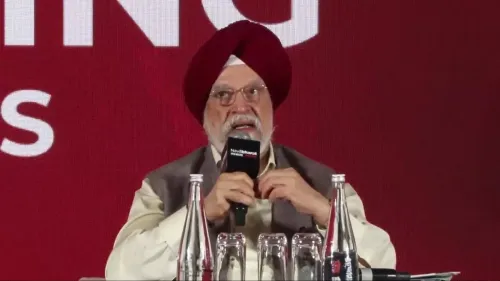
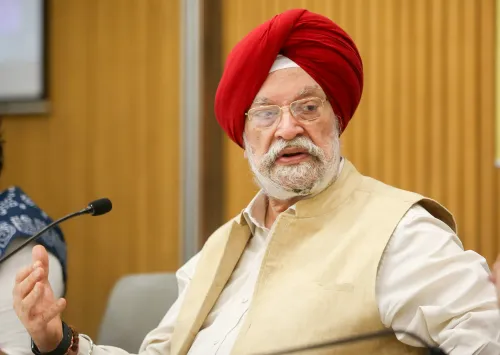
Addressing a large gathering of industry leaders and energy-sector professionals, Puri reframed what energy security actually demands in the current era. 'Energy security today is not simply about securing supplies; it is also about navigating conflicts, chokepoints, volatile prices and sudden disruptions while keeping the country and its economy on the move,' he said, setting the tone for a data-heavy account of a decade's worth of preparation.
A Decade of Diversification — the Numbers Behind the Resilience
The minister presented a series of infrastructure milestones attributing India's ability to absorb recent shocks. Crude sourcing was widened from 27 to 41 countries, giving India the flexibility to pivot away from disrupted sources without missing a beat. Strategic petroleum reserves were built up to 5.33 million tonnes, providing a physical buffer against import outages.
On the supply side, refining capacity climbed from 215 MMTPA to 267 MMTPA, while fuel retail outlets more than doubled from roughly 52,000 to over 100,000. LPG import terminals expanded from 11 to 22, and domestic LPG production jumped from around 34,000 tonnes a day to 55,000 tonnes a day. The combined effect, Puri argued, was that 'Indian energy consumers remained fully insulated' even as other economies lurched through price shocks and shortages.
Samudra Manthan: Unlocking India's Offshore Frontier
The headline forward-looking initiative at ETM-2026 was Samudra Manthan, the government's push to crack open India's offshore hydrocarbon potential. The scheme opens nearly 1 million sq. km of previously designated 'No-Go' areas for exploration — a significant reset of the regulatory map that had kept large swathes of Indian waters off-limits to drilling. Puri positioned it as a direct lever to cut import dependence by strengthening domestic exploration and production.
The move builds on a decade-long policy of treating the upstream sector as a strategic asset rather than a revenue afterthought. Bidding outcomes and block-award timelines under Samudra Manthan will be the key metrics to watch as the initiative moves from announcement to implementation.
E20, GOBARdhan, and the 'Annadata se Urjadata' Vision
Beyond conventional hydrocarbons, Puri pointed to two schemes doing double duty on energy and rural welfare. The E20 ethanol blending programme — blending 20 per cent ethanol into petrol — is simultaneously trimming the import bill and channelling additional income to farmers who supply the feedstock. The arithmetic of replacing crude with domestically grown sugarcane and grain is squarely embedded in India's energy-security calculus.
The GOBARdhan scheme, launched in 2018, converts agricultural residue and organic waste into Compressed Biogas (CBG), advancing what Puri described as the vision of 'Annadata se Urjadata' — 'from food-giver to energy-giver'. Rural livelihoods, waste management, and import substitution converge in a single scheme, reflecting the multi-vector philosophy the minister articulated: for a country of India's scale, energy security 'means building an energy system that is secure, affordable, diversified and increasingly sustainable.'
One System, Many Fuels — The Strategic Philosophy
Perhaps the most pointed line in Puri's address was a direct pushback against energy-transition absolutism. 'Success cannot mean choosing one fuel, one technology or one pathway,' he said — a pointed rebuttal to narratives that frame the energy transition as a binary choice between fossil fuels and renewables. India, he made clear, intends to hold all its options simultaneously: expanded conventional capacity, strategic reserves, offshore exploration, biofuels, and eventually green fuels.
It is a doctrine forged in the volatility of the past few years — and ETM-2026 was its most comprehensive public audit yet. Whether the offshore blocks of Samudra Manthan translate into flowing barrels will ultimately determine whether that doctrine holds.
Point of View
Not merely a consumer — a politically potent framing ahead of any electoral cycle. Execution risk on offshore exploration timelines and CBG plant scale-up will test whether the doctrine translates from the podium to the pump.
NationPress
27 Oct 2026
Frequently Asked Questions
What is ETM-2026 and where was it held?
ETM-2026 is the 29th Energy Technology and Innovation Meet, inaugurated by Union Petroleum Minister Hardeep Singh Puri in Goa on 27 October 2026. It brings together industry leaders and professionals from India's energy sector to discuss technology, innovation, and policy.
What is Samudra Manthan scheme in India?
Samudra Manthan is a government initiative to expand offshore hydrocarbon exploration in India by opening nearly 1 million sq. km of previously designated 'No-Go' areas. It aims to strengthen domestic exploration and production and reduce India's dependence on energy imports.
How has India diversified its crude oil imports?
According to Minister Puri, India expanded its crude oil sourcing from 27 countries to 41 countries over the past decade, giving it greater flexibility to manage global supply disruptions and price shocks.
What is the GOBARdhan scheme?
GOBARdhan is a central government scheme launched in 2018 that converts agricultural residue, cattle dung, and organic waste into Compressed Biogas (CBG). It aims to support rural livelihoods, promote waste-to-wealth initiatives, and advance energy self-reliance — encapsulated in the phrase 'Annadata se Urjadata' (from food-giver to energy-giver).
What is E20 ethanol blending and how does it help India?
E20 refers to blending 20 per cent ethanol into petrol. The programme helps reduce India's crude oil import bill by substituting domestically produced ethanol, while also providing additional income to farmers who supply the sugarcane and grain feedstock.