Puri Inaugurates Light-and-Sound Show at Kapilvastu
Synopsis
Union Petroleum Minister Hardeep Singh Puri inaugurated a light-and-sound show at Kapilvastu in Siddharthnagar on 1 August 2026, bringing Buddha's early life journey to life for pilgrims and tourists as part of India's sustained Buddhist Circuit development and soft-power strategy.
Key Takeaways
Hardeep Singh Puri inaugurated a light-and-sound show at Kapilvastu, Siddharthnagar on 1 August 2026 .
The show narrates Gautam Buddha's early life at the ancient Shakya capital before his Great Renunciation.
Lok Sabha MP Jagdambika Pal , the Bhikshu Sangha , and Siddharth University leadership were present at the inauguration.
The initiative is part of the Swadesh Darshan Buddhist Circuit framework active since 2014-15 .
The project aims to attract international pilgrims and advance India's cultural diplomacy with Buddhist-majority nations.
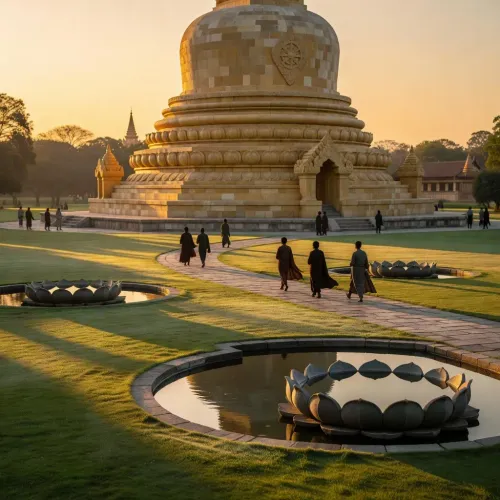
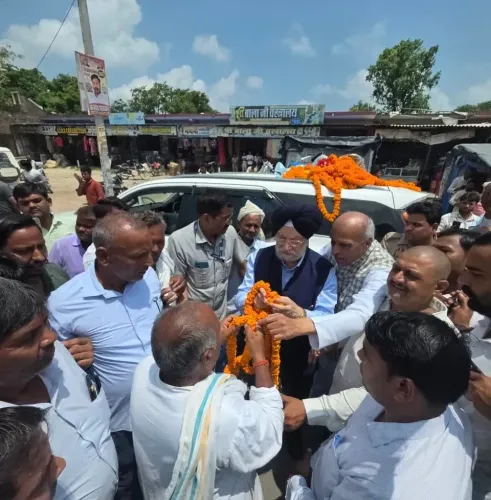
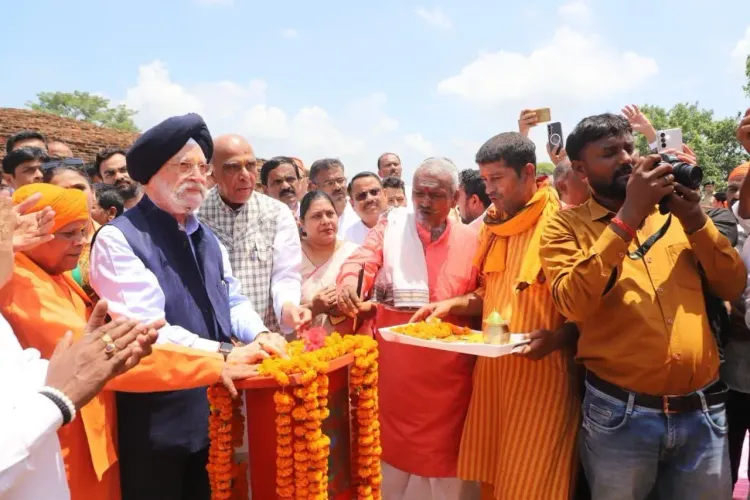
On the sacred soil where Siddhartha once walked before he became the Buddha, Union Petroleum Minister Hardeep Singh Puri inaugurated a new light-and-sound show at Kapilvastu, Siddharthnagar, on Saturday, 1 August 2026 — bringing to life the earliest chapter of one of humanity's most consequential spiritual journeys.
Puri opened the event with the invocation 'Buddham Sharanam Gachchhami' ('I take refuge in the Buddha'), setting the tone for what he described as a landmark moment in connecting India's Buddhist heritage to the world. 'Through this show, pilgrims visiting Siddharthnagar can experience that early life journey of Lord Buddha — when he left Kapilvastu and gave humanity the immortal teachings of compassion and peace,' he said in his post.
What the Show Brings to Kapilvastu
The production is designed to animate the formative arc of Gautam Buddha's story at its geographic source. Kapilvastu — the ancient Shakya capital in Siddharthnagar district, Uttar Pradesh — is where the young prince Siddhartha lived before his Great Renunciation, making it the logical and emotional starting point for any immersive retelling of his life. A show rooted here, rather than at Bodh Gaya or Sarnath, gives pilgrims something rare: the beginning of the story, not just its peak.
Present at the inauguration were members of the Bhikshu Sangha (the Buddhist monastic community), Lok Sabha MP Jagdambika Pal, the Vice-Chancellor and faculty of Siddharth University, and residents of Siddharthnagar — a gathering that underlined both the civic and the spiritual weight of the occasion.
Buddhist Circuit as Soft-Power Strategy
This inauguration sits inside a deliberate, long-running policy frame. Since the Swadesh Darshan scheme identified the Buddhist Circuit as a thematic tourism priority from 2014-15, successive central governments have channelled infrastructure investment into Uttar Pradesh's Buddhist sites — interpretation centres, connectivity upgrades, and experiential installations at Kapilvastu, Sarnath, and Kushinagar. The logic is twin-tracked: deepen inbound pilgrimage tourism and sharpen India's cultural diplomacy with Buddhist-majority nations across Southeast and East Asia.
A light-and-sound show is a particularly effective tool in that kit — it converts an archaeological site into a living narrative, accessible to international visitors who may not read Sanskrit inscriptions but will feel the story told in light and music.
Siddharthnagar's Emerging Place on the Pilgrim Map
For Siddharthnagar, a district bordering Nepal that has long sat in the shadow of better-known Buddhist destinations, the show represents a meaningful upgrade in visitor experience and, potentially, in economic footfall. Puri expressed confidence that the initiative would serve as 'a powerful medium to take our rich Buddhist heritage effectively to the new generation and the global community.'
The next step to watch: whether state-central coordination produces further pilgrim-facilitation agreements — particularly with Nepal, Sri Lanka, Thailand, Japan, and South Korea — that route international Buddhist tourists through Kapilvastu as a first stop on the circuit, not an afterthought.
Point of View
New Delhi signals that the Buddhist Circuit carries diplomatic weight, not just tourism revenue. The presence of the Bhikshu Sangha alongside a BJP heavyweight also reflects a deliberate optics choice — anchoring the event in religious authenticity rather than purely political branding. Whether Siddharthnagar can convert this experiential upgrade into sustained international pilgrim footfall will depend on connectivity and facilitation agreements that the show alone cannot deliver.
NationPress
1 Aug 2026
Frequently Asked Questions
What is the light-and-sound show at Kapilvastu about?
The show narrates the early life of Gautam Buddha at Kapilvastu — the ancient Shakya capital in Siddharthnagar, Uttar Pradesh — depicting his journey from the city before he renounced worldly life and went on to teach compassion and peace to humanity.
Who inaugurated the Kapilvastu light-and-sound show?
Union Petroleum Minister Hardeep Singh Puri inaugurated the show on 1 August 2026 in Siddharthnagar, Uttar Pradesh.
Where is Kapilvastu located?
Kapilvastu is located in Siddharthnagar district, Uttar Pradesh, bordering Nepal. It is identified as the ancient capital of the Shakya clan and is closely associated with Gautam Buddha's early life.
What is the Swadesh Darshan Buddhist Circuit?
The Swadesh Darshan scheme, launched in 2014-15, identified the Buddhist Circuit — covering sites such as Kapilvastu, Sarnath, and Kushinagar in Uttar Pradesh — as a priority for thematic tourism infrastructure development to boost pilgrimage tourism and cultural diplomacy.
Who else attended the Kapilvastu show inauguration?
The inauguration was attended by members of the Bhikshu Sangha (Buddhist monastic community), Lok Sabha MP Jagdambika Pal, the Vice-Chancellor and faculty of Siddharth University, and residents of Siddharthnagar.