Puri Meets Iran Petroleum Minister at BRICS Energy Talks
Synopsis
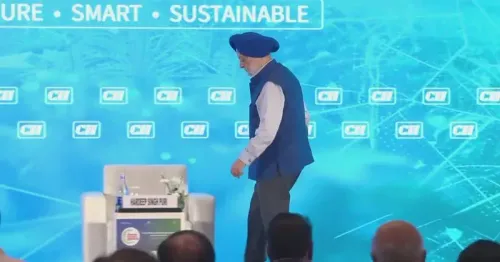
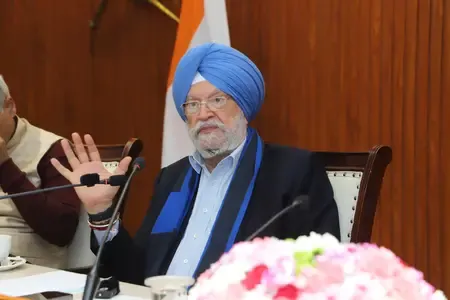
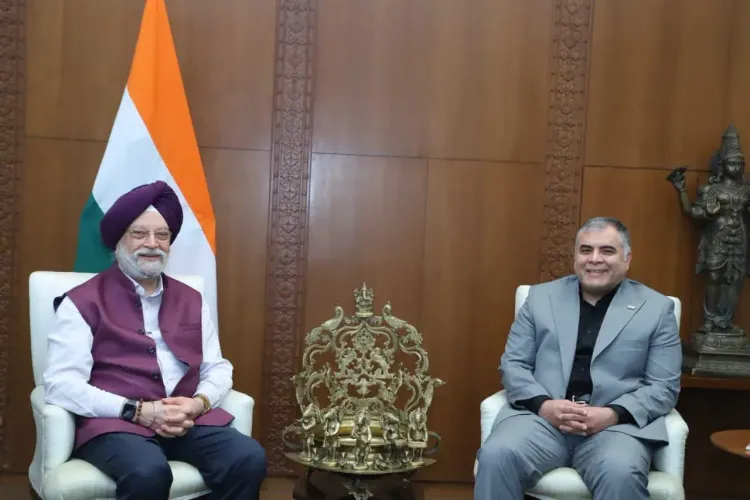
Union Petroleum Minister Hardeep Singh Puri met Iran's Petroleum Minister Mohsen Paknejad on the sidelines of the BRICS Energy Ministers' Meeting on 25 June 2026, signalling India's intent to explore renewed energy cooperation with Tehran through multilateral diplomacy.
Key Takeaways
Hardeep Singh Puri met Iran's Petroleum Minister Mohsen Paknejad on 25 June 2026 at the BRICS Energy Ministers' Meeting .
The two sides explored opportunities for cooperation in the energy sector.
India reaffirmed its commitment to energy security through 'dialogue, partnership and mutually beneficial engagement.' India and Iran share a longstanding energy relationship, with Indian crude imports from Iran having fallen sharply after US sanctions tightened in 2019 .
India signed the Chabahar port development agreement with Iran in 2016 , underscoring the broader strategic and trade connectivity between the two countries.
BRICS forums have become a key multilateral channel for India-Iran energy diplomacy outside the direct bilateral framework.
Union Petroleum Minister Hardeep Singh Puri met H.E. Mohsen Paknejad, Minister of Petroleum of Iran, on the sidelines of the BRICS Energy Ministers' Meeting on Thursday, 25 June 2026, exploring avenues for bilateral cooperation in the energy sector.
Context
Puri confirmed the meeting on X, stating that the two sides 'explored opportunities to cooperate in the energy sector' and reaffirming that 'India remains committed to enhancing energy security through dialogue, partnership and mutually beneficial engagement.' The meeting took place on the sidelines of the BRICS Energy Ministers' gathering, a multilateral forum that has increasingly become a venue for bilateral energy contacts among member and partner states.
Iran is a major oil and natural gas producer with deep historical trade ties to India. The two countries share a longstanding energy relationship that has been periodically constrained by United States sanctions on Tehran's petroleum exports.
Policy Backdrop
India signed the Chabahar port development agreement with Iran in 2016, aimed at improving regional connectivity and opening an alternative trade corridor to Afghanistan and Central Asia. Iranian crude was a significant part of India's import basket until 2019, when tightening US sanctions forced Indian refiners to wind down purchases and volumes fell sharply.
Since then, India — the world's third-largest oil importer — has pursued a diversified supply strategy drawing from Russia, the Middle East, and the United States, while maintaining diplomatic channels with Tehran through multilateral settings such as BRICS. The expanded BRICS grouping, which added new members in 2024, has provided a regular platform for such engagements outside the direct bilateral framework.
Stakeholders and Impact
Indian oil importers and downstream energy companies stand to benefit if the two sides translate exploratory talks into concrete supply or infrastructure arrangements. A resumption or expansion of Iranian crude supply could offer India price leverage and supply-chain diversification at a time of volatile global energy markets.
The engagement also carries diplomatic weight: conducting energy diplomacy inside a multilateral forum like BRICS allows India to sustain ties with Tehran while managing the sensitivities of its broader foreign-policy relationships. Puri's prior career as a career diplomat makes him a natural interlocutor for such nuanced engagements.
What's Next
Observers will watch for any follow-up technical-level talks or specific project proposals emerging from the BRICS energy track in the weeks ahead. The trajectory of US sanctions on Iran will remain the decisive variable in determining whether the cooperation Puri and Paknejad discussed can move beyond the exploratory stage. The next BRICS Summit is expected to be another milestone where energy partnerships among member states could be formalised or advanced further.
Point of View
Maintaining a live channel with Tehran is a low-cost, high-option hedge. The real test will be whether these exploratory conversations produce any tangible project pipeline or supply arrangement before the next geopolitical shift reshapes the calculus.
NationPress
24 Sept 2026
Frequently Asked Questions
Why did India's Petroleum Minister meet Iran's oil minister at BRICS?
Union Petroleum Minister Hardeep Singh Puri met Iran's Petroleum Minister Mohsen Paknejad on the sidelines of the BRICS Energy Ministers' Meeting on 25 June 2026 to explore opportunities for energy sector cooperation, as part of India's broader strategy of maintaining energy security through dialogue and partnership.
Does India still import oil from Iran?
Indian crude imports from Iran fell sharply after the United States tightened sanctions on Tehran in 2019, forcing Indian refiners to wind down purchases. India has since diversified its supply sources but continues to maintain diplomatic channels with Iran through multilateral forums such as BRICS.
What is the BRICS Energy Ministers' Meeting?
The BRICS Energy Ministers' Meeting is a regular multilateral forum among BRICS member states where energy ministers discuss cooperation, supply security, and investment. It has increasingly become a venue for bilateral energy contacts among members and partner countries.
What is the Chabahar port agreement between India and Iran?
India and Iran signed the Chabahar port development agreement in 2016 to improve regional connectivity and open an alternative trade corridor to Afghanistan and Central Asia, reflecting the broader strategic and economic ties between the two countries.
What does this meeting mean for India's energy security?
The meeting signals India's intent to keep open the option of renewed energy engagement with Iran, which could offer price leverage and supply diversification. However, the trajectory of US sanctions on Iran will remain the key variable in determining whether exploratory talks translate into concrete energy arrangements.