Puri meets Sri Lanka Energy Minister on hydrocarbon ties
Synopsis
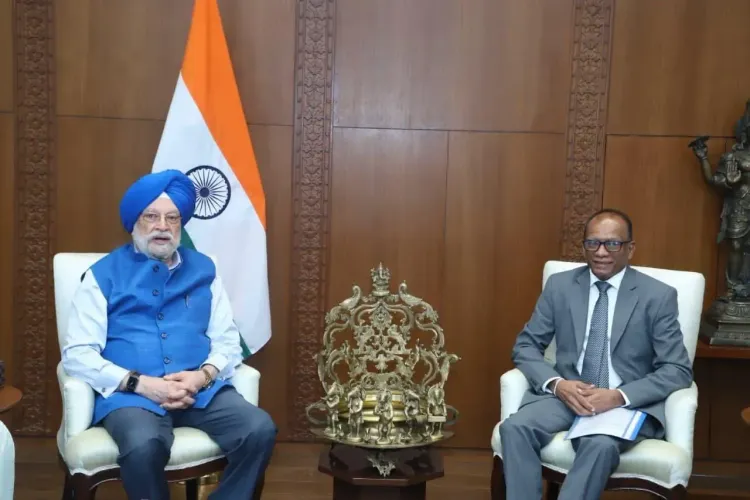
Union Petroleum Minister Hardeep Singh Puri hosted Sri Lanka's Energy Minister Anura Karunathilake in New Delhi on 7 August 2026, holding talks on hydrocarbon cooperation rooted in India's post-2022 crisis support and the Trincomalee oil tank farm agreement.
Key Takeaways
Hardeep Singh Puri met Sri Lanka Energy Minister Anura Karunathilake in New Delhi on 7 August 2026 .
Discussions focused on strengthening hydrocarbon cooperation and deepening bilateral energy ties.
India extended emergency petroleum supplies and credit facilities to Sri Lanka during its 2022 economic crisis .
Both countries agreed in 2022 to jointly develop the Trincomalee oil tank farm for strategic storage.
The meeting aligns with India's Neighbourhood First policy of prioritising energy and economic links with immediate neighbours.
Follow-up MoUs on exploration or storage and progress on Trincomalee will be key indicators of outcomes.
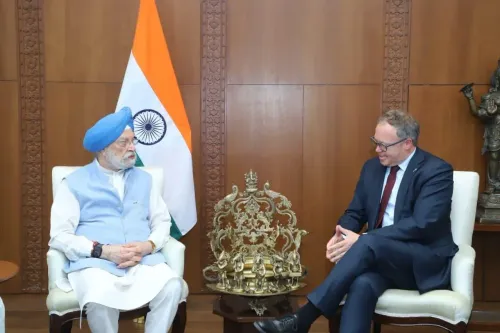
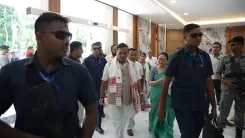
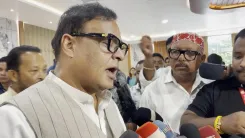
Two neighbours with a complicated recent past sat down in New Delhi on Friday, 7 August 2026, to talk energy — and the stakes were anything but routine. Union Petroleum Minister Hardeep Singh Puri received Sri Lanka's Minister of Energy, H.E. Anura Karunathilake, at his office for what both sides described as 'productive and forward-looking' discussions on deepening hydrocarbon cooperation between India and Sri Lanka.
From crisis lifeline to long-term partnership
The meeting did not happen in a vacuum. In 2022, when Sri Lanka was in the grip of its worst economic crisis in decades — fuel queues stretching for kilometres, power cuts lasting hours — India stepped in with emergency petroleum supplies and credit facilities. That emergency response planted the seed for a more structured energy relationship. The two countries also agreed that year to jointly develop and modernise the Trincomalee oil tank farm, a strategically located storage facility on Sri Lanka's northeastern coast that has long been seen as a regional energy asset.
Friday's meeting builds directly on that foundation. Minister Puri, a career diplomat before he entered elected politics, framed the talks around 'mutually beneficial partnerships' — language that signals a move from crisis-driven assistance to institutionalised cooperation.
India's Neighbourhood First, one barrel at a time
The bilateral sits squarely within India's Neighbourhood First policy, which prioritises economic and energy ties with immediate neighbours as a tool of strategic depth. For Sri Lanka, deepening hydrocarbon links with India means greater energy security and access to a large, stable supplier on its doorstep. For India, it means reinforcing influence in the Indian Ocean at a moment when regional connectivity — and competition — is intensifying.
The presence of tags to @PMOIndia, @PetroleumMin, and @MEAIndia in Puri's post signals that this is not a siloed ministry-to-ministry exchange. The Prime Minister's Office and the Ministry of External Affairs are both in the loop — a marker of the diplomatic weight being attached to the engagement.
What comes next will matter more than the handshake. Watchers of the bilateral will look for follow-up Memoranda of Understanding on exploration, storage, or supply — and whether the Trincomalee project moves from agreement to ground-level progress. The next India-Sri Lanka bilateral or BIMSTEC energy consultation will be the real test of how much ground the two ministers actually covered.
Point of View
Long-term partnership — a shift that serves India's strategic interest in anchoring Colombo within its economic orbit. For the BJP government, visible hydrocarbon diplomacy with neighbours doubles as a demonstration of the Neighbourhood First doctrine yielding tangible results. The Trincomalee tank farm remains the centrepiece: if that project accelerates, it would give India both a commercial foothold and a strategic storage position in the Indian Ocean. The multilateral tagging of PMO and MEA suggests this bilateral is being managed as a foreign-policy asset, not merely a sectoral exchange.
NationPress
7 Aug 2026
Frequently Asked Questions
Why did India's Petroleum Minister meet Sri Lanka's Energy Minister in August 2026?
The meeting focused on strengthening hydrocarbon cooperation between the two countries, building on India's emergency petroleum support to Sri Lanka during its 2022 economic crisis and the agreement to jointly develop the Trincomalee oil tank farm.
What is the Trincomalee oil tank farm and why does it matter?
The Trincomalee oil tank farm is a strategically located petroleum storage facility on Sri Lanka's northeastern coast. India and Sri Lanka agreed in 2022 to jointly develop and modernise it, making it a key asset in their bilateral energy partnership.
Who is Anura Karunathilake?
Anura Karunathilake is Sri Lanka's Minister of Energy, who visited New Delhi on 7 August 2026 for bilateral talks with Union Petroleum Minister Hardeep Singh Puri on hydrocarbon cooperation.
What is India's Neighbourhood First policy in the context of energy?
India's Neighbourhood First policy prioritises economic and energy cooperation with immediate neighbours. In Sri Lanka's case, this has translated into emergency petroleum supplies, credit facilities, and joint infrastructure projects like the Trincomalee oil tank farm.
What should we watch for after the India-Sri Lanka energy talks?
Key indicators will include any follow-up MoUs on petroleum exploration or storage, concrete progress on the Trincomalee oil tank farm project, and outcomes from the next scheduled India-Sri Lanka bilateral or BIMSTEC energy consultation.