Puri pays tribute to APJ Abdul Kalam on death anniversary
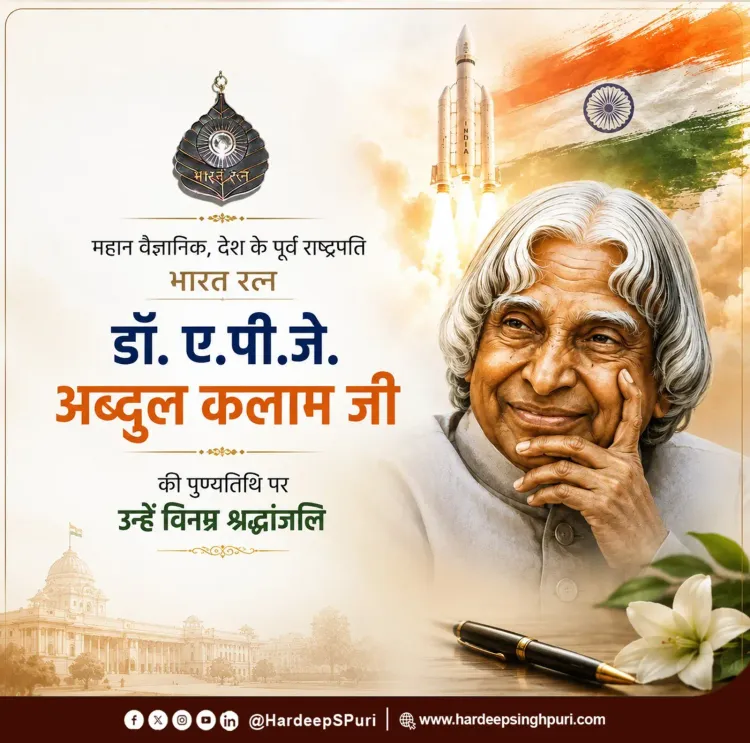
Synopsis
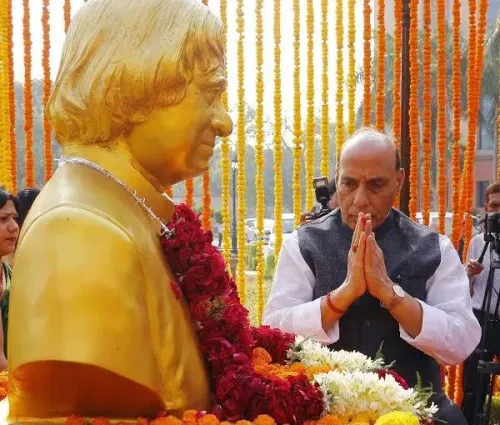
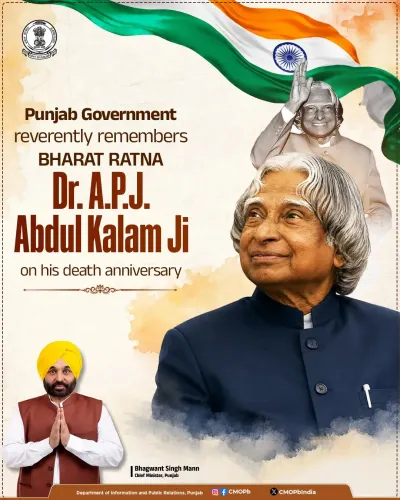
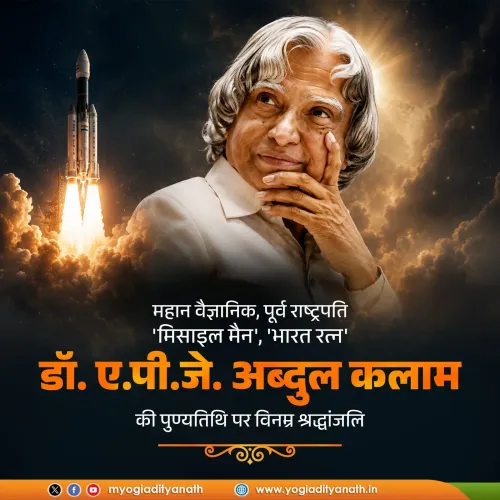
Union Petroleum Minister Hardeep Singh Puri marked the death anniversary of former President Dr APJ Abdul Kalam on 27 July 2026, honouring the 'Missile Man' for inspiring generations and connecting his vision of a self-reliant India to the government's Viksit Bharat 2047 mission.
Key Takeaways
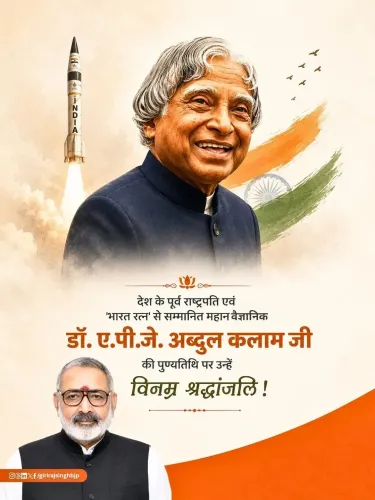
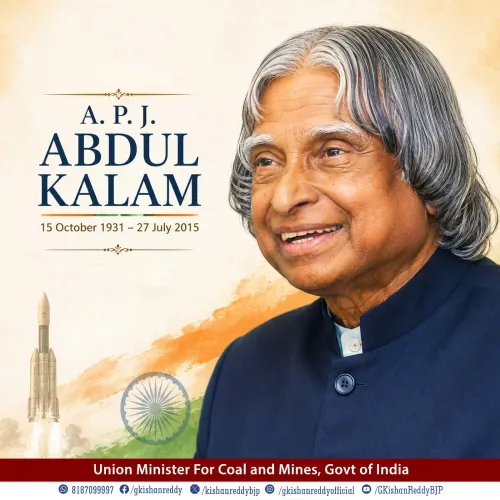
Hardeep Singh Puri paid tribute to Dr APJ Abdul Kalam on his death anniversary, 27 July 2026 .
Kalam served as India's 11th President (2002–2007) and was awarded the Bharat Ratna in 1997 .
He passed away on 27 July 2015 while addressing students at IIM Shillong .
Puri linked Kalam's legacy to Viksit Bharat , the government's vision to make India a developed nation by 2047 .
Kalam's birth anniversary, 15 October , is observed as World Students' Day globally.
Kalam's emphasis on technological self-reliance continues to inform India's defence indigenisation and energy security policies.
Union Petroleum Minister Hardeep Singh Puri on Monday, 27 July 2026 paid tribute to former President and aerospace scientist Dr APJ Abdul Kalam on his death anniversary, invoking Kalam's legacy as a guiding force for India's vision of becoming a developed nation by 2047.
Context
Dr APJ Abdul Kalam passed away on 27 July 2015 while delivering a lecture at the Indian Institute of Management, Shillong. He served as India's 11th President from 2002 to 2007, becoming the first scientist to occupy Rashtrapati Bhavan. Awarded the Bharat Ratna in 1997, he remains one of the most widely revered public figures in post-independence India.
Puri's post described Kalam as a 'scientist, teacher, visionary,' fondly remembered as the 'Missile Man' — a title earned through his foundational role in developing India's ballistic missile programme and his contribution to the 1998 Pokhran nuclear tests. The minister noted that Kalam 'inspired generations with his wisdom, humility and unwavering faith in India's future.'
Policy Backdrop
Annual commemorations on 27 July have become a fixture in India's national calendar, drawing tributes from across the political spectrum. Kalam's emphasis on technological self-reliance, space science, and defence indigenisation has made his legacy particularly resonant with the current government's policy priorities.
Puri explicitly linked Kalam's vision to Viksit Bharat, the Modi government's flagship developmental framework that aims to transform India into a fully developed economy by 2047 — the centenary of independence. The framework stresses self-reliance in technology, energy security, and economic growth, themes Kalam championed throughout his public life.
Stakeholders and Impact
Kalam's memory carries particular weight among students and the scientific community. His birth anniversary, 15 October, is observed globally as World Students' Day in recognition of his lifelong dedication to youth and education. Tributes on his death anniversary reinforce that connection, with ministers and institutions regularly citing his writings and speeches to motivate younger generations.
For the petroleum and energy sector — Puri's own portfolio — Kalam's advocacy for energy independence and clean technology remains directly relevant. India's push for domestic energy production, renewable capacity, and reduced import dependence echoes the self-reliance doctrine Kalam articulated across decades of public service.
What's Next
Commemorations are expected to intensify around Kalam's birth anniversary on 15 October 2026, observed as World Students' Day, with universities, scientific institutions, and government bodies likely to host events linking his legacy to ongoing science and technology missions. Parliamentary and ministerial statements connecting Kalam's vision to defence indigenisation and energy security programmes are anticipated in the months ahead.
As Viksit Bharat 2047 messaging continues to anchor government communication, Kalam's name is likely to remain a touchstone for policy narratives around innovation, self-reliance, and national development — making each anniversary a moment of both remembrance and political articulation.
Point of View
Self-reliant and developed India' as a precursor to current policy, the minister draws a line of ideological continuity between Kalam's scientific nationalism and the Modi administration's development agenda. This pattern — invoking Kalam on anniversaries to legitimise present-day policy priorities — has become a consistent feature of government communication. The tribute also signals the petroleum ministry's alignment with the broader self-reliance doctrine, particularly relevant as India pursues energy security and domestic production targets.
NationPress
27 Jul 2026
Frequently Asked Questions
When did APJ Abdul Kalam die?
Dr APJ Abdul Kalam passed away on 27 July 2015 while delivering a lecture at the Indian Institute of Management, Shillong . He was 83 years old at the time of his death.
Why is APJ Abdul Kalam called the Missile Man of India?
Kalam earned the title 'Missile Man of India' for his central role in developing India's ballistic missile programme, including the Agni and Prithvi missiles, and for his contribution to the 1998 Pokhran nuclear tests .
What is Viksit Bharat and how does it relate to Kalam's vision?
Viksit Bharat is the Modi government's framework to transform India into a fully developed nation by 2047 , focusing on self-reliance, technology, and economic growth — themes that closely mirror the vision Kalam articulated throughout his career as a scientist and President.
What award did APJ Abdul Kalam receive?
Dr APJ Abdul Kalam was awarded the Bharat Ratna , India's highest civilian honour, in 1997 , recognising his contributions to science, defence research, and public service.
What is World Students' Day and why is it linked to Kalam?
World Students' Day is observed on 15 October — Kalam's birth anniversary — in honour of his lifelong dedication to education and his deep connection with students across India and the world.