Puri pushes 'Made in India for the World' in oil and gas equipment
Synopsis
Union Petroleum Minister Hardeep Singh Puri chairs a FICCI industry interaction in New Delhi, calling on oil and gas PSUs and domestic manufacturers to build world-class indigenous equipment under Atmanirbhar Bharat, backed by over ₹1 lakh crore in scheme outlays.
Key Takeaways
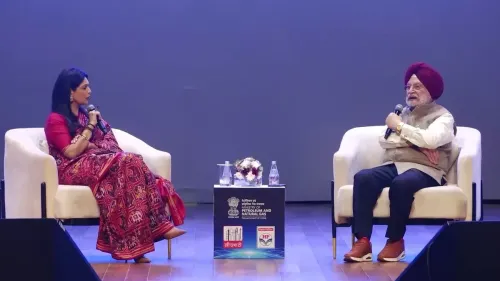
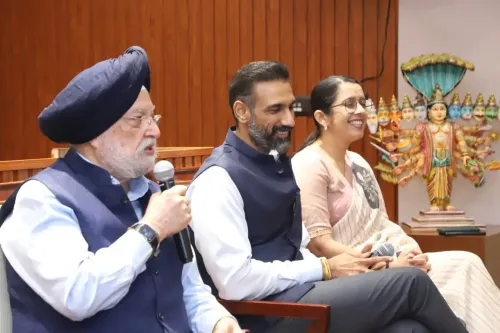
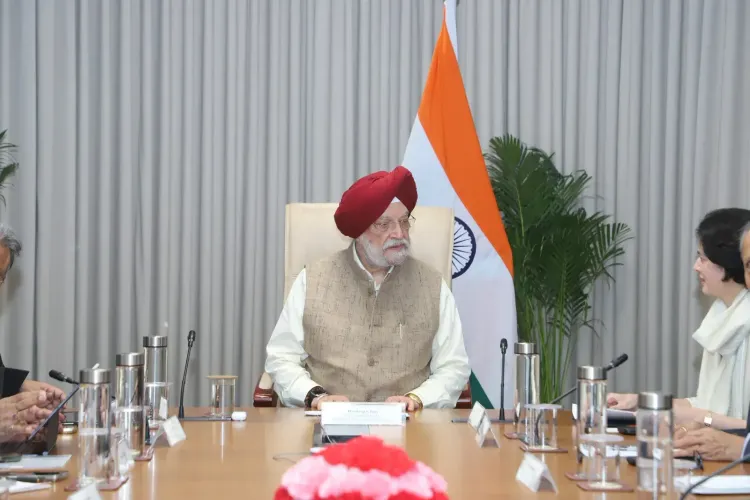
Hardeep Singh Puri held an industry interaction with FICCI members at Kartavya Bhawan-3, New Delhi on 18 November 2026 .
The GOBARdhan scheme carries an outlay of ₹23,731 crore , targeting CBG plant and processing equipment demand.
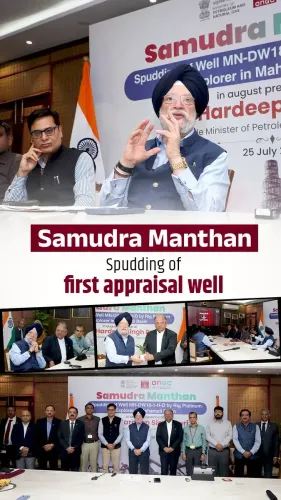
The Samudra Manthan Mission carries an announced outlay of ₹84,084 crore for offshore exploration and specialised engineering systems.
Puri called on Oil and Gas PSUs to partner with Indian manufacturers, run field trials and open more procurement space for MSMEs .
The minister's stated goal: shift from 'Made around the world for India' to 'Made in India for the World.' Industry participants included representatives from L&T, Praj Industries and domestic pump manufacturers.
India's oil and gas sector has long imported the machinery that powers its own energy ambitions — and Union Petroleum Minister Hardeep Singh Puri wants that equation reversed, permanently. On Wednesday, 18 November 2026, Puri convened an industry interaction with members of FICCI at Kartavya Bhawan-3, New Delhi, pressing the case for deep indigenisation across the entire oil and gas equipment value chain.
From import substitution to global export ambition
The minister drew a sharp distinction between two very different goals. Import substitution — making roughly equivalent copies of what India currently buys abroad — is no longer enough. 'We must move beyond import substitution to developing world-class indigenous technologies, strengthening domestic supply chains and making India a global manufacturing and export hub for oil and gas equipment,' he said. His closing formulation crystallised the shift: 'From Made around the world for India to Made in India for the World.'
The ambition plugs directly into the Atmanirbhar Bharat framework — the self-reliance campaign launched in May 2020 — and the older Make in India programme announced in September 2014. Successive governments have pursued indigenisation in strategic sectors, but the energy equipment segment, with its specialised metallurgy, subsea hardware and advanced instrumentation, has remained disproportionately import-dependent.
GOBARdhan and Samudra Manthan: the two demand engines
Puri pointed to two flagship initiatives that together represent enormous domestic procurement potential. The GOBARdhan scheme — aimed at converting organic waste into compressed biogas — carries an outlay of ₹23,731 crore and is expected to generate demand for specialised CBG plant equipment and processing systems. The Samudra Manthan Mission, with an announced outlay of ₹84,084 crore, targets offshore exploration and is set to drive procurement of specialised offshore rigs, subsea hardware and advanced engineering systems. Together they represent a combined pipeline of over ₹1 lakh crore in potential deployment — a runway long enough to anchor an entire domestic manufacturing ecosystem.
The ask to Oil and Gas PSUs — and what it means for MSMEs
Puri put India's public sector oil companies on notice. He called on Oil and Gas PSUs to actively partner with Indian manufacturers, facilitate technology development, encourage field trials of domestically produced equipment, and carve out greater space for MSMEs in procurement pipelines. The ask matters because PSUs function as anchor clients — their willingness to absorb the risk of first-of-kind domestic equipment trials can make or break an emerging technology supplier. Without that institutional push, even a well-funded scheme can end up importing the hardware it was meant to domesticate. Representatives from companies including L&T, Praj Industries and pump manufacturers participated in the FICCI interaction, signalling early industry engagement with the indigenisation agenda.
The road from a room full of industrialists at Kartavya Bhawan to a globally competitive Indian oil equipment sector is a long one. But Puri's framing today set the direction of travel — and named the government programmes, the rupee amounts, and the institutional actors expected to get it there.
Point of View
But oil and gas equipment remains a stubborn outlier given its high-precision requirements. The ₹84,084 crore Samudra Manthan outlay is the most consequential new variable — if tendering processes prioritise domestic suppliers with real technology mandates rather than nominal local-content clauses, it could accelerate indigenisation meaningfully. The direct call-out of PSUs as first-mover buyers is the right lever; without anchor procurement, private manufacturers hesitate to invest in tooling. Whether PSUs respond with concrete vendor-development programmes, or treat the minister's statement as a photo opportunity, will be the tell.
NationPress
18 Nov 2026
Frequently Asked Questions
What is the Samudra Manthan Mission?
The Samudra Manthan Mission is a government initiative targeting offshore oil and gas exploration, with an announced outlay of ₹84,084 crore. It is expected to drive demand for specialised offshore rigs, subsea equipment and advanced engineering systems produced domestically.
What is GOBARdhan and how much is its budget?
GOBARdhan is a central scheme that promotes compressed biogas plants using organic waste. It carries an outlay of ₹23,731 crore and is designed to generate demand for CBG processing and plant equipment.
What did Hardeep Singh Puri say to Oil and Gas PSUs at the FICCI meeting?
Puri called on oil and gas PSUs to partner with Indian manufacturers, facilitate technology development, encourage field trials of domestically made equipment, and create greater procurement opportunities for MSMEs.
What is Atmanirbhar Bharat's role in the oil and gas sector?
Atmanirbhar Bharat, launched in May 2020, aims to boost domestic manufacturing and reduce import dependence. In oil and gas, this means developing indigenous equipment, strengthening supply chains, and positioning India as a global manufacturing and export hub for energy hardware.
Which companies participated in the FICCI oil and gas indigenisation interaction?
Representatives from L&T, Praj Industries and pump manufacturers including KBL and KEPL participated in the FICCI industry interaction chaired by Minister Hardeep Singh Puri at Kartavya Bhawan-3, New Delhi.