Amit Shah: India a trusted global peace voice under Modi, Putin remarks prove it
Synopsis
On Gandhi Jayanti, Home Minister Amit Shah cited Vladimir Putin's public praise of Modi's Ukraine peace efforts — delivered at the Valdai Discussion Club in Moscow — to argue that India has become the world's trusted voice for peace. It is a rare instance of the Russian president openly acknowledging a non-Western leader's mediation push, and it reinforces India's carefully built image of strategic autonomy.
Key Takeaways
Home Minister Amit Shah declared on 2 October 2026 that India is a 'trusted voice for global peace' under PM Modi .
Shah cited Russian President Vladimir Putin's praise of Modi's consistent efforts to end the Ukraine conflict .
Putin made the remarks at the Valdai Discussion Club in Moscow on Thursday , calling Modi 'one of those world leaders' who raises the Ukraine issue at every meeting.
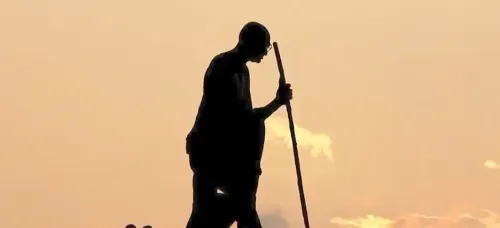
Shah linked Putin's timing to Gandhi Jayanti , connecting Modi's diplomacy to Gandhi's legacy of peace and non-violence.
Shah invoked the principle of Vasudhaiva Kutumbakam to frame India's broader humanitarian and diplomatic record.
India has maintained a neutral stance on the Russia-Ukraine war, abstaining from UN resolutions while engaging both sides.
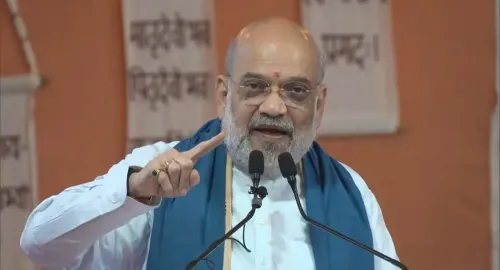
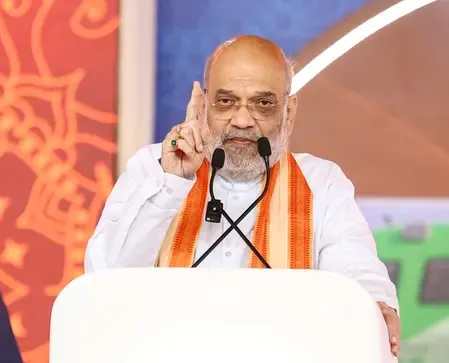
Union Home Minister Amit Shah on Friday, 2 October 2026 — Gandhi Jayanti — declared that India has emerged as a 'trusted voice for global peace' under Prime Minister Narendra Modi, citing Russian President Vladimir Putin's public appreciation of Modi's persistent efforts to help end the Ukraine conflict. Shah made the remarks in a post on X, calling Putin's statement a matter of immense pride for every Indian.
What Shah Said
Shah underscored the symbolic weight of the timing, noting that Putin's praise arrived on the birth anniversary of Mahatma Gandhi — the figure who gave the world the philosophy of peace and non-violence. 'The Russian President Shri Vladimir Putin's appreciation of PM Shri @narendramodi Ji's tireless efforts towards global peace brings immense pride to every Indian,' Shah wrote.
He further argued that during periods of global wars and turbulence, Modi has consistently delivered the message that solutions do not emerge from battlefields but through dialogue and diplomacy. 'India, under the leadership of Modi Ji, has always stepped forward with help and assistance, whether in situations of war or calamity, giving a new recognition to our timeless tradition of Vasudhaiva Kutumbakam,' Shah added.
Putin's Remarks at Valdai Club
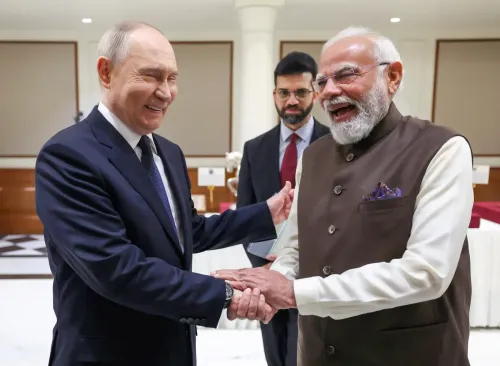
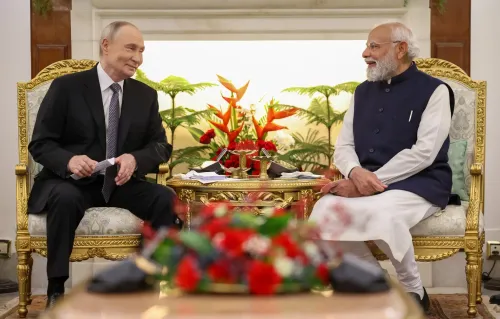
The trigger for Shah's post was a statement Putin made on Thursday at the Valdai Discussion Club in Moscow. Speaking at the annual forum, Putin acknowledged that despite Russia and India sharing 'very good, even friendly' relations and strong personal ties, Modi consistently raises questions about ending the Ukraine conflict at every bilateral meeting.
'He always raises these issues at every meeting with us,' Putin said, adding that Modi 'had very good ideas aimed at finding mutually acceptable solutions.' Putin described Modi as 'one of those world leaders' who, despite close bilateral bonds, shows a keen interest in facilitating a peaceful resolution — a rare acknowledgement from the Russian leader toward a non-Western head of government.
Why This Matters for India's Diplomacy
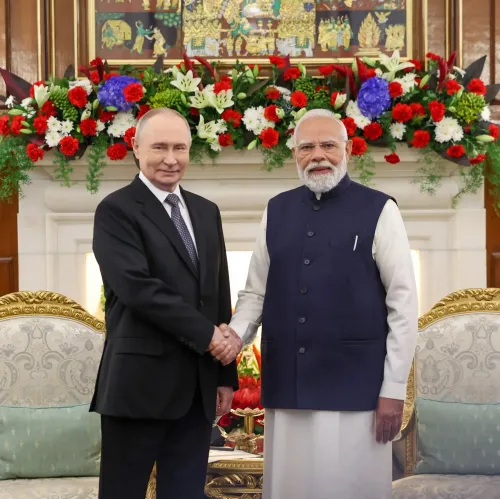
India has maintained a carefully calibrated position on the Russia-Ukraine war, abstaining from UN votes condemning the invasion while simultaneously engaging both Moscow and Kyiv. Modi's meetings with Putin — and his now-famous remark that 'this is not an era of war' — have drawn both praise and scrutiny internationally. Putin's latest comments at Valdai appear to validate New Delhi's self-positioning as a potential bridge-builder in the conflict.
This comes amid ongoing global efforts to find an off-ramp to the Ukraine war, with various diplomatic tracks, including those involving China and Gulf states, having stalled or produced limited results. India's growing strategic autonomy — anchored in its Quad membership, its ties with Russia, and its expanding economic weight — has given its diplomatic voice greater traction than at any point in recent decades.
The Gandhi Jayanti Symbolism
Shah's framing of Putin's praise through the lens of Gandhi Jayanti was deliberate. By connecting contemporary Indian diplomacy to Gandhi's legacy of peace and non-violence, the ruling Bharatiya Janata Party (BJP) sought to cast Modi's foreign policy instincts as part of a civilisational continuum rather than mere strategic calculation. Critics may note the contrast between Gandhi's pacifism and the BJP's domestic political positioning, but on the international stage, the Gandhian framing offers India a broadly acceptable moral foundation.
What to Watch Next
With ceasefire efforts in Ukraine remaining fragile, attention will now focus on whether India translates its acknowledged diplomatic goodwill into a concrete mediation role — or whether the appreciation remains rhetorical. Modi's next bilateral engagement with either Putin or Ukrainian President Volodymyr Zelensky will be closely watched for any movement toward a structured Indian peace initiative.
Point of View
Or whether it remains an image asset. Shah's Gandhi Jayanti framing is politically clever, but it sidesteps the structural tension in India's position: simultaneously deepening ties with Russia through discounted oil purchases while claiming neutral mediator status. If Modi is to convert appreciation into actual influence over the Ukraine conflict, a more explicit and public diplomatic initiative — beyond private bilateral meetings — will eventually be required.
NationPress
2 Oct 2026
Frequently Asked Questions
What did Amit Shah say about India's role in global peace?
Home Minister Amit Shah said on 2 October 2026 that India has emerged as a 'trusted voice for global peace' under PM Modi, citing Russian President Putin's public praise of Modi's efforts to help end the Ukraine conflict. Shah made the statement in a post on X on Gandhi Jayanti.
What did Putin say about PM Modi and the Ukraine conflict?
Speaking at the Valdai Discussion Club in Moscow on Thursday, Putin said Modi is 'one of those world leaders' who consistently raises questions about ending the Ukraine conflict at every bilateral meeting, despite the two countries sharing friendly ties. Putin added that Modi had 'very good ideas' for finding mutually acceptable solutions.
Why did Amit Shah link Putin's remarks to Gandhi Jayanti?
Shah noted that Putin's appreciation of Modi's peace efforts coincided with the birth anniversary of Mahatma Gandhi, who championed peace and non-violence. The framing was intended to connect Modi's contemporary diplomacy to India's civilisational tradition of peaceful resolution.
What is India's official position on the Russia-Ukraine war?
India has maintained strategic neutrality, abstaining from UN votes condemning Russia's invasion while engaging both Moscow and Kyiv. PM Modi has publicly stated that 'this is not an era of war' and has urged dialogue and diplomacy as the path to resolution.
What does Putin's statement mean for India's diplomatic standing?
Putin's public acknowledgement of Modi's mediation efforts at a high-profile international forum like the Valdai Discussion Club adds credibility to India's self-positioning as a potential peace broker. However, analysts note that concrete outcomes from India's diplomatic engagement remain limited so far.