Should the Tax-Free Limit Be Increased? Raghav Chadha Speaks Out
Synopsis
In a recent parliamentary discussion, Raghav Chadha emphasizes the need to increase the tax-free income limit to stimulate domestic investment. As foreign investors withdraw, he urges the government to rethink tax policies that currently penalize long-term investments. His proposals could reshape India’s financial landscape, fostering growth and stability in uncertain times.
Key Takeaways
Proposal to Increase Tax-Free Limit: Encouraging domestic investment.
FIIs Withdrawals: Highlighting the volatility in global capital flows.
Domestic Investors' Role: Stabilizing Indian equities with significant contributions.
Importance of GST 2.0: Need for complete input tax credit pass-through.
Supplementary Grants Approved: Additional expenditure authorized for essential priorities.
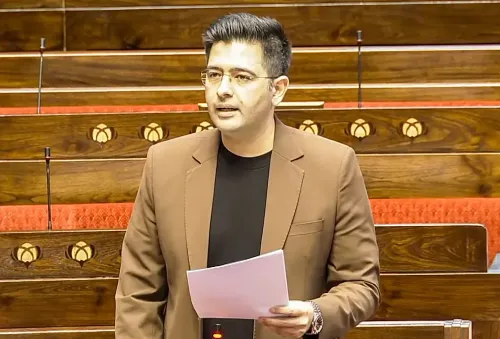
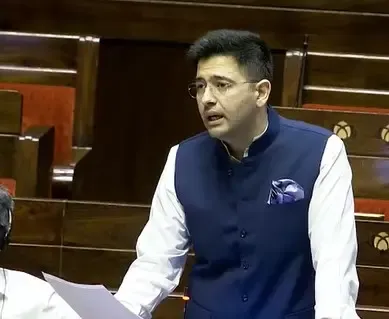
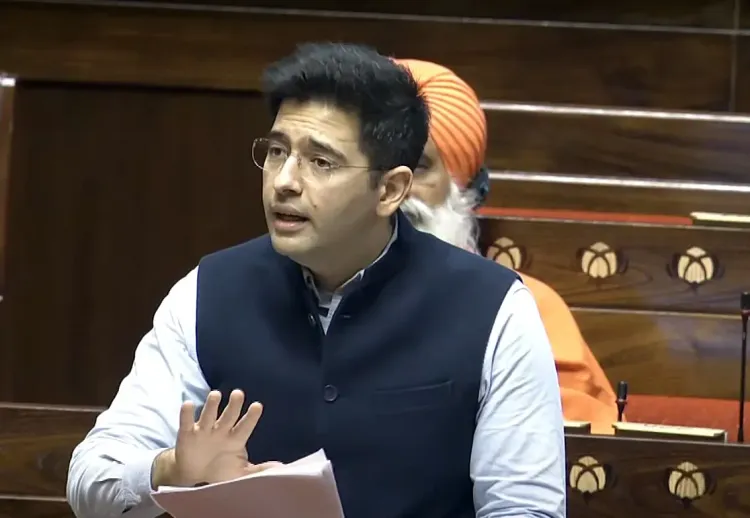
New Delhi, Dec 16 (NationPress) Aam Aadmi Party (AAP) Rajya Sabha MP Raghav Chadha engaged in a parliamentary debate on the initial set of Supplementary Demands for Grants for 2025-26 on Tuesday, describing it as an "annual formality" since it pertains to a money bill that does not necessitate approval from the Upper House.
Nonetheless, he seized the opportunity to provide insightful recommendations to Finance Minister Nirmala Sitharaman aimed at enhancing investments and optimizing tax regulations.
Chadha pointed out the fluctuations in global capital movements, highlighting that Foreign Institutional Investors (FIIs) withdrew roughly Rs 1.60 lakh crore from Indian stocks from January to December 2025 amid uncertain global conditions.
Conversely, he commended domestic institutional investors (DIIs) for their strong presence, contributing around Rs 7 lakh crore to the market, thereby stabilizing and safeguarding Indian equities.
"A fundamental economic principle is to foster investments," Chadha stressed during his address.
He advocated for an increase in the tax-free income limit to acknowledge enduring domestic capital and alleviate the tax burden on investments.
"Investment in India is heavily taxed," he remarked, advocating a policy shift to support rather than penalize long-term domestic inflows.
Subsequently, on his X handle, the MP elaborated on three specific recommendations made to the Finance Minister, stating, "Tax consumption if you must, but nurture investment. Patient domestic investment should be rewarded, not penalized."
Recognizing GST 2.0 as a pivotal reform, he emphasized the necessity for a comprehensive input tax credit pass-through to ensure its full effectiveness, and he proposed a tailored Tokenisation Bill along with a regulatory sandbox to enable fractional ownership of digital tokens through blockchain technology, thereby fostering innovation in financial assets.
The Supplementary Demands for Grants, sanctioned by Parliament on December 15, authorize additional spending of Rs 41,455 crore, primarily to support fertilizer subsidies and other key priorities.
Chadha's comments emerge amid ongoing discussions about economic resilience, with domestic investors playing a crucial role in counterbalancing foreign outflows this year.
His proposals highlight the opposition's call for pro-investment reforms to maintain India's growth trajectory, even as the government defends its fiscal policies.
Point of View
Raghav Chadha's interventions bring forward a crucial dialogue on India's investment strategies. His call for increasing the tax-free income limit reflects a broader concern about nurturing domestic capital in a challenging economic environment. The push for pro-investment reforms is timely, as it aligns with the need for sustained growth and stability amidst global uncertainties.
NationPress
26 Sept 2026
Frequently Asked Questions
What did Raghav Chadha propose regarding tax policies?
Raghav Chadha proposed increasing the tax-free income limit to encourage domestic investments and reduce the tax burden on investors.
How much did FIIs withdraw from Indian equities?
Foreign Institutional Investors withdrew approximately Rs 1.60 lakh crore from Indian equities between January and December 2025.
What role did domestic investors play according to Chadha?
Chadha praised domestic institutional investors for injecting around Rs 7 lakh crore into the market, helping stabilize Indian equities.
What is GST 2.0's significance according to Chadha?
Chadha recognizes GST 2.0 as a landmark reform but emphasizes the need for complete input tax credit pass-through for its effectiveness.
What is the total additional expenditure authorized by Parliament?
Parliament approved additional expenditure of Rs 41,455 crore, mainly for fertilizer subsidies and other key priorities.