Raghav Chadha backs anti-paper-leak law with stiff jail, fine
Synopsis
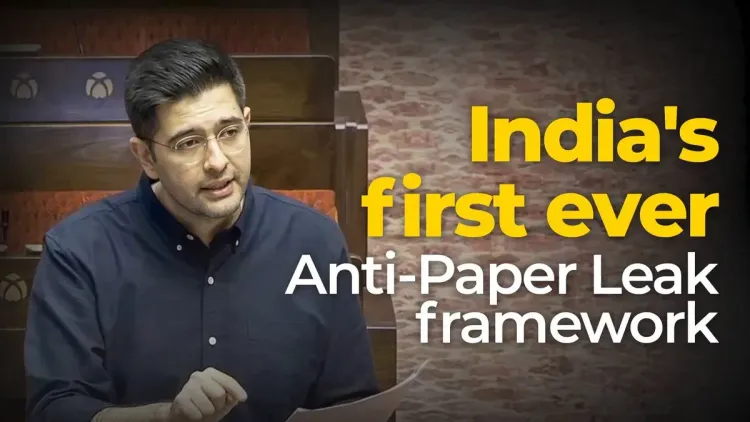
AAP Rajya Sabha MP Raghav Chadha has backed India's Public Examinations (Prevention of Unfair Means) Act, 2024, praising its 10-year jail term and steep fines as a genuine deterrent against paper leak mafias that disrupted NEET and UGC-NET in 2023–2024.
Key Takeaways
AAP Rajya Sabha MP Raghav Chadha publicly endorsed India's anti-paper-leak law on July 31, 2026 .
The Public Examinations (Prevention of Unfair Means) Act, 2024 prescribes up to 10 years imprisonment for organised exam fraud.
Offences under the Act are non-bailable and non-compoundable , targeting syndicates rather than individual candidates.
The law followed major leak scandals tied to NEET and UGC-NET in 2023–2024 that triggered nationwide student protests.
Enforcement outcomes in the next major examination cycle will determine whether the law's deterrent effect holds in practice.
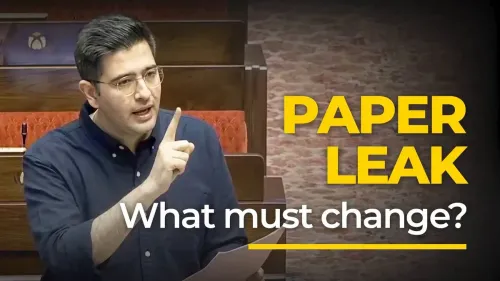
A law that promises to make exam mafias tremble — not students — is drawing sharp attention from Parliament's corridors. AAP Rajya Sabha MP Raghav Chadha on Friday, July 31, 2026, threw his weight behind India's anti-paper-leak legislation, calling it the first law to create 'real deterrence' against the organised gangs that have repeatedly sabotaged national examinations.
Chadha put it bluntly in his post: 'इस कानून के बाद यदि कोई सपने में भी paper leak करने के बारे में सोचेगा तो उसकी रूह कांप जाएगी' — 'After this law, even if someone thinks about leaking a paper in their dreams, their soul will tremble.' The message was pointed: the fear, for once, should belong to the criminals.
What the law actually says
The Public Examinations (Prevention of Unfair Means) Act, 2024, passed by Parliament, targets organised cheating networks with offences that are both non-bailable and non-compoundable — meaning no bail by default and no out-of-court settlement. Chadha highlighted the headline penalties: ten years in jail and a ten crore rupee fine. The Act was deliberately framed to go after syndicates, not panicked individual candidates caught in the crossfire.
The legislation arrived after a bruising season of exam scandals. Leaks linked to NEET and UGC-NET in 2023–2024 triggered nationwide protests, with hundreds of thousands of students demanding accountability. Careers stalled. Re-examinations were ordered. The credibility of India's public examination system — the gateway to medicine, teaching, civil services — took a direct hit.
Why the mafia angle matters
Earlier legal frameworks treated paper leaks largely as administrative failures or minor criminal acts. The 2024 Act changed the framing entirely: this is organised crime. By making offences non-compoundable, the law removes the option for accused parties to pay their way out of prosecution. Non-bailable provisions keep accused persons in custody unless a court specifically grants relief. Together, these provisions shift the cost-benefit calculation for anyone running a leak operation.
For students preparing for the next cycle of competitive exams — UPSC, JEE, NEET, SSC — the question is no longer whether a tough law exists. It is whether enforcement agencies will use it with the same aggression the legislation was designed to invite. That test is still ahead.
Point of View
However, is prosecutorial: India has a history of strong anti-corruption statutes that gather dust without aggressive enforcement. Whether the Act translates into actual convictions of syndicate leaders will determine if it reshapes the exam ecosystem or remains a deterrent only on paper.
NationPress
31 Jul 2026
Frequently Asked Questions
What is the Public Examinations (Prevention of Unfair Means) Act 2024?
It is a central law passed by India's Parliament that criminalises organised cheating in public examinations, prescribing up to 10 years in prison and heavy fines for offences that are non-bailable and non-compoundable.
What did Raghav Chadha say about the paper leak law?
AAP Rajya Sabha MP Raghav Chadha called it the first law to create 'real deterrence,' saying it makes paper leak mafias afraid rather than students, and highlighted the 10-year jail term and steep fine as its key teeth.
What does non-bailable and non-compoundable mean in the paper leak law?
Non-bailable means an accused cannot be released on bail automatically — a court must specifically grant it. Non-compoundable means the case cannot be settled out of court between the parties; the state must prosecute it to conclusion.
Which exams were affected by paper leaks that led to this law?
Leaks linked to NEET (medical entrance) and UGC-NET (university eligibility) in 2023–2024 triggered widespread student protests and prompted Parliament to enact stricter anti-cheating legislation.
Does the paper leak law target students or exam mafias?
The Act is explicitly designed to target organised gangs and syndicates running leak operations, not individual candidates who may have been caught up in the fraud.