Rahul Gandhi: Centre shielding CEC Gyanesh Kumar ahead of INDIA bloc Supreme Court march
Synopsis
Rahul Gandhi walked into the Congress headquarters on Monday and turned the government's massive security deployment into an argument against itself — claiming 20,000–30,000 police on Delhi's streets only prove Modi is shielding the CEC. With the INDIA bloc marching to the Supreme Court over the electoral roll controversy, the opposition is betting that the bigger the crackdown, the louder the message.
Key Takeaways
Rahul Gandhi accused the Centre of 'protecting' CEC Gyanesh Kumar at a press conference in New Delhi on 12 October 2026 .
The INDIA bloc is planning a march to the Supreme Court demanding Gyanesh Kumar's resignation over the Special Intensive Review (SIR) of electoral rolls.
Gandhi alleged that between 20,000 and 30,000 security personnel have been deployed across Delhi , with trains and buses reportedly stopped to prevent protesters from entering the city.
He claimed — without independent verification — that 50 per cent of police personnel privately support the opposition's position.
Gandhi warned CEC Gyanesh Kumar directly: 'You will not survive as the CEC,' alleging the opposition holds 'evidence' of past conduct.
The ECI and the government had not publicly responded to Monday's specific allegations at the time of reporting.
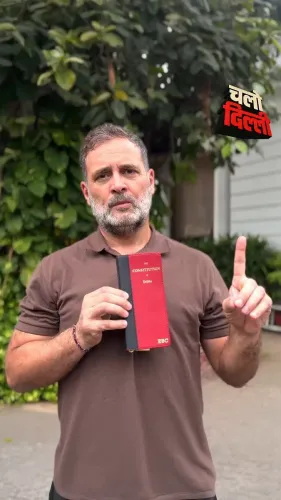
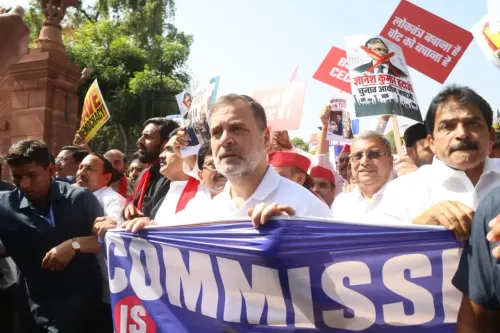
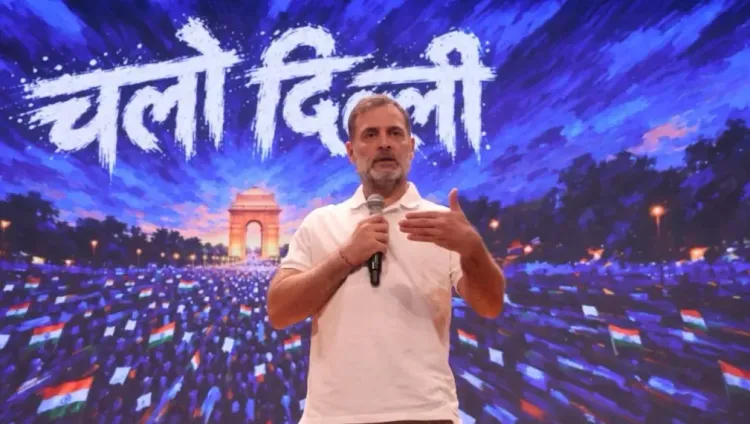
Leader of Opposition Rahul Gandhi on Monday, 12 October 2026, accused the Centre of actively 'protecting' Chief Election Commissioner (CEC) Gyanesh Kumar, even as massive security deployments across New Delhi drew sharp criticism from opposition parties ahead of the INDIA bloc's planned march to the Supreme Court. Gandhi made the allegations at a press conference held at the Congress headquarters in New Delhi.
The Charge Against the Centre
Addressing reporters, Gandhi said, 'The protest against Gyanesh Kumar, the Election Commission and vote theft has been underway in Delhi for the past four to five days. Resistance has existed for 10–12–13 years, but now it is crystallising.' He framed the government's decision to deploy between 20,000 and 30,000 security personnel across the capital as a strategic error that would only help the opposition's cause.
'We want 20,000 to 30,000 police personnel standing on the streets. And the government is making a big mistake by doing this. We want to show the nation that the government, Narendra Modi, is protecting Gyanesh Kumar,' Gandhi said, suggesting that the visible show of force would ultimately expose, in his words, the CEC's 'controller.'
Security Curbs and 'Siege' Allegations
Gandhi questioned the scale of restrictions imposed on the capital, alleging that trains and buses had been stopped to prevent people from reaching Delhi. 'Why is Delhi, the capital city of India, under siege? People are being stopped from reaching Delhi,' he said. He claimed that police personnel themselves were 'deeply disturbed,' alleging that officers were questioning 'why they are being made to beat the youth of India.'
Gandhi further alleged that while opposition protesters were being blocked, members of the Rashtriya Swayamsevak Sangh (RSS) were being allowed to move freely. He claimed that 'BJP and RSS goons are beating women,' while security forces were simultaneously directed to stop 'patriotic Indian youth.' These are allegations from Gandhi and have not been independently verified.
CEC Gyanesh Kumar and the SIR Controversy
The INDIA bloc's march is centred on demands for the resignation of CEC Gyanesh Kumar over controversy surrounding the Special Intensive Review (SIR) of the electoral rolls — a process critics argue could disenfranchise voters. Gandhi said the CEC 'is not able to sleep at night,' and added: 'You will not survive as the CEC.' He claimed the opposition holds 'information' and 'evidence' about alleged past conduct, without providing specifics at the press conference.
This comes amid a wider political confrontation over the Election Commission of India (ECI)'s independence and its handling of voter rolls, which opposition parties contend amounts to 'vote theft.' The ECI and the government have not responded publicly to Monday's specific allegations as of the time of this report.
Political Stakes of the March
Gandhi claimed that roughly 50 per cent of police personnel had privately expressed support for the opposition's position — a claim that cannot be independently verified. He framed the moment as a binary: 'The people of India, all of you and all opposition parties are on one side while Narendra Modi, Amit Shah, Ajit Doval, Gyanesh Kumar and four or five people in the Election Commission are on the other side.'
The Supreme Court march represents a significant escalation in the opposition's campaign against the ECI, moving protests from street demonstrations to the doorstep of the country's highest judiciary. How the government and the Election Commission respond in the coming days is expected to shape the next phase of this political confrontation.
Point of View
That half the police privately back the protesters, is unverifiable and almost certainly rhetorical, but its political function is clear: it attempts to peel away the legitimacy of state force. The deeper question the mainstream coverage is not asking is whether the SIR controversy — the actual trigger for these protests — has been examined on its merits, or whether it has been buried under the spectacle of street politics. If the opposition genuinely holds evidence of electoral roll manipulation, the Supreme Court march is the right forum; if it does not, this risks becoming noise that protects the status quo by exhausting public attention.
NationPress
12 Oct 2026
Frequently Asked Questions
Why is the INDIA bloc marching to the Supreme Court?
The INDIA bloc is marching to the Supreme Court to demand the resignation of Chief Election Commissioner Gyanesh Kumar over controversy surrounding the Special Intensive Review (SIR) of electoral rolls. Opposition parties allege the SIR process could disenfranchise voters and amounts to 'vote theft.'
What did Rahul Gandhi say about the security deployment in Delhi?
Gandhi alleged that between 20,000 and 30,000 security personnel had been deployed across Delhi, with trains and buses reportedly stopped to prevent protesters from entering the capital. He called it a 'siege' and argued the deployment only strengthened the opposition's case.
What is the Special Intensive Review (SIR) of electoral rolls?
The Special Intensive Review (SIR) is a process conducted by the Election Commission of India to scrutinise and update voter rolls. Opposition parties have raised concerns that its implementation could lead to the removal of legitimate voters, framing it as a tool for electoral manipulation — allegations the ECI has not publicly addressed in response to Monday's statements.
Has the government or the Election Commission responded to these allegations?
As of the time of reporting on 12 October 2026, neither the Centre nor the Election Commission of India had publicly responded to the specific allegations made by Rahul Gandhi at Monday's press conference.
What did Rahul Gandhi say directly to CEC Gyanesh Kumar?
Gandhi said the CEC 'is not able to sleep at night' and warned: 'You will not survive as the CEC.' He claimed the opposition holds 'information' and 'evidence' about the CEC's alleged past conduct, but did not provide specifics at the press conference.