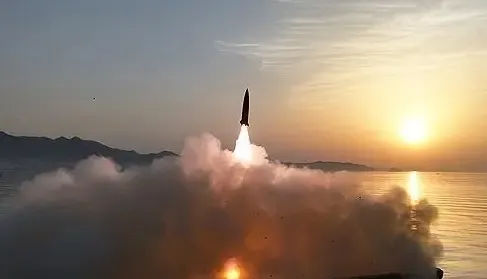
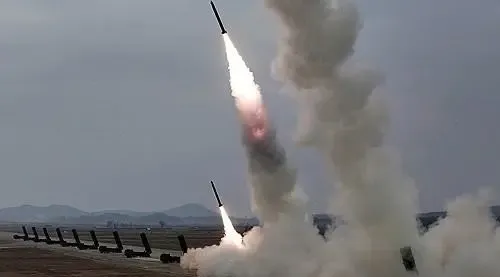
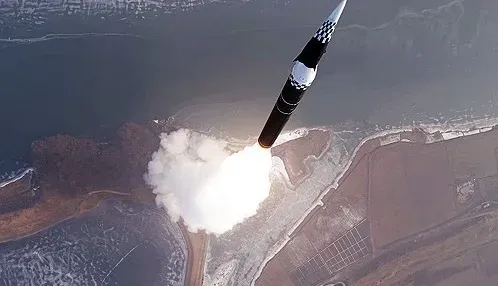
North Korea fires multiple ballistic missiles toward Sea of Japan
Synopsis
North Korea fired multiple ballistic missiles toward the Sea of Japan on 12 October — its second such provocation in under two weeks. With one missile reaching over 910 km and flying at a potentially irregular trajectory, Tokyo has lodged a formal protest and Seoul-Washington forces are on heightened alert. The back-to-back launches signal a deliberate escalation cycle with few signs of diplomatic off-ramps.
Key Takeaways
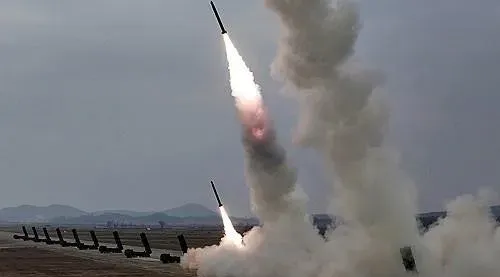
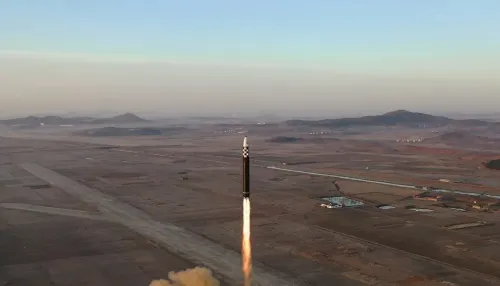
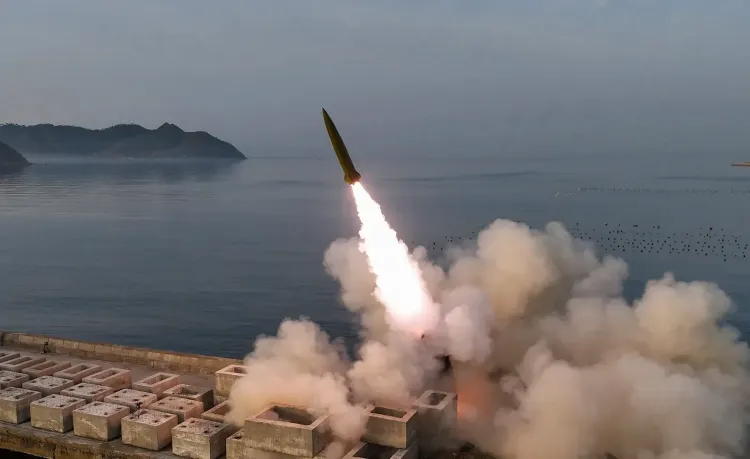
North Korea launched multiple ballistic missiles toward the Sea of Japan on 12 October .
Missiles were fired from near Pyongyang at around 9:20 am local time ; one flew over 910 km at an altitude of 70 km .
Japan lodged a formal protest with North Korea via diplomatic channels and condemned the launches as violations of UN Security Council resolutions.
Japanese PM Sanae Takaichi directed authorities to share information quickly and ensure maritime and airspace safety.
The launch follows a similar missile test on 3 October from the Wonsan area, which flew over 700 km .
South Korea and the US are jointly assessing the launches and maintain a combined defence readiness posture.
North Korea on Monday, 12 October fired multiple ballistic missiles toward the Sea of Japan, according to reports from local media and regional military authorities. South Korea's military confirmed that several of the projectiles flew beyond 900 kilometres, while Japan said two missiles likely fell outside its exclusive economic zone.
Key Details of the Launch
According to South Korea's Joint Chiefs of Staff (JCS), the missiles were launched from near Pyongyang at approximately 9:20 am local time on Monday. Japan's parliamentary vice defence minister Takashi Koyari stated that the second missile is estimated to have reached an altitude of 70 kilometres and travelled over 910 kilometres.
Koyari said, 'We are analysing details, including whether it flew on an irregular trajectory,' signalling that authorities have not ruled out the use of an evasive flight path designed to complicate missile-defence interceptions.
Japan's Response
Japanese Prime Minister Sanae Takaichi directed government offices to gather and assess information swiftly, share it with the public accurately, and ensure safe navigation at sea and in airspace, according to reports from Kyodo News. Japan lodged a formal protest with North Korea through a diplomatic channel and condemned the launches as violations of relevant United Nations Security Council resolutions.
Pattern of Provocation
Monday's launches follow a similar incident on 3 October, when North Korea fired a ballistic missile toward the East Sea from the Wonsan area at approximately 6:30 am local time. In that instance, South Korea's JCS reported the missile flew above 700 kilometres before landing at sea. South Korean and US intelligence authorities had monitored that earlier launch from its early stage and shared relevant information between the two allies.
Notably, this marks the second ballistic missile activity from North Korea within a span of roughly ten days, reflecting a pattern of escalatory testing that analysts say is often timed to apply pressure during diplomatic inflection points.
South Korea's Military Posture
South Korea's JCS reiterated its combined readiness with Washington: 'Our military is closely monitoring various movements by the North under a robust South Korea-US combined defence posture and maintaining the capability and readiness to respond decisively to any provocations.' The two allies said they were jointly assessing the full details of Monday's launches.
As regional governments continue gathering data on the trajectory and payload characteristics of Monday's missiles, further assessments from US Indo-Pacific Command are expected in the coming hours.
Point of View
It points to a manoeuvrable warhead capability that would stress South Korea and Japan's existing interception architecture. The absence of a UN response beyond condemnation underscores how hollow the Security Council mechanism has become as a deterrent against Pyongyang's missile programme.
NationPress
12 Oct 2026
Frequently Asked Questions
What missiles did North Korea fire on 12 October 2026?
North Korea fired multiple ballistic missiles toward the Sea of Japan on 12 October from near Pyongyang at around 9:20 am local time. South Korea's military confirmed some flew above 900 kilometres, with one estimated to have reached an altitude of 70 kilometres and covered over 910 kilometres.
How did Japan respond to the North Korean missile launch?
Japan lodged a formal protest with North Korea through a diplomatic channel and condemned the launches as violations of UN Security Council resolutions. Japanese Prime Minister Sanae Takaichi directed government offices to gather and disseminate information quickly and ensure maritime and airspace safety.
What happened during North Korea's missile launch on 3 October?
On 3 October, North Korea fired a ballistic missile from the Wonsan area toward the East Sea at approximately 6:30 am local time. South Korea's JCS reported it flew above 700 kilometres before landing at sea; US and South Korean intelligence monitored the launch jointly from an early stage.
Did the missiles land in Japanese territory?
No. Japan said two of the missiles likely fell outside its exclusive economic zone. Authorities were still analysing trajectory details, including whether the flight path was irregular.
What is the South Korea-US stance on the launches?
South Korea's Joint Chiefs of Staff stated that Seoul and Washington are maintaining a 'robust combined defence posture' and are jointly assessing the details of Monday's launches. They affirmed readiness to respond decisively to any further provocations.