FTAs to unlock $85 trillion GDP markets for India: Piyush Goyal
Synopsis
Commerce Minister Piyush Goyal put a striking number on India's FTA push: $85 trillion in combined GDP across developed markets, accessible on preferential terms within 18 months. Backed by a $4 trillion economy and $16 trillion in purchasing power parity, India is negotiating from a position of strength — while drawing firm red lines around farmers, fishermen, and MSMEs.
Key Takeaways
Commerce Minister Piyush Goyal said India's new FTAs will unlock preferential access to developed markets with a combined GDP of $85 trillion within roughly 18 months .
India's current GDP stands at $4 trillion ; its purchasing power parity is estimated at $16 trillion by the IMF .
The government's negotiating strategy protects farmers , fishermen , and MSMEs by listing sensitive sectors before talks begin.
Goyal cited tourism as an AI-resilient growth sector with significant job creation potential.
India's 1.4 billion population and demographic advantage are being used as key leverage points in trade negotiations.
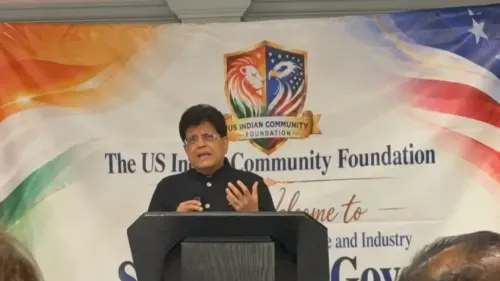
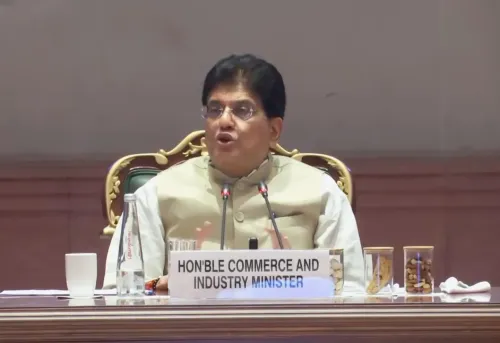
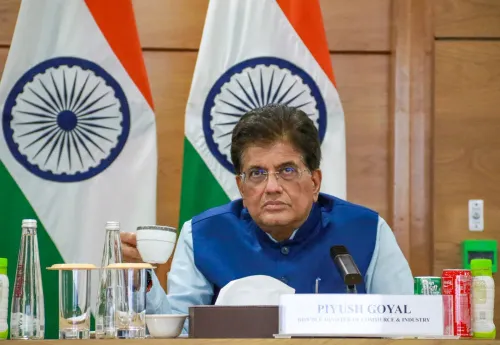
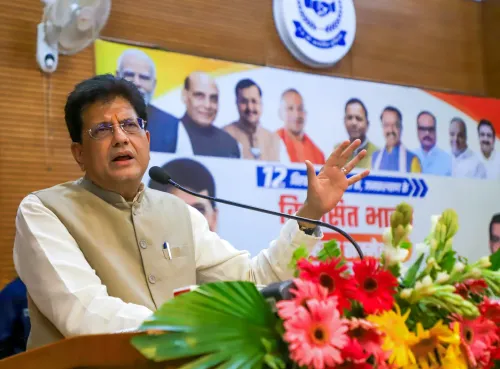
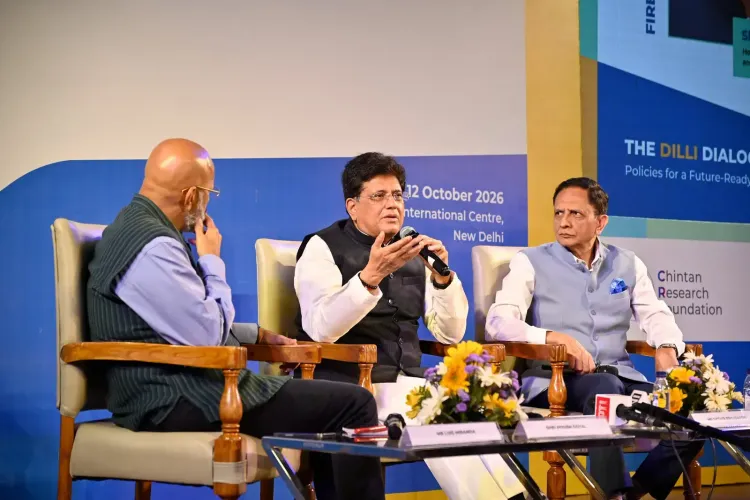
Commerce and Industry Minister Piyush Goyal on Monday, 12 October 2026, said that the new free trade agreements (FTAs) India has recently signed will provide the country with preferential access to developed markets representing a combined GDP of $85 trillion — within the next year and a half. Speaking at the Dilli Dialogue: Policies for a Future-Ready India conference in New Delhi, Goyal framed the FTAs as a cornerstone of India's ambition to integrate deeply into the global economy while protecting domestic sensitivities.
India's Pitch in Trade Negotiations
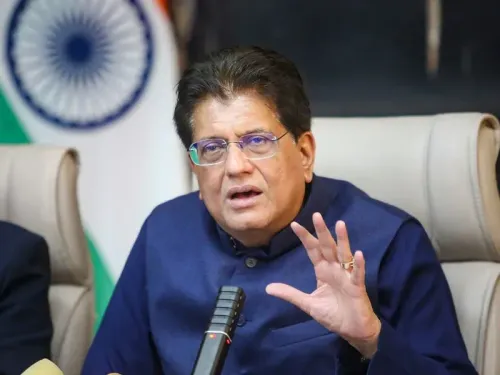
Goyal outlined the core of India's negotiating position with characteristic directness. “My pitch is very simple in trade deal negotiations. I am a $4 trillion economy today and our purchasing power is already, as per the IMF, $16 trillion. Our capacity as a nation is huge,” he said.
He pointed to India's population of 1.4 billion, its demographic dividend, and its growth trajectory as differentiators that give New Delhi substantial leverage at the table — contrasting India's position with advanced economies grappling with ageing populations and sluggish growth.
Twin-Track Strategy: Global Integration and Domestic Growth
The minister described India's broader trade vision as running on two parallel tracks. “We want to be part of the global marketplace, creating opportunities for people, jobs, startups, and our youth to come up with new ideas. In this process, we’ll have a twin track. Of course, we’ll have to engage with the world’s best technologies, but we’ll also have to identify areas with tremendous job and business growth potential,” Goyal said.
He cited tourism as one such high-potential, technology-resilient sector. “Just imagine the scope of tourism. It is AI-proof. AI can only improve the efficiency of tourism promotion,” he remarked, underscoring that not all growth sectors are threatened by automation.
Protecting Farmers, Fishermen and MSMEs
Goyal stressed that trade liberalisation does not mean blanket openness. The government, he explained, prepares a list of sensitive sectors — covering farmers, fishermen, and micro, small and medium enterprises (MSMEs) — before any negotiation begins, carefully assessing the impact of increased foreign competition on each.
He added that the approach is grounded in mutual respect. “Most negotiations I start with the ground rule: you respect my sensitivities, I will respect yours,” Goyal said, noting that this principle makes talks more productive and reduces friction at the final stages.
What This Means for India's Trade Outlook
This comes amid a broader push by India to finalise or upgrade FTAs with key partners including the United Kingdom, the European Union, and several Indo-Pacific economies. Notably, India already operationalised trade agreements with the UAE and Australia in recent years, which served as templates for the current negotiating framework. The $85 trillion market-access figure, if realised within the projected timeline, would represent a structural shift in India's export geography — reducing dependence on any single trading partner and diversifying revenue streams for Indian industry, startups, and service exporters alike.
Industry analysts have broadly welcomed the direction, though some experts caution that preferential access on paper does not automatically translate into export competitiveness — factors such as logistics, standards harmonisation, and domestic supply chain depth will determine how much ground Indian exporters actually gain. The government's next moves on this front will be closely tracked by exporters and investors.
Point of View
But market access and export performance are two different things. India's earlier FTAs with the UAE and Australia showed that even operationalised agreements require years before trade flows visibly shift — logistics gaps, standards divergence, and domestic capacity constraints are real limiters. Goyal's emphasis on protecting farmers and MSMEs is politically sensible but also signals that India's FTA architecture will remain selective, not sweeping. The more consequential test will be the EU and UK agreements, where the gap between ambition and finalisation has stretched across multiple years and governments.
NationPress
12 Oct 2026
Frequently Asked Questions
What did Piyush Goyal say about India's free trade agreements?
Commerce and Industry Minister Piyush Goyal said on 12 October 2026 that India's newly signed FTAs will give the country preferential market access to developed economies with a combined GDP of $85 trillion within roughly 18 months. He made the remarks at the Dilli Dialogue conference in New Delhi.
Which sectors does India protect during FTA negotiations?
According to Goyal, India draws up a list of sensitive sectors — covering farmers, fishermen, and MSMEs — before entering any trade negotiation. The government carefully assesses the potential impact of foreign competition on these groups before deciding what can be opened up.
How does India's purchasing power factor into trade talks?
Goyal cited IMF estimates placing India's purchasing power parity at $16 trillion, alongside a nominal GDP of $4 trillion. He uses these figures to establish India's scale and leverage in trade negotiations, arguing that access to Indian consumers is a significant bargaining chip.
Why did Goyal call tourism an AI-proof sector?
Goyal argued that tourism is largely resilient to automation and artificial intelligence, unlike many manufacturing or back-office services. He said AI can only improve promotional efficiency, making tourism a reliable area for job and business growth as India integrates into global markets.
Which FTAs has India recently signed or upgraded?
India has operationalised trade agreements with the UAE and Australia in recent years, which served as models for current negotiations. Ongoing talks with the United Kingdom, the European Union, and several Indo-Pacific economies are part of the broader push to expand preferential market access.