Piyush Goyal: India's free trade deals cover 70% of global GDP
Synopsis
Commerce Minister Piyush Goyal revealed that India's free trade deals — spanning 38 countries — now cover nearly 70% of global GDP, a figure that reframes India's trade posture from defensive to aggressively outward-looking. The claim, made at NID Ahmedabad, signals that the Modi government is betting on design, innovation, and digital infrastructure to convert FTA access into real export gains.
Key Takeaways
Commerce Minister Piyush Goyal said India's free trade agreements cover nearly 70 per cent of global GDP and close to two-thirds of global trade.
Prime Minister Modi has finalised FTAs with 38 countries , all described as strong, developed economies not directly competing with India.
An estimated 1,700 to 1,800 globally known companies have already set up innovation and design centres in India.
Goyal cited India's status as the world's fastest-growing major economy and holder of the third-largest startup ecosystem globally .
The minister urged students and startups to target sectors such as semiconductors , AI , quantum computing , and deep technology .
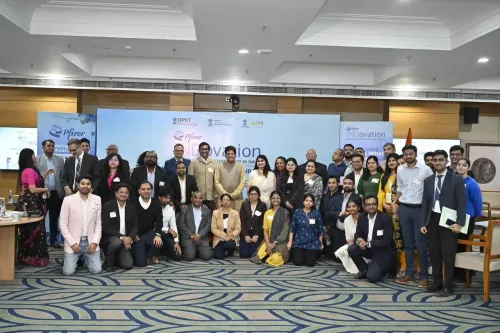
Remarks were made at the inauguration of the Innovation and Incubation Centre at NID Ahmedabad on 17 May .
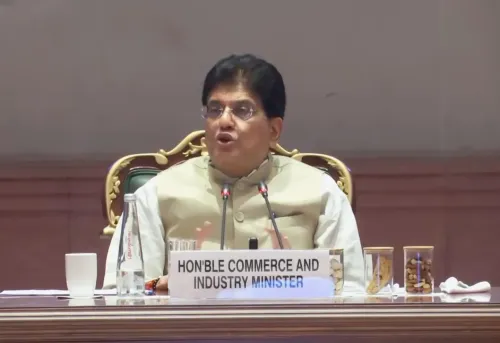
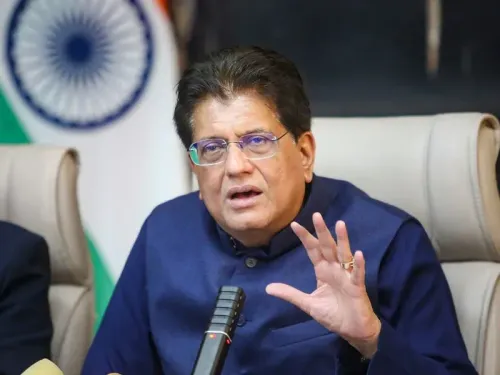
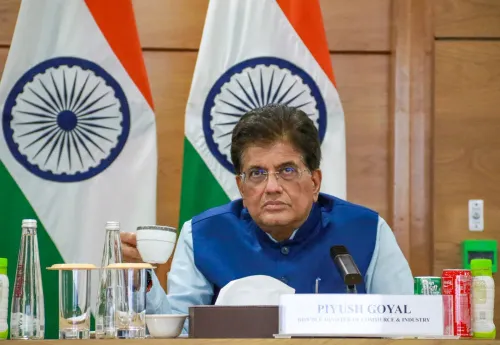
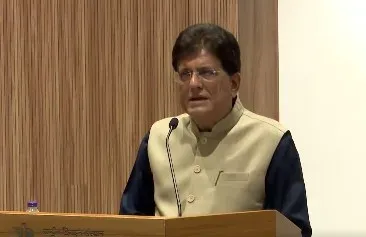
Union Commerce and Industry Minister Piyush Goyal on Sunday, 17 May said India's free trade agreements with developed economies now give the country preferred market access covering nearly 70 per cent of global GDP. Speaking at the inauguration of the Innovation and Incubation Centre at the National Institute of Design (NID) in Ahmedabad, Goyal framed the agreements as a cornerstone of Prime Minister Narendra Modi's long-term economic strategy.
Scale of the Trade Agreements
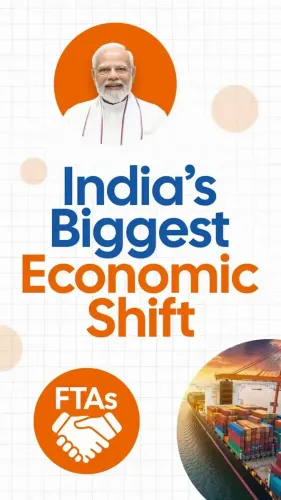
Goyal stated that Prime Minister Modi had finalised free trade agreements with 38 countries, collectively accounting for nearly 70 per cent of global GDP and close to two-thirds of global trade. He underlined that India had deliberately chosen to partner with 'strong and developed economies' rather than nations that directly compete with Indian industries — a strategic distinction, he argued, that would amplify rather than dilute India's export potential.
'This will become our strength if we improve product design, packaging, branding and innovative products with an outward-looking approach aimed at capturing global markets, not just India,' the minister said.
Link to Flagship Economic Programmes
The minister connected the trade agreements to India's broader economic transformation, citing initiatives such as Make in India, Startup India, and Digital India — all launched shortly after Prime Minister Modi took office in 2014. Goyal also noted that India had integrated regional electricity grids into a single national grid during this period, strengthening the infrastructure backbone for industrial growth.
He pointed to India's low-cost internet access and expanding digital infrastructure as key draws for global technology investment, adding that an estimated 1,700 to 1,800 globally recognised companies had already established innovation and design centres in the country.
Data Centres and Digital Opportunity
Goyal highlighted India's growing attractiveness as a destination for data centres, suggesting that investments worth 'lakhs of crores' could flow in, driven by the country's infrastructure, affordable high-quality data, digital connectivity, and skilled workforce. He attributed investor confidence partly to what he described as India's reputation for integrity: 'The world trusts India because India's DNA is honest and innovation here will not be stolen,' he said.
Global Capability Centres, he added, were increasingly choosing India for the same reasons — a trend he said was set to accelerate as digital infrastructure deepened.
Call to Action for Students and Startups
Addressing students and entrepreneurs at the NID event, Goyal urged them to think globally and target emerging sectors including semiconductors, artificial intelligence, quantum computing, machine learning, and deep technology. He called on incubation centres to bridge the gap between ideas and commercially viable products for international markets.
India's future competitiveness, he argued, would hinge on productivity, sustainable manufacturing, high-quality products, and the speed of innovation — areas where design thinking, as taught at NID, would play a central role.
India's Broader Economic Standing
Goyal reiterated that India had become the world's fastest-growing major economy and had built the third-largest startup ecosystem globally, backed by rapid 5G rollout and some of the world's most affordable data services. With the new FTA network in place, he said, Indian companies were better positioned than ever to expand internationally and compete on a global scale.
As India deepens its trade architecture and digital infrastructure, the coming years will test whether the FTA framework translates into measurable export growth and job creation on the ground.
Point of View
But its value depends entirely on what preferential access actually delivers in practice. FTAs create market openings — they do not guarantee export volumes. India's merchandise export growth has remained uneven despite earlier trade pacts, and sectors like electronics and semiconductors, which Goyal specifically flagged, are still in early-stage domestic manufacturing. The real question is whether Indian companies have the design capability, supply-chain depth, and brand equity to exploit these agreements at scale — or whether the FTA network simply widens the door that few domestic firms are yet positioned to walk through.
NationPress
26 Sept 2026
Frequently Asked Questions
What did Piyush Goyal say about India's free trade agreements?
Commerce Minister Piyush Goyal said India's free trade agreements with 38 countries now cover nearly 70 per cent of global GDP and close to two-thirds of global trade. He made the remarks at the inauguration of the Innovation and Incubation Centre at NID Ahmedabad on 17 May.
How many countries has India signed FTAs with under PM Modi?
According to Goyal, Prime Minister Modi has finalised free trade agreements with 38 countries. The minister emphasised that these are strong, developed economies rather than nations that compete directly with Indian industries.
Why does the 70% global GDP figure matter for India?
Preferred market access covering 70% of global GDP means Indian exporters can potentially enter major markets on more favourable terms than competitors without such agreements. Goyal argued this would support India's ambitions in manufacturing, exports, design, and innovation.
What sectors did Goyal highlight for future growth?
Goyal urged students and startups to focus on semiconductors, artificial intelligence, quantum computing, machine learning, and deep technology. He said incubation centres should help convert ideas into commercially viable products for international markets.
What did Goyal say about data centres and digital investment in India?
Goyal said estimates suggest India can attract data centre investments worth lakhs of crores, driven by its infrastructure, affordable high-quality data, digital connectivity, and skilled workforce. He noted that 1,700 to 1,800 globally known companies already operate innovation and design centres in India.