Has India Achieved Market Access to 70% of Global GDP at Zero Duty?
Synopsis
India has expanded its market access to a significant 70% of global GDP with mostly zero duty on exports. Union Minister Piyush Goyal emphasizes the importance for startups to leverage this opportunity and innovate affordable medical technology for both domestic and international markets.
Key Takeaways
India has access to 70% of global GDP.
Most exports are at zero duty.
Nine Free Trade Agreements completed in three years.
Encouragement for startups to innovate globally.
Focus on affordable medical technology.
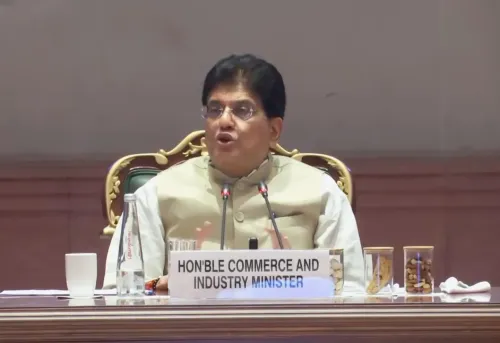
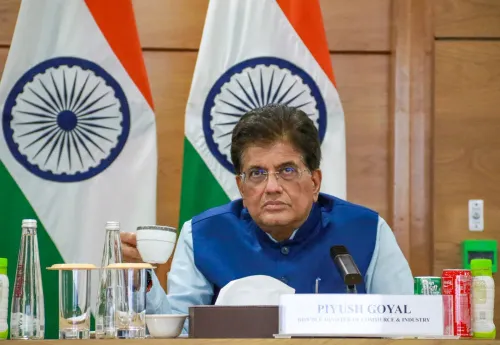
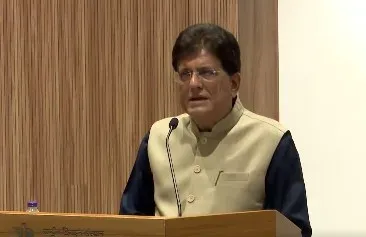
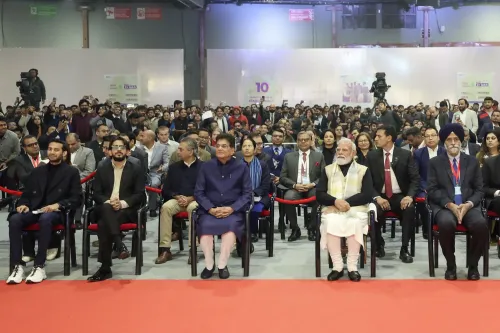
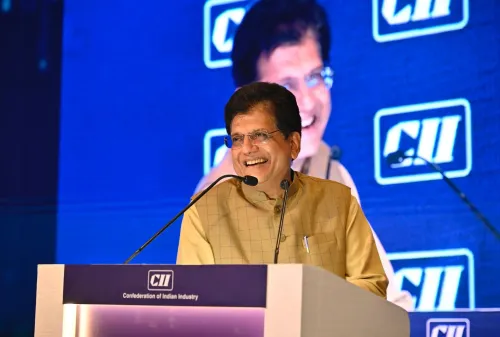
New Delhi, Feb 12 (NationPress) India has now secured access to 70 percent of the global GDP, primarily at zero duty for its domestic products, announced Union Commerce and Industry Minister Piyush Goyal on Thursday.
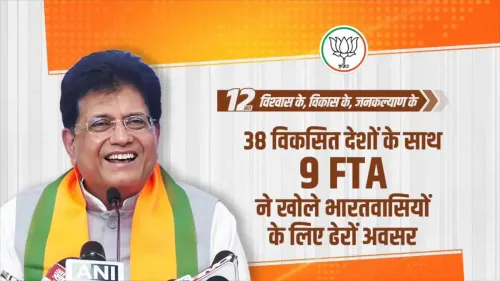
During an event in the capital, Goyal highlighted that in the past three years, nine Free Trade Agreements (FTAs) have been finalized, involving 38 countries with robust per capita incomes. He noted that most developed markets have established trade ties with India.
“These agreements encompass the 27-nation EU, the four-nation EFTA, the UK, Australia, New Zealand, and the USA, along with earlier agreements with Japan, Korea, and ASEAN nations,” the minister stated.
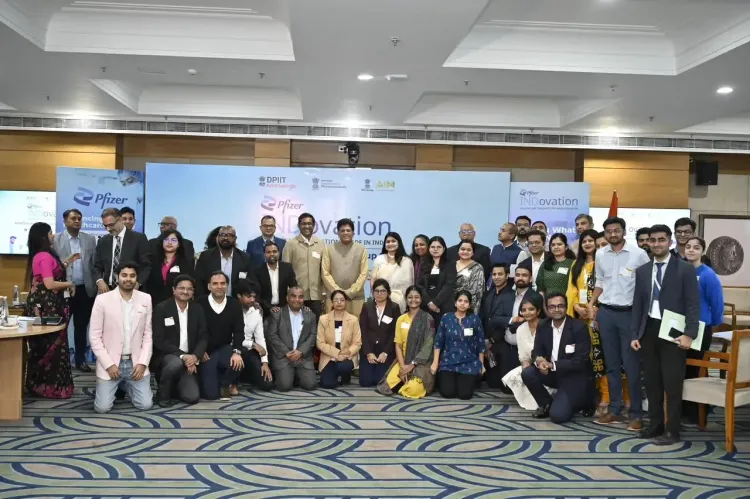
He encouraged medtech startups to explore opportunities beyond domestic borders, utilizing India’s expanding trade agreements that encompass nearly 70 percent of global GDP. He urged them to innovate affordable solutions that can cater to both Indian and international markets.
According to Goyal, affordable and scalable medical technology can enhance healthcare access even in the most remote areas of India, while also tapping into global markets across Africa, Latin America, Central Asia, Southeast Asia, and developed nations.
The minister advised startups not to confine themselves to local markets and to showcase their innovations at global fairs and exhibitions.
He assured that the Commerce Ministry will assist delegations, and that India’s missions in over 190 countries are available to support innovators. Collaboration with global firms present in more than 100 countries is also encouraged for gaining access to developed markets.
Innovative and affordable medtech products can help cut costs and enhance quality through economies of scale. Goyal remarked that several startups present at the event had achieved CDSCO approvals, while others were close to securing FDA approvals, facilitating their international expansion.
Innovation should focus on the day-to-day challenges faced by India.
The minister highlighted the necessity of showcasing success stories and called upon ‘Startup India’, the private sector, and media to uplift entrepreneurs, including those who may initially face setbacks.
Additionally, three new National Institutes of Pharmaceutical Education and Research (NIPERs) are being set up, along with upgrades to seven existing NIPERs. A new National Institute of Design (NID) will also be established in Eastern India, with states vying for the best proposal.
Point of View
India's achievement of securing market access to 70% of global GDP at zero duty is a significant milestone that showcases the country's growing influence in international trade. It highlights the importance of fostering innovation, especially in the medtech sector, while encouraging startups to think globally. This is a positive step towards enhancing India's economic landscape and creating opportunities for entrepreneurs.
NationPress
20 Sept 2026
Frequently Asked Questions
What percentage of global GDP does India have access to?
India has gained access to 70 percent of global GDP.
Are there any duties on Indian exports?
In most cases, Indian products are exported at zero duty.
How many Free Trade Agreements has India concluded recently?
India has concluded nine Free Trade Agreements in the last three years.
Which countries are involved in India's recent trade agreements?
The agreements cover countries like the EU, USA, UK, Australia, New Zealand, Japan, Korea, and ASEAN nations.
What sectors should Indian startups focus on for global expansion?
Startups, especially in the medtech sector, should leverage trade agreements to innovate affordable solutions for both domestic and international markets.