Rahul Gandhi Attacks Dharmendra Pradhan Over Education Failures
Synopsis
Congress leader Rahul Gandhi attacked former Education Minister Dharmendra Pradhan on July 27, 2026, calling him a symbol of corruption and India's failing education system, alleging his resignation was driven by fear of youth anger rather than moral accountability, and questioning his continued presence in Parliament.
Key Takeaways
Rahul Gandhi called Dharmendra Pradhan a permanent symbol of corruption and India's 'ruined education system' in a post on July 27, 2026 .
Gandhi alleged the same system claimed the lives of 26 children and forced lakhs of young people onto the streets in protest.
He charged that Pradhan's resignation as Education Minister was not a moral act but a response to the rage of protesting youth.
The attack questions Pradhan's continued presence in Parliament after stepping down from the ministry.
The Congress has consistently linked education governance failures — including examination integrity and campus safety — to BJP's ministerial accountability record.
Parliamentary scrutiny of the Education Ministry and potential committee inquiries are expected to follow.
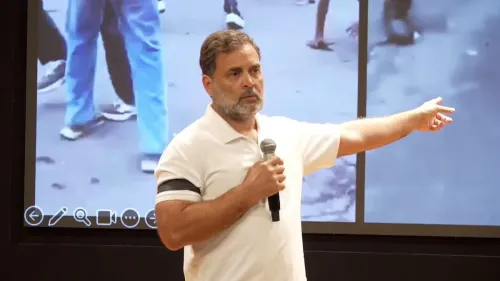
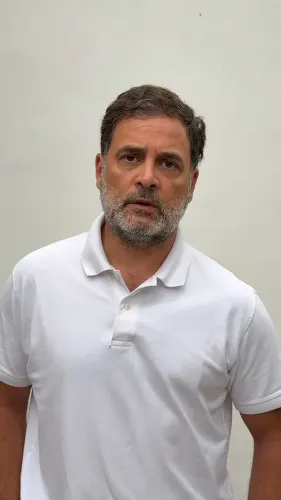
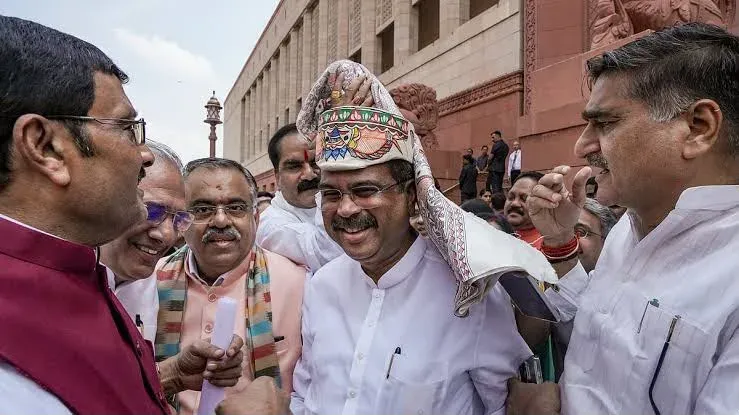
Congress leader and Leader of the Opposition in Lok Sabha Rahul Gandhi on Monday, July 27, 2026, launched a sharp attack on BJP leader Dharmendra Pradhan, calling him a symbol of corruption and the collapse of India's education system, and questioning his continued presence in Parliament after his resignation as Education Minister.
Context
In his post on X, Gandhi wrote: 'Dharmendra Pradhan bhrashtachar aur Bharat ki barbaad education system ke prateek hain aur hamesha rahenge' — 'Dharmendra Pradhan is, and will always remain, a symbol of corruption and India's ruined education system.' He further alleged that 'the same system claimed the lives of 26 children and forced lakhs of young people onto the streets.' Gandhi did not elaborate on the specific incident referenced, but the reference appears tied to a safety or examination-related tragedy that drew nationwide student protests.
Gandhi also questioned the circumstances of Pradhan's departure from the Education Ministry, writing that the resignation was not driven by moral accountability but by fear of youth anger: 'Isteefa bhi naitikta se nahin — yuvaon ke aakrosh se darkar dena pada' — 'Even the resignation was not given out of integrity — it was forced by the rage of the youth.' The post ends mid-sentence, suggesting it accompanied an image that completed the thought about Pradhan's parliamentary role.
Policy Backdrop
Dharmendra Pradhan served as Union Minister of Education and was the face of implementing the National Education Policy 2020, which introduced sweeping structural changes to school and higher education, including multidisciplinary learning and vocational integration. The ministry's tenure was marked by recurring controversies over examination integrity, paper leaks, and campus infrastructure concerns — issues that opposition parties repeatedly raised in Parliament and in public discourse.
Opposition criticism of the Education Ministry has consistently centred on three pressure points: safety failures in educational institutions, the credibility of competitive examinations, and the quality of youth employment outcomes linked to the reformed system. Gandhi's post fits squarely within this pattern of sustained political accountability demands directed at the ministry's leadership.
Stakeholders and Impact
The primary stakeholders in this political exchange are India's student community, parents, and millions of young job-seekers who depend on the credibility of the national education and examination framework. Large-scale student protests — referenced in Gandhi's post — signal that discontent has moved beyond parliamentary corridors into street-level mobilisation, amplifying the political stakes for the ruling party.
For the Indian National Congress, the attack serves a dual purpose: holding a former minister personally accountable while framing the broader governance record of the BJP on education as a systemic failure rather than an isolated lapse. The timing — with Pradhan's presence in Parliament despite his resignation from the ministry — gives Gandhi a concrete, visible target to sustain the narrative.
What's Next
Parliamentary scrutiny of the Education Ministry's functioning is expected to intensify, with opposition members likely to press for committee inquiries into examination system reforms and institutional safety standards. Gandhi's post signals that Congress intends to keep education accountability at the centre of its opposition strategy in the current session.
The political pressure on the BJP to explain Pradhan's continued parliamentary role — and to address the grievances of protesting youth — is unlikely to ease unless the government offers concrete remedial measures on examination integrity and student safety. How the ruling party responds in Parliament will determine whether this becomes a sustained crisis or a contained political moment.
Point of View
Congress aims to sustain electoral accountability beyond the minister's tenure. The invocation of 26 deaths and mass street protests grounds the attack in human cost, making it harder for the BJP to dismiss as routine opposition rhetoric. The timing, with Pradhan still visible in Parliament, gives Congress a live target that keeps the narrative active inside and outside the House. This fits a broader opposition pattern of converting governance failures into personal indictments ahead of electoral cycles.
NationPress
28 Jul 2026
Frequently Asked Questions
Why did Rahul Gandhi attack Dharmendra Pradhan on education?
Rahul Gandhi accused Dharmendra Pradhan of being a symbol of corruption and the failure of India's education system, alleging that the system under his watch claimed 26 lives and drove lakhs of youth to protest in the streets.
Why did Dharmendra Pradhan resign as Education Minister?
According to Rahul Gandhi's post, Pradhan's resignation was not motivated by moral accountability but by fear of youth anger following large-scale student protests. The specific circumstances of the resignation have not been independently detailed in the available information.
What is the National Education Policy 2020?
The National Education Policy 2020 is a sweeping reform of India's school and higher education framework, emphasising multidisciplinary learning and vocational training. Dharmendra Pradhan was the Education Minister responsible for its implementation.
What did Rahul Gandhi say about India's education system?
Rahul Gandhi said India's education system is 'ruined' and that Dharmendra Pradhan is and will always remain its symbol of corruption, linking the system's failures to student deaths and mass youth protests.
Is Dharmendra Pradhan still in Parliament after resigning as minister?
Rahul Gandhi's post implies that Pradhan remains a member of Parliament even after his resignation from the Education Ministry, and Gandhi used this continued presence as the basis for his criticism.