Rahul Gandhi backs MP tribal jal satyagraha over Ken-Betwa land
Synopsis
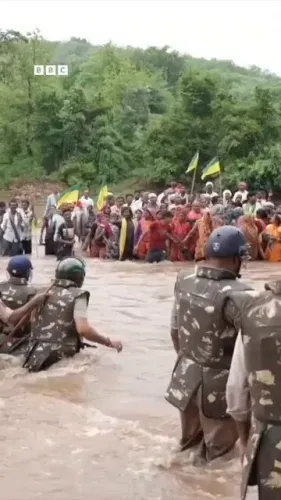
Congress leader Rahul Gandhi on 27 July 2026 expressed solidarity with Madhya Pradesh tribal communities protesting land acquisition and inadequate rehabilitation under the Ken-Betwa River Link Project, accusing the BJP government of suppressing their peaceful jal satyagraha with police force.
Key Takeaways
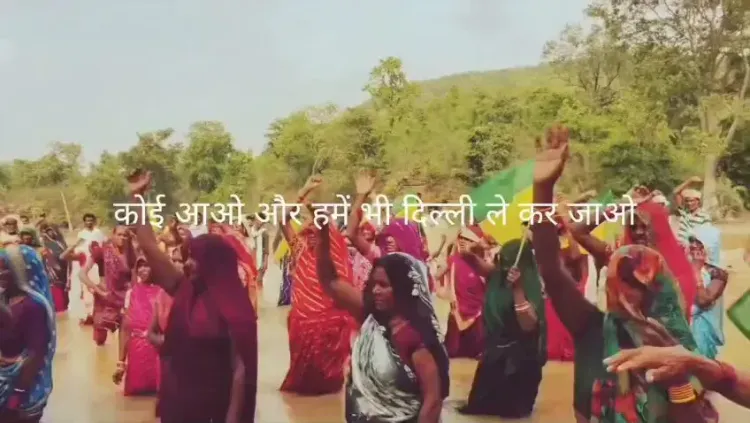
Tribal communities in Madhya Pradesh launched a jal satyagraha and hunger strike over land taken for the Ken-Betwa River Link Project without just compensation or rehabilitation.
Rahul Gandhi posted on X on 27 July 2026 backing the protesters and demanding compensation and dignified resettlement.
Gandhi alleged that the BJP government was suppressing the peaceful protest using police force instead of addressing the communities' demands.
The Ken-Betwa Link Project is India's first major river interlinking scheme, with Phase-I approved between 2015 and 2021 , targeting water-scarce Bundelkhand .
The Forest Rights Act, 2006 guarantees tribal rights over forest land and is central to legal disputes around such infrastructure projects.
Congress pledged to secure justice for the affected Adivasi families, raising political pressure on the ruling dispensation ahead of any legal proceedings.
Congress leader Rahul Gandhi, Leader of the Opposition in the Lok Sabha, on Monday, 27 July 2026, publicly backed tribal communities in Madhya Pradesh who have been staging a jal satyagraha (water sit-in protest) and hunger strike over alleged land dispossession and inadequate rehabilitation linked to the Ken-Betwa River Link Project.
Context
In a post shared on X, Gandhi stated that the tribal men and women of Madhya Pradesh were protesting because their land was taken for the Ken-Betwa project without just compensation or dignified rehabilitation. He translated their demand plainly: 'guzar-basar karne ke liye uchit sahara to do' ('at least give us adequate support to survive'), adding that without it, 'life is no better than a funeral pyre.' Gandhi also alleged that instead of hearing their grievances, the BJP government was suppressing even their peaceful protest with police force.
The post credited a video accompanying it to Shiksha Pareek and Lok Singh, suggesting ground-level documentation of the agitation. Gandhi declared Congress's solidarity with the affected communities, asserting that compensation and rehabilitation 'will have to be given.'
Policy Backdrop
The Ken-Betwa Link Project is India's first major river interlinking scheme, designed to transfer surplus water from the Ken river to the Betwa river across the drought-prone Bundelkhand region, covering parts of Madhya Pradesh and Uttar Pradesh. The project is intended to boost irrigation, drinking water supply, and power generation in one of the country's most water-stressed zones.
The concept of river interlinking was formally outlined in the National Perspective Plan prepared by the Ministry of Water Resources in the 1980s, and Phase-I of the Ken-Betwa project received in-principle approval and funding commitments from the Union government between 2015 and 2021. Critics have long argued that such large dam and diversion projects displace forest-dwelling and tribal populations who depend on the very land and water bodies being altered.
The Scheduled Tribes and Other Traditional Forest Dwellers (Recognition of Forest Rights) Act, 2006 — commonly called the Forest Rights Act — legally recognises tribal communities' rights over forest land and resources. Opposition voices and rights groups have frequently cited the Act in disputes where development projects proceed without adequate consent or rehabilitation for affected Adivasi families.
Stakeholders and Impact
The communities at the centre of this agitation are project-affected families from the Bundelkhand region of Madhya Pradesh, many of whom belong to Scheduled Tribes. Gandhi described them as the 'first owners of the country' with the 'foremost right over water, forests and land' — a framing rooted in the constitutional and legislative protections extended to Adivasi communities.
The Bharatiya Janata Party government at the Centre is implementing the project and faces the dual challenge of delivering on its infrastructure and water-security promises while addressing rehabilitation shortfalls. The state government of Madhya Pradesh, also BJP-led, is the immediate administrative authority for land acquisition and resettlement processes on the ground.
Successive governments across party lines have faced similar tensions between large-scale water infrastructure and the rights of displaced communities. Gandhi's intervention signals that Congress intends to use this local agitation as a sustained political pressure point against the ruling dispensation.
What's Next
Attention will now turn to whether the Madhya Pradesh government responds to the rehabilitation demands raised by the protesting families, and whether any formal hearings are initiated in the National Green Tribunal or the Madhya Pradesh High Court on land compensation under the Ken-Betwa project. Gandhi's public commitment that 'compensation and rehabilitation will have to be given' raises the political stakes ahead of any such proceedings.
If the protest continues or escalates, it could draw wider national attention to the implementation gaps in tribal rehabilitation policy — a fault line that has historically cut across multiple large infrastructure projects in central India.
Point of View
Water, and forests to sharpen the contrast with the BJP's infrastructure-first narrative. The Ken-Betwa project is symbolically significant because it is the flagship of India's long-pending river interlinking agenda, making any rehabilitation failure politically costly for the ruling party. By publicly committing to 'ensure justice,' Gandhi is also signalling that Congress intends to keep displacement and Forest Rights Act implementation at the centre of its opposition agenda in Madhya Pradesh, a state the party lost and is seeking to reclaim. The allegation of police action against peaceful protesters, if substantiated, could further amplify the issue in courts and civil society.
NationPress
27 Jul 2026
Frequently Asked Questions
What is the Ken-Betwa River Link Project?
The Ken-Betwa Link Project is India's first major river interlinking scheme, designed to divert surplus water from the Ken river to the Betwa river in the Bundelkhand region of Madhya Pradesh and Uttar Pradesh to address water scarcity, boost irrigation, and generate hydropower. Phase-I received Union government approval and funding commitments between 2015 and 2021.
Why are tribal communities in Madhya Pradesh protesting against the Ken-Betwa project?
Tribal communities allege that their land was acquired for the Ken-Betwa project without fair compensation or dignified rehabilitation. They have staged a jal satyagraha (water sit-in) and hunger strike demanding adequate resettlement support, arguing that their rights under the Forest Rights Act, 2006 have not been honoured.
What did Rahul Gandhi say about the Ken-Betwa tribal protest?
On 27 July 2026, Rahul Gandhi posted on X expressing solidarity with the protesting tribal communities, accusing the BJP government of suppressing their peaceful protest with police force, and pledging that Congress would ensure they receive compensation and rehabilitation.
What is jal satyagraha?
Jal satyagraha is a form of non-violent protest in which demonstrators stand or sit in water bodies for extended periods to draw attention to their demands. It has been used by communities displaced by dam and river projects across India to highlight grievances over land loss and rehabilitation.
What legal protections do tribal communities have against displacement by development projects in India?
The Scheduled Tribes and Other Traditional Forest Dwellers (Recognition of Forest Rights) Act, 2006 — the Forest Rights Act — legally recognises tribal and forest-dwelling communities' rights over land and forest resources. Development projects are required to obtain consent and ensure proper rehabilitation under this and related land acquisition laws before displacing such communities.