Rahul Gandhi Accuses BJP of Rigging Gokul Dairy Cooperative Polls
Synopsis
Congress leader Rahul Gandhi accused the BJP of altering Gokul dairy cooperative rules after losing a board election — expanding the board from 12 to 16 seats and inserting 4 directors — to manufacture a majority and override the mandate of milk producers.
Key Takeaways
Rahul Gandhi alleged that milk producers defeated the BJP in the Gokul dairy cooperative election.
He claimed the BJP responded by inserting 4 additional directors and expanding the board from 12 to 16 seats post-poll.
Gandhi called the move 'theft of milk producers' votes' and 'adulteration of the mandate.' Dairy cooperative boards in India control procurement, pricing, and rural credit — making them significant political prizes.
Gandhi warned the BJP that farmers 'do not forget,' signalling the issue will be carried into future electoral cycles.
Legal challenges through cooperative courts or high courts are the standard recourse in disputed post-poll rule changes.
Milk producers in Gokul defeated the BJP at the ballot box — and, Congress leader Rahul Gandhi alleges, the ruling party responded by rewriting the rules of the game. In a sharp post on X on Thursday, November 5, 2026, Gandhi accused the BJP of inflating the size of the dairy cooperative board after losing an election, calling it an outright theft of the farmer's mandate.
Gandhi's post lays out a pointed sequence: 'दूध उत्पादकों ने भाजपा को हरा दिया' ('milk producers defeated the BJP'), after which, he alleges, the party pushed through post-poll rule changes — inserting 4 additional directors and expanding the board from 12 to 16 seats — to manufacture a majority it had failed to win at the polls. 'This is the theft of milk producers' votes — adulteration of the mandate,' he wrote, borrowing the dairy metaphor of adulteration to describe political manipulation. His closing line: 'The farmer does not forget.'
Why Dairy Cooperative Boards Are a Political Prize
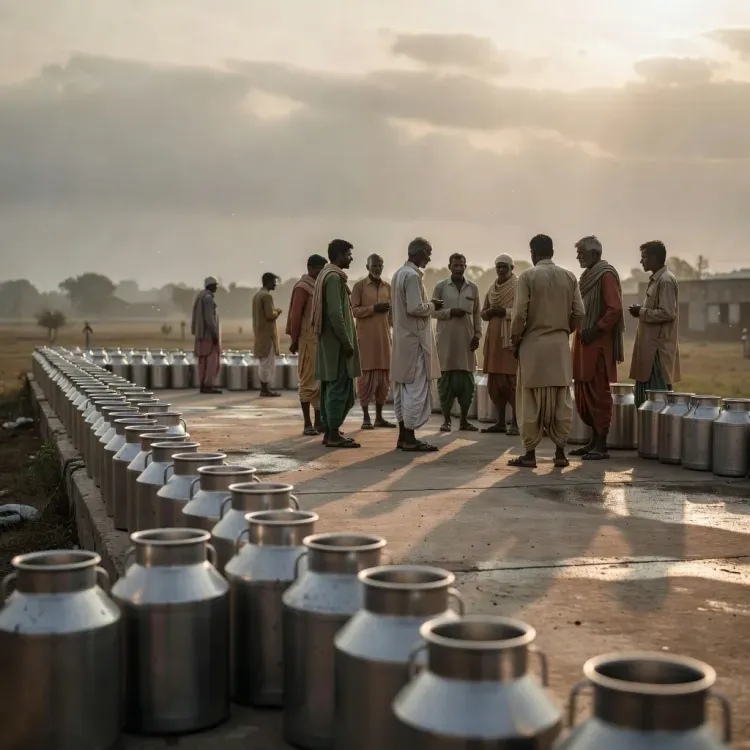
Dairy cooperatives in India are far more than milk-collection points. They sit at the intersection of rural livelihoods and political networks, controlling procurement prices, bonus payments, and credit linkages for hundreds of thousands of small producers. Control of a cooperative board translates directly into influence over village economies — which is precisely why they have long been contested terrain for political parties across states.
The Gokul cooperative operates in this politically charged space. When a party loses a cooperative election, its leverage over procurement and pricing decisions weakens, giving the winning bloc real power over farmers' incomes. The allegation that board size was expanded post-poll to dilute the winning majority describes a structural override of the democratic verdict.
The 'Board Inflation' Allegation
Gandhi's specific charge — that 4 directors were inserted and the board was grown from 12 to 16 after the results — describes a tactic that has periodically been alleged in cooperative governance disputes across India: altering the institutional rules after a vote to shift the arithmetic of control. The critical test is whether the rule change followed due legal process or was pushed through to serve a political purpose. Gandhi frames it unambiguously as the latter.
The image of 'adulteration' is deliberate. In a dairy context the word strikes viscerally — Gandhi is equating the manipulation of a democratic mandate with the contamination of milk, a practice farmers and consumers alike regard as a betrayal of trust.
What Comes Next for Gokul's Farmers
The natural next step in such disputes is a legal challenge. Post-poll amendments to board composition can be contested in state cooperative courts or high courts if they are shown to lack statutory authority or were timed to defeat an election result. Any petition filed by the winning bloc would bring the specific sequence of events — the election result, the date of the rule change, and the government's justification — into the public record and judicial scrutiny.
Gandhi's closing line, 'The farmer does not forget,' is calibrated to resonate in a rural constituency that has watched cooperative politics for decades. If the courts take up the matter, the farmers of Gokul may not have to rely on memory alone.
Point of View
Framing institutional manipulation at the grassroots as a symptom of a party desperate to hold power at any cost. The dairy metaphor of 'adulteration' is surgically chosen: in rural India, milk adulteration is not an abstraction but a lived grievance, making the analogy land harder than any policy jargon. If the allegation of post-poll board expansion is substantiated in court, it would hand the Congress a concrete, court-verified symbol of democratic erosion ahead of state elections. The BJP has not publicly responded to the specific charge, leaving the narrative space entirely with Gandhi for now.
NationPress
5 Nov 2026
Frequently Asked Questions
What is Gokul dairy cooperative and why does it matter politically?
Gokul is a dairy cooperative whose elected board controls milk procurement, pricing, and farmer payments. Cooperative boards of this kind are significant political battlegrounds because they influence rural incomes and local political networks.
What rule change did Rahul Gandhi allege the BJP made in Gokul?
Gandhi alleged that after losing the cooperative election, the BJP inserted 4 additional directors and expanded the board size from 12 to 16, claiming this was done to manufacture a majority and override the election result.
Is post-poll alteration of cooperative board size legal in India?
Cooperative societies are governed by state cooperative laws and their own bye-laws. Any amendment to board composition must follow prescribed statutory procedures; changes made to reverse an election outcome can be challenged in cooperative courts or high courts.
What can Gokul milk producers do to challenge the alleged rule change?
Affected members can file a petition before the state cooperative registrar or move the relevant high court, arguing that the post-poll amendment lacked statutory authority or was designed to defeat a valid election mandate.
Why did Rahul Gandhi use the word 'adulteration' in his post about the cooperative?
Gandhi used the dairy term 'adulteration' — meaning contamination of milk — as a deliberate metaphor to describe the alleged tampering with an election mandate, making the analogy viscerally resonant for dairy farmers and rural audiences.