Rahul Gandhi calls nationwide march to Ramleela Maidan on Nov 1
Synopsis
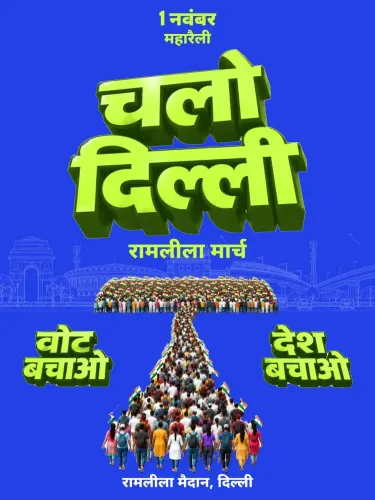
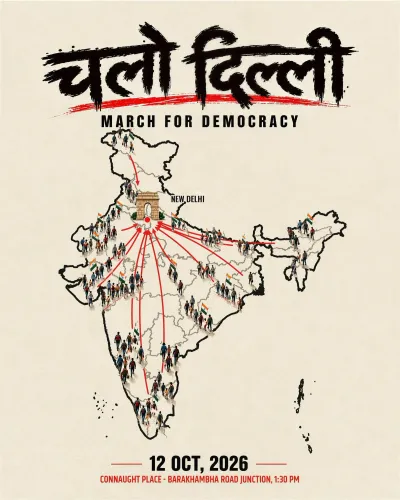
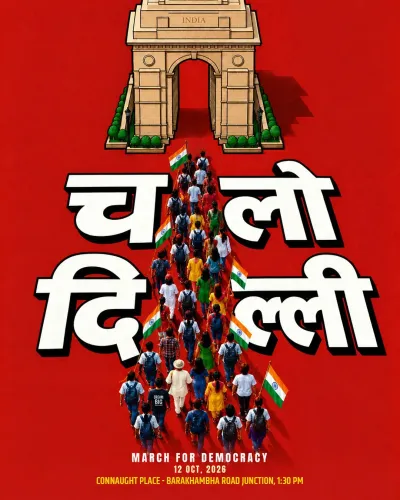
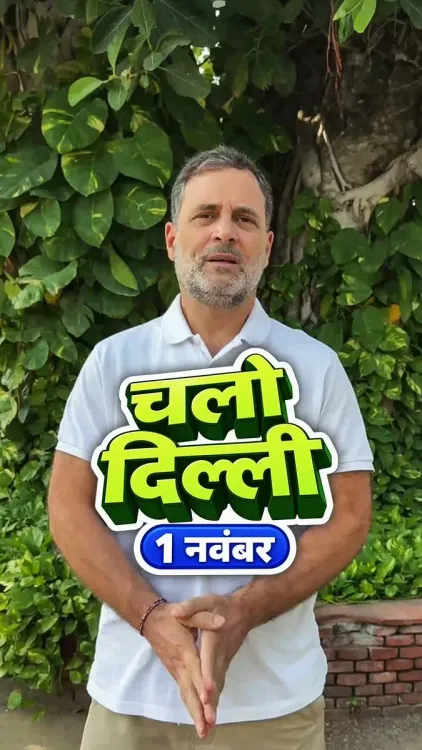
Congress leader Rahul Gandhi has called citizens, students, and opposition supporters to a mass march at Ramleela Maidan, New Delhi on 1 November 2026, framing it as a cross-party stand to save democracy, stop vote theft, and protect the Constitution under the banner #ChaloDilli.
Key Takeaways
Rahul Gandhi has announced a mass march to Ramleela Maidan, New Delhi on 1 November 2026 under the hashtag #ChaloDilli .
The march is framed as non-partisan — 'not the march of any one political party' — and is being called 'the march of the soul of Hindustan.' Gandhi named PM Narendra Modi , Home Minister Amit Shah , and Election Commissioner Gyanesh Kumar directly in his mobilisation call.
He made a specific appeal to student groups across all political affiliations to join, citing threats to freedom of expression and thought.
The central demands are protecting the Constitution, preventing alleged vote theft, and asserting the independence of democratic institutions.
Gandhi urged participants not to fear police action, saying 'घबराने की जरूरत नहीं है' — 'There is no need to be afraid.'
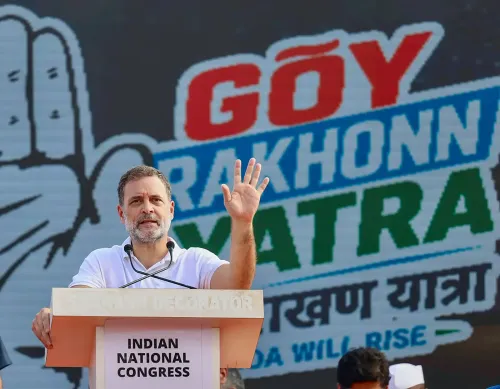
With three days to go, Congress leader Rahul Gandhi has issued a sweeping, bilingual call to action — urging citizens, student groups, and opposition supporters across India to converge on Ramleela Maidan, New Delhi, on 1 November for what he is framing as a march not for any single party, but for the soul of Indian democracy itself.
Posting under the hashtag #ChaloDilli, Gandhi declared the event a march 'to save democracy, to stop vote theft, to protect the Constitution' — 'लोकतंत्र को बचाने का, वोट चोरी को रोकने का, संविधान को बचाने का मार्च' ['a march to save democracy, to stop vote theft, to protect the Constitution']. He named Prime Minister Narendra Modi, Union Home Minister Amit Shah, and Election Commissioner Gyanesh Kumar directly, calling on all who are 'fed up' with the three to join. The explicit naming of the Election Commissioner alongside the two top BJP leaders signals that the Congress's deepest grievance going into the rally is with the conduct of electoral institutions, not just the ruling party's politics.
Why Ramleela Maidan — and why now
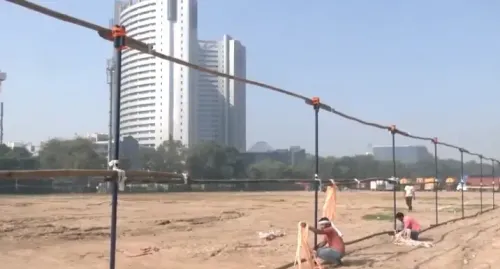
Ramleela Maidan is not a random venue. The sprawling open ground in central Delhi has hosted some of the most consequential political gatherings in post-Independence India — from Anna Hazare's anti-corruption fasts to Narendra Modi's own pre-2014 mega-rallies. Choosing it signals that the Congress intends scale. Gandhi's tone reinforced the ambition: 'It will be a fantastic march, and it's a march for the soul of this country.'
The timing matters too. The Congress-led opposition has sustained a years-long campaign questioning the integrity of Electronic Voting Machines and the independence of the Election Commission following the 2019 and 2024 general elections. A public march anchored on 'vote theft' and electoral fairness lands that critique on the street — where numbers become the argument.
The pitch to students and the apolitical
Perhaps the sharpest strategic move in Gandhi's post is his direct outreach to student groups — explicitly 'regardless of political affiliation.' The appeal — 'if you feel that India is under attack, if you feel you are under attack, your expression, your ideas, your way of thinking is under attack, come and join us' — is designed to pull beyond the Congress base and into the campus networks and civil society organisations that have become a distinct political constituency in their own right.
He also addressed, head-on, the concern many potential marchers will have: a confrontation with law enforcement. 'Don't worry about the police, don't worry about lathis — the BJP will not have the guts to try any of their antics,' he said. 'घबराने की जरूरत नहीं है' ['There is no need to be afraid']. It is a line calibrated to lower the psychological barrier to participation — particularly for first-time protesters.
Gyanesh Kumar in the crosshairs
The mention of Election Commissioner Gyanesh Kumar by name is the sharpest institutional challenge embedded in the post. Indian oppositions have long criticised the appointment and functioning of election commissioners, but naming a sitting commissioner in a mobilisation call for a mass protest marks an escalation in rhetoric. It places the Election Commission's perceived independence at the centre of the 1 November rally's political argument — and guarantees that the government and commission will face pointed questions about their response in the days before the march.
All eyes now turn to Ramleela Maidan on 1 November: the turnout will either validate Gandhi's claim that this transcends party lines or reveal the limits of opposition mobilisation — and the answer will shape every conversation about India's electoral politics for months to come.
Point of View
Gandhi has sharpened the institutional critique well beyond standard electoral rhetoric. The deliberate outreach to apolitical student groups suggests an attempt to reframe the Congress not merely as the BJP's rival, but as the custodian of a broader democratic coalition. Turnout on 1 November will be a real-time verdict on whether that repositioning has purchase beyond the party's existing base.
NationPress
29 Oct 2026
Frequently Asked Questions
What is the Chalo Dilli march called by Rahul Gandhi?
The Chalo Dilli march is a mass public demonstration called by Congress leader Rahul Gandhi, scheduled for 1 November 2026 at Ramleela Maidan, New Delhi . It is framed as a cross-party march to protect the Constitution, prevent alleged vote theft, and defend democratic institutions.
Why did Rahul Gandhi name Gyanesh Kumar in his march call?
Gandhi named Election Commissioner Gyanesh Kumar alongside PM Modi and Home Minister Amit Shah as figures that citizens are 'fed up' with, placing the perceived independence of the Election Commission at the heart of the protest's demands. The Congress has long raised concerns about electoral integrity.
Who is invited to the Ramleela Maidan protest on 1 November?
Gandhi has invited all citizens, with a specific appeal to student groups regardless of political affiliation , as well as civil society activists and anyone who feels that democracy, the Constitution, or freedom of expression is under threat in India.
What is Ramleela Maidan and why is it significant for protests?
Ramleela Maidan is a large, historic open ground in central New Delhi that has hosted some of India's most significant political rallies and protest events. Its capacity and symbolic resonance make it the venue of choice for movements seeking to demonstrate mass public support.
What are the main demands of the Congress's Chalo Dilli march?
The march's three stated demands are: saving democracy ( लोकतंत्र को बचाना ), stopping alleged vote theft ( वोट चोरी को रोकना ), and protecting the Constitution ( संविधान को बचाना ). Gandhi has also framed it as a defence of free expression and independent thought.