Rahul Gandhi Demands Election Commissioner Gyanesh Kumar's Resignation
Synopsis
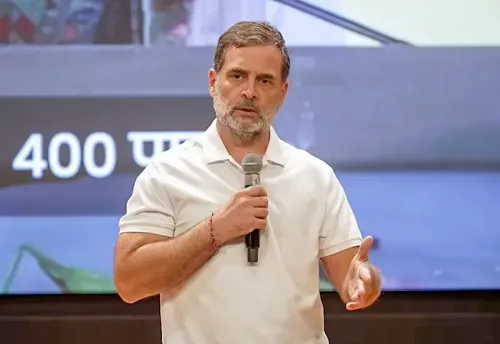
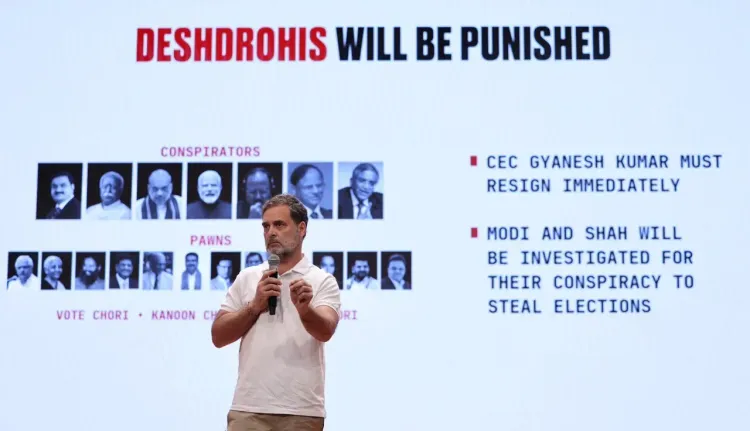
Congress leader Rahul Gandhi on September 24, 2026, demanded Election Commissioner Gyanesh Kumar's resignation and called him a traitor, urging him to become a state witness. Gandhi also demanded a full investigation into PM Narendra Modi and Home Minister Amit Shah over alleged vote theft.
Key Takeaways
Rahul Gandhi accused Election Commissioner Gyanesh Kumar of 'treason' and demanded his immediate resignation.
Gandhi called on Kumar to 'become an approver' — a legal term for a co-accused who turns state witness — against Narendra Modi and Amit Shah .
Gandhi claimed he has been exposing 'vote theft' for three years and said Kumar's own statements now confirm his allegations.
Congress has raised EVM and voter roll integrity concerns since at least 2023 , with multiple court petitions filed by various opposition parties.
The Election Commission has not publicly responded to the specific claims Gandhi attributes to Gyanesh Kumar in this post.
Three years of allegations, and now — in Rahul Gandhi's telling — the admission has arrived from inside the system itself. The Congress leader and Leader of the Opposition in Lok Sabha escalated his long-running campaign against alleged electoral fraud on Thursday, September 24, 2026, calling for the immediate resignation of Election Commissioner Gyanesh Kumar and demanding a full probe into Prime Minister Narendra Modi and Home Minister Amit Shah.
Posting in Hindi, Gandhi declared: 'मैं तीन साल से वोट चोरी का पर्दाफ़ाश करता आ रहा हूँ।' ('I have been exposing vote theft for three years. Now the Election Commissioner himself is acknowledging it and revealing the truth.')
He went further, charging Gyanesh Kumar with what he called 'treason' — 'देशद्रोह' — and demanded Kumar resign immediately and 'become an approver', a legal term for an accused who turns state witness in exchange for cooperation with the prosecution.
The 'Vote Theft' Charge Gandhi Has Pursued Since 2023
Gandhi's campaign against alleged electoral irregularities dates to at least 2023, when the Congress party publicly highlighted claimed discrepancies in voter rolls and raised questions about the integrity of electronic voting machines. Those concerns — shared by several opposition parties — triggered petitions in courts and sustained political debate, though the Election Commission of India and the judiciary have repeatedly upheld the EVM-based system.
The opposition's core argument has been that voter list manipulation and opaque machine design make verifiable audits impossible. The BJP government and the Election Commission have consistently denied wrongdoing, pointing to existing safeguards including the Voter Verifiable Paper Audit Trail (VVPAT) system.
Why the 'Approver' Demand Is Legally Charged Language
Gandhi's call for Kumar to 'become an approver' is a deliberate legal framing. Under Indian criminal procedure, an approver is a co-accused who confesses and testifies against others in exchange for a pardon or lighter treatment. By deploying that language, Gandhi is not just demanding a resignation — he is framing the Election Commissioner as a potential participant in a criminal conspiracy and positioning Modi and Shah as the principal targets of any investigation.
The charge of 'treason' — देशद्रोह, literally anti-national betrayal — sets the rhetorical stakes at the highest possible level. It is language designed to force a response from both the Election Commission and the ruling dispensation.
What Comes Next for the Election Commission
The Election Commission of India has not issued any public response to the claims attributed to Gyanesh Kumar in Gandhi's post, and the specific statement or admission Gandhi references could not be independently verified at time of publication. Any formal rebuttal, parliamentary question, or Supreme Court proceeding arising from this exchange will sharply define the next phase of the electoral integrity debate heading into upcoming state elections.
For now, the Opposition leader has drawn the sharpest line yet — naming names, invoking criminal law, and daring the system to answer.
Point of View
He is now explicitly naming a sitting constitutional officer — the Election Commissioner — as a co-conspirator and potential prosecution witness. This moves the opposition's electoral-integrity campaign from the realm of political allegation into a legal-criminal framing, a shift that raises the pressure on the Election Commission to respond publicly. If any court or parliamentary forum picks up the 'approver' thread, it could transform what has been a recurring opposition talking point into a live institutional crisis. The episode also signals that electoral integrity will be a central axis of opposition mobilisation in the election cycle ahead.
NationPress
24 Sept 2026
Frequently Asked Questions
What did Rahul Gandhi say about Election Commissioner Gyanesh Kumar?
Rahul Gandhi accused Gyanesh Kumar of 'treason' (देशद्रोह), demanded his immediate resignation, and called on him to become an 'approver' — a legal term for a co-accused who turns state witness — in what Gandhi described as a vote-theft conspiracy involving PM Modi and Home Minister Amit Shah.
What is an 'approver' in Indian law?
An approver is a co-accused who confesses to a crime and agrees to testify against other accused persons, typically in exchange for a pardon or more lenient treatment. Rahul Gandhi's use of the term frames the Election Commissioner as a potential participant in a criminal conspiracy.
How long has Rahul Gandhi been raising vote theft allegations?
Gandhi stated he has been exposing alleged vote theft for three years. The Congress party publicly began highlighting EVM and voter roll discrepancy concerns around 2023, including through press conferences and legal petitions.
What is the Election Commission's position on EVM integrity?
The Election Commission of India has consistently upheld the reliability of the EVM-based voting system and points to safeguards such as the Voter Verifiable Paper Audit Trail (VVPAT). The Commission has not publicly responded to Gandhi's September 24, 2026 post at time of publication.
What happens next after Rahul Gandhi's allegations against Modi and Shah?
Any formal response from the Election Commission, parliamentary questions, or Supreme Court proceedings will define the next phase. The opposition may push for a parliamentary debate or file fresh petitions, and upcoming state elections could intensify scrutiny of the EVM controversy.