Rahul Gandhi demands permanent fix as Bihar floods displace lakhs
Synopsis
Congress leader Rahul Gandhi condoled Bihar flood victims on October 4, 2026, and challenged the BJP-led 'double engine' government to answer what it achieved in 17 years against the state's recurring annual flood crisis, demanding permanent solutions over repeated relief.
Key Takeaways
Congress leader Rahul Gandhi reacted to the 2026 Bihar floods on October 4 , expressing condolences to bereaved families.
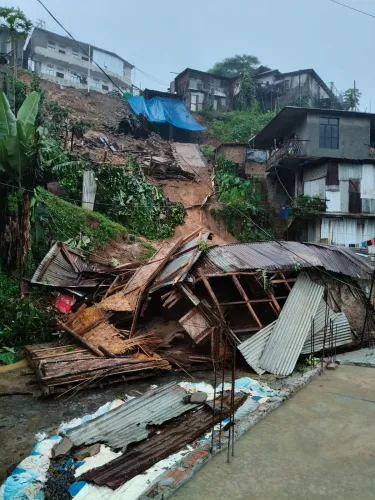
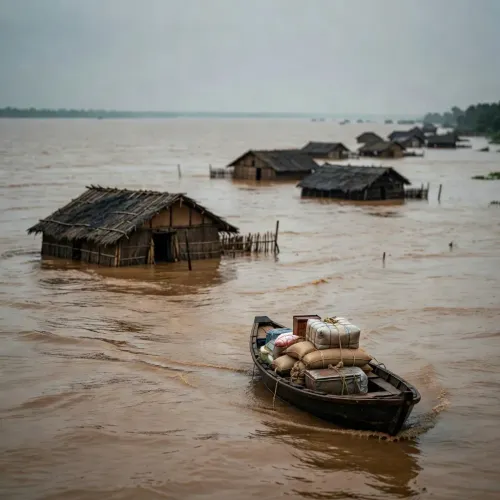
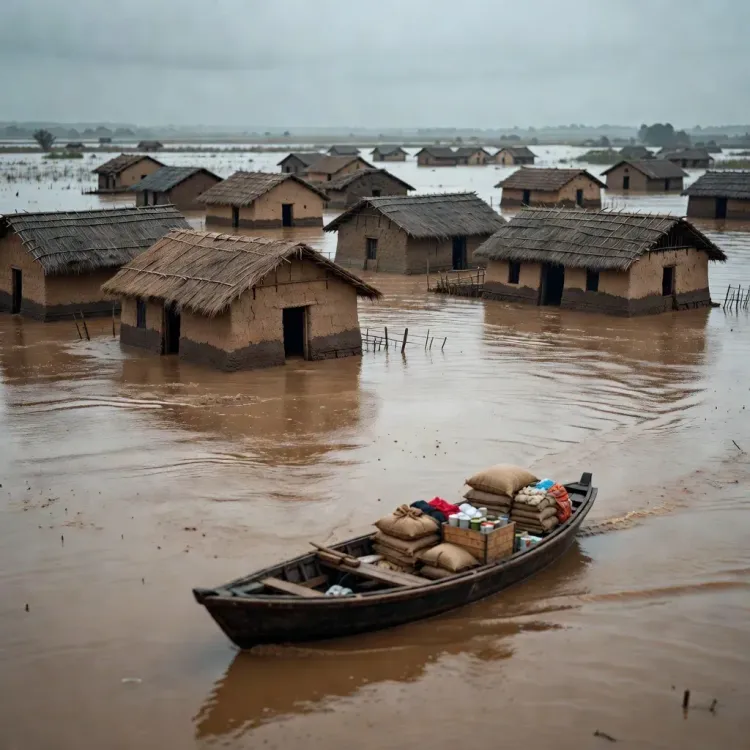
Lakhs of people are reported affected, with hundreds of villages submerged and multiple deaths and missing persons reported.
Gandhi described Bihar's floods as a 'saalana traasdi' (annual tragedy), not a one-off disaster.
He challenged the BJP 's 'double engine government' to account for 17 years of governance and what structurally changed on the ground.
Gandhi demanded permanent flood-management solutions for Bihar, not repeated cycles of relief and assurances.
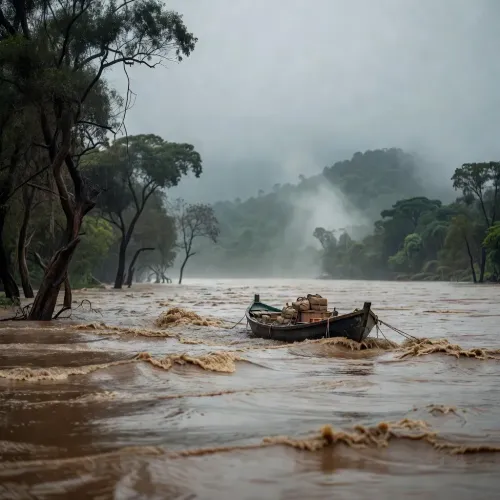
Every monsoon, Bihar drowns — and every monsoon, the promises begin again. Congress leader Rahul Gandhi, Leader of the Opposition in the Lok Sabha, on Sunday, October 4, 2026, broke his response to the latest Bihar flood crisis into two sharp parts: condolence for the dead, and a blunt accountability question aimed squarely at the ruling BJP.
In his post on X, Gandhi wrote: 'बिहार में बाढ़ फिर कहर बनकर टूटी है' — 'Floods have once again unleashed devastation in Bihar.' He noted that lakhs of people are affected, hundreds of villages are submerged, and reports of deaths and missing persons continue to mount. 'My deepest condolences to the families who have lost their loved ones,' he wrote.
A seasonal catastrophe with no permanent answer
Gandhi's sharpest point was not about the flood itself — it was about the pattern. He described Bihar's annual flood cycle in stark terms: every year the waters rise, people die, families are uprooted, and displacement follows. 'The most sorrowful part is that this crisis is not new in Bihar,' he wrote, calling it a 'saalana traasdi' — an annual tragedy.
The state sits at the confluence of rivers fed by Himalayan snowmelt and heavy monsoon rainfall, making it structurally one of India's most flood-vulnerable states. The problem recurs with near-mechanical regularity each year, affecting districts across northern and central Bihar and triggering massive relief operations.
Gandhi's direct challenge to BJP's 'double engine' government
Turning to politics, Gandhi addressed the BJP directly, invoking the ruling party's own campaign slogan. The 'double engine government' formulation — meaning BJP leading both the state and central governments simultaneously — has been a central BJP electoral argument in Bihar. Gandhi flipped it: 'The double engine government should answer — what was done in the last 17 years to deal with this annual tragedy? What changed on the ground?'
The 17-year figure is a pointed reference to the tenure of the BJP-led alliance in Bihar. Chief Minister Nitish Kumar has governed the state since 2005, first with the BJP and, after various political realignments, back in alliance with the BJP. Gandhi's question frames the flood deaths not as a natural disaster but as a governance failure accumulated over nearly two decades.
The demand: permanent solutions, not annual relief
Gandhi closed with what he framed as Bihar's core demand: 'The people of Bihar need not relief and assurances every year — they need a permanent solution.' The distinction matters. Relief operations address the immediate crisis; structural interventions — flood embankments, river management, early-warning systems, drainage infrastructure — address the cause.
The absence of research confirming the current flood's specific toll means precise casualty numbers cannot be stated here, but Gandhi's post itself references deaths, missing persons, and the submersion of hundreds of villages — a scale consistent with Bihar's historically severe flood seasons.
Whether this season's devastation finally forces a policy reckoning, or whether Bihar files it away as another year's tragedy to revisit in next year's monsoon, is the question Gandhi is now putting on the record — and on the BJP's desk.
Point of View
Empathy — and then converts the disaster into a governance audit, weaponising the BJP's own 'double engine' slogan against it. The '17 years' figure is the sharpest tool in the post, because it personalises structural failure rather than letting the ruling alliance treat floods as an act of God. Bihar's chronic flood vulnerability makes it a recurring soft underbelly for whoever governs the state; the Opposition's challenge is to push the discourse from annual relief politics toward infrastructure investment, and this post is an attempt to set exactly that framing ahead of any relief-announcement cycle.
NationPress
4 Oct 2026
Frequently Asked Questions
What did Rahul Gandhi say about the Bihar floods in October 2026?
Rahul Gandhi expressed deep condolences to families who lost loved ones in the Bihar floods and called out the BJP-led government for failing to find a permanent solution to what he described as an annual tragedy affecting lakhs of people every monsoon.
How many people are affected by Bihar floods in 2026?
According to Rahul Gandhi's post, lakhs of people are affected and hundreds of villages are submerged, with multiple deaths and missing persons reported, though official toll figures were not specified in his statement.
What is the 'double engine government' Gandhi referred to in Bihar?
The 'double engine government' is a BJP campaign term meaning the same party governs both the state and the Centre simultaneously. Gandhi used it sarcastically to challenge the BJP-led alliance in Bihar to explain its flood management record over 17 years.
Why does Bihar flood every year?
Bihar is structurally one of India's most flood-prone states due to its rivers being fed by heavy Himalayan snowmelt and monsoon rainfall. Inadequate embankments, drainage infrastructure, and river management have long been cited as reasons the problem persists annually.
What permanent solution is Rahul Gandhi asking for in Bihar floods?
Gandhi demanded long-term structural interventions — flood embankments, river management, and drainage infrastructure — rather than the recurring cycle of relief and assurances that he said the state receives every monsoon without the underlying problem being addressed.