Rahul Gandhi Holds 'Public Impeachment' of Election Commissioner Gyanesh Kumar
Synopsis
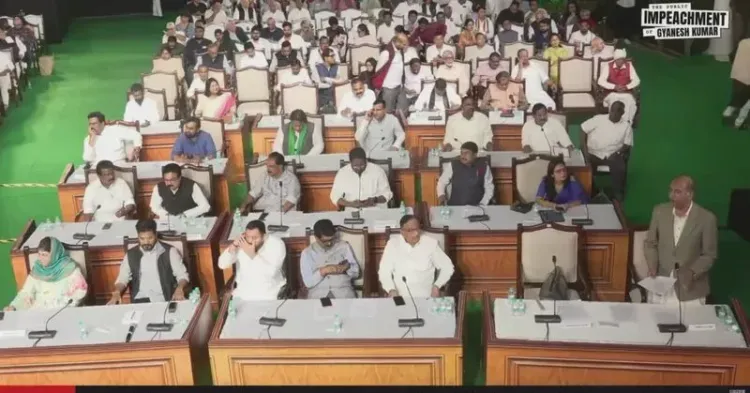
Congress leader Rahul Gandhi livestreamed a symbolic 'Public Impeachment' of Election Commissioner Gyanesh Kumar at 10 Rajaji Marg, New Delhi on 1 November 2026, escalating opposition pressure over the Election Commission's contested 2023 appointment law and its perceived executive influence.
Key Takeaways
Rahul Gandhi livestreamed an event titled 'Public Impeachment of Gyanesh Kumar' from 10 Rajaji Marg, New Delhi on 1 November 2026 .
The event is symbolic — no constitutional mechanism exists for an opposition party to impeach an Election Commissioner.
Gyanesh Kumar was appointed Election Commissioner in 2024 under the Chief Election Commissioner and other Election Commissioners (Appointment, Conditions of Service and Terms of Office) Act, 2023 .
That 2023 law replaced a collegium-style selection (which included the Chief Justice of India) with a panel dominated by the Prime Minister and a Cabinet Minister .
Opposition parties have challenged the new appointment process as compromising the Election Commission's independence since 2023.
The event sets up a likely parliamentary confrontation when the winter session of Parliament convenes.
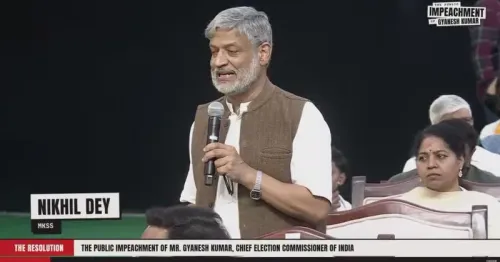
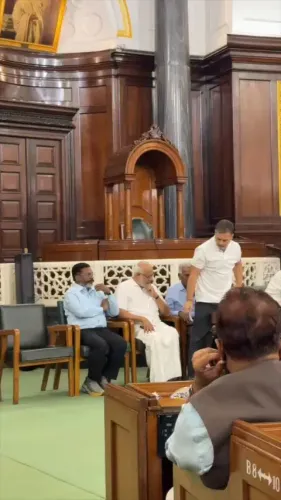
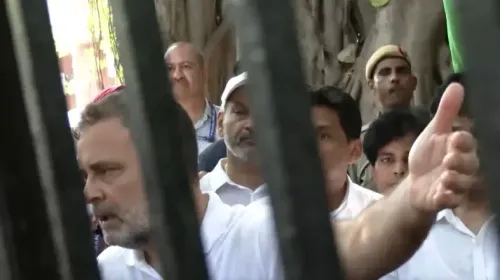
A dramatic opposition salvo landed at 10 Rajaji Marg, New Delhi on Saturday, 1 November 2026, as Congress leader and Leader of the Opposition Rahul Gandhi livestreamed what he called the 'Public Impeachment of Gyanesh Kumar' — a symbolic political event targeting the sitting Election Commissioner of India and placing the independence of the country's top poll body squarely back in the national conversation.
What the 'Public Impeachment' Actually Means
To be clear: there is no constitutional mechanism for a 'public impeachment' of an Election Commissioner by an opposition party. What Rahul Gandhi staged is a political-symbolic action — a public tribunal-style event designed to put Gyanesh Kumar, appointed Election Commissioner in 2024, on trial in the court of public opinion. The Congress has consistently argued that Kumar's appointment, and the process that produced it, compromised the Election Commission's autonomy.
The choice of 10 Rajaji Marg — a New Delhi address associated with opposition press interactions and political events — signals this was a carefully choreographed piece of political theatre, not a legal proceeding. The livestream format amplified the reach far beyond any press conference.
The 2023 Appointment Law at the Heart of the Row
The Congress's grievance traces directly to the Chief Election Commissioner and other Election Commissioners (Appointment, Conditions of Service and Terms of Office) Act, 2023. That law replaced a Supreme Court-mandated collegium-style selection — which had included the Chief Justice of India — with a panel comprising the Prime Minister and a Cabinet Minister, effectively giving the ruling executive a decisive majority in choosing who runs India's elections.
Opposition parties argued from the outset that this structural change hollowed out the Election Commission's independence. Gyanesh Kumar, an IAS officer, was among the commissioners appointed under the new framework — making him, in the Congress's framing, a symbol of that contested process.
A Pattern of Symbolic Escalation
This is not the first time the opposition has used public spectacle to press its case against the Election Commission's current composition. Since 2023, symbolic protests, press events, and parliamentary interventions have been recurring tools. But a livestreamed 'impeachment' — borrowing the language of constitutional accountability — marks a notable escalation in both register and reach.
Rahul Gandhi, as Leader of the Opposition in the Lok Sabha, holds the most prominent institutional platform available to the Congress. Deploying that platform for a direct, named challenge to a sitting Election Commissioner carries weight beyond street protest — it forces a response, or at minimum a public reckoning, from the establishment.
What Parliament's Winter Session May Bring
The event sets up a likely flashpoint when Parliament's winter session convenes. Opposition parties could table privilege motions, adjournment motions, or demand a floor debate on Election Commission appointments. Whether the ruling coalition engages or stonewalls will itself become part of the political story — and the Congress has now ensured it has footage, a livestream record, and a sharp news hook to carry into that battle.
The Election Commission of India has not, as of this report, issued any public response to the event.
The constitutional body that runs the world's largest democracy is now the explicit subject of an opposition 'impeachment' — symbolic or not, that framing does not dissolve quietly.
Point of View
Forcing the ruling coalition to either defend Gyanesh Kumar publicly or absorb the optics of silence. The move is rooted in a genuine structural grievance: the 2023 appointment law did materially shift the balance of power over who controls India's election machinery. Whether symbolic theatre translates into legislative or judicial traction depends on how the Congress sustains the narrative into the winter session — but as an agenda-setting manoeuvre, it is difficult to ignore.
NationPress
31 Oct 2026
Frequently Asked Questions
What is the 'Public Impeachment of Gyanesh Kumar' by Rahul Gandhi?
It is a symbolic political event organised by Congress leader Rahul Gandhi at 10 Rajaji Marg, New Delhi, on 1 November 2026, in which the opposition staged a public tribunal-style proceeding against Election Commissioner Gyanesh Kumar to highlight concerns over the Election Commission's independence. It has no legal or constitutional standing.
Who is Gyanesh Kumar and why is he controversial?
Gyanesh Kumar is an IAS officer appointed as Election Commissioner of India in 2024 under the new selection process introduced by the 2023 Act, which replaced a Supreme Court-mandated collegium system with a panel led by the Prime Minister and a Cabinet Minister. Opposition parties argue this process compromised the Election Commission's independence.
Can an Election Commissioner be impeached in India?
Under the Indian Constitution, an Election Commissioner can be removed only on the recommendation of the Chief Election Commissioner, not through any public or parliamentary 'impeachment' initiated by an opposition party. Rahul Gandhi's event is symbolic, not a legal proceeding.
What changed in the Election Commissioner appointment process in 2023?
The Chief Election Commissioner and other Election Commissioners (Appointment, Conditions of Service and Terms of Office) Act, 2023 replaced the earlier selection process — which a Supreme Court order had directed should include the Chief Justice of India — with a committee comprising the Prime Minister and a Cabinet Minister, giving the ruling executive a decisive role.
What could happen next in Parliament over the Election Commission row?
The opposition is expected to raise the matter in Parliament's winter session through privilege motions, adjournment motions, or floor debates targeting the Election Commission's appointment process and the conduct of Gyanesh Kumar.