CM Rekha Gupta launches Arpan Kendra cloth donation drive in Delhi
Synopsis
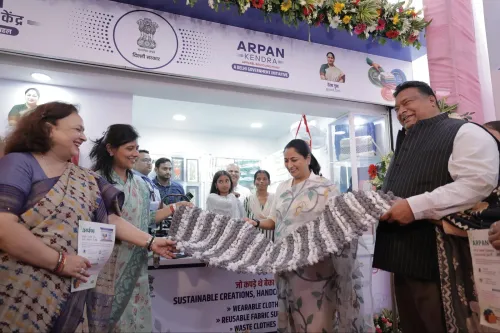
Delhi Chief Minister Rekha Gupta inaugurated the 'Arpan Kendra' at Kasturba Gandhi Polytechnic in Pitampura on 31 October 2026, launching a city-wide textile recycling drive that will expand to 10 Delhi Metro stations, where residents can donate old clothes for reuse and upcycling.
Key Takeaways
Arpan Kendra inaugurated at Kasturba Gandhi Polytechnic, Pitampura, on 31 October 2026 by Delhi CM Rekha Gupta.
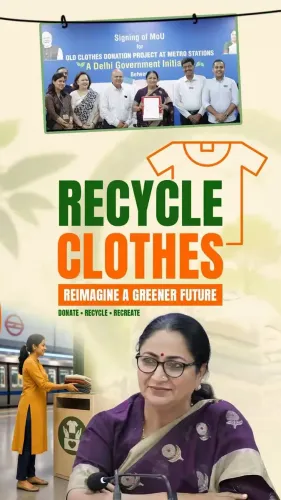
Old, usable clothes donated at the centres will be reused or recycled into new products , diverting textile waste from landfills.
10 Delhi Metro stations will host Arpan Kendras, leveraging high daily footfall to maximise public participation.
The initiative aligns with the national Swachh Bharat Mission (launched 2014) and the #ViksitDelhi sustainability agenda.
Specific Metro station names and the full rollout timeline have not yet been publicly disclosed.
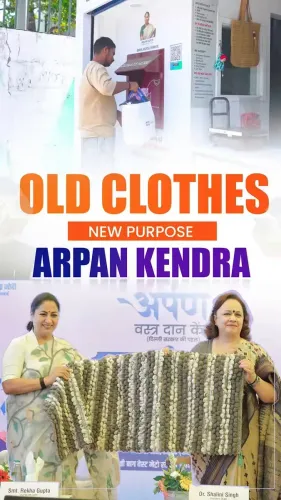
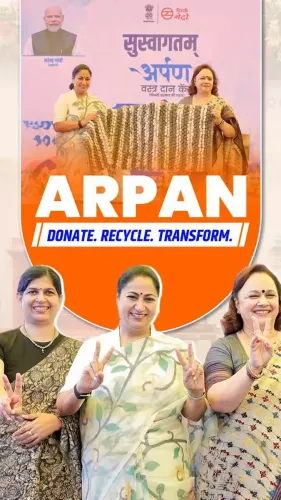
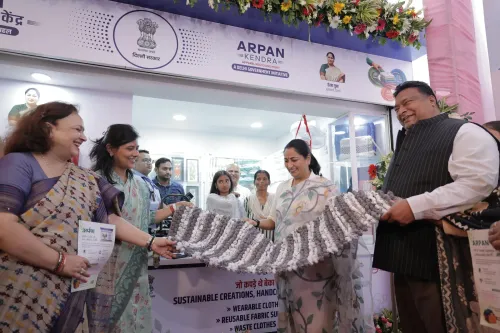
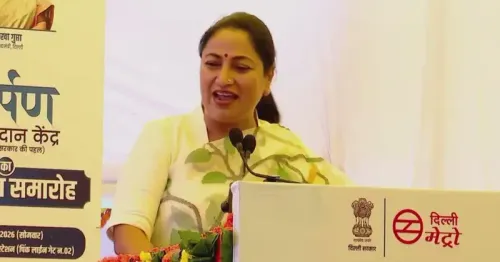
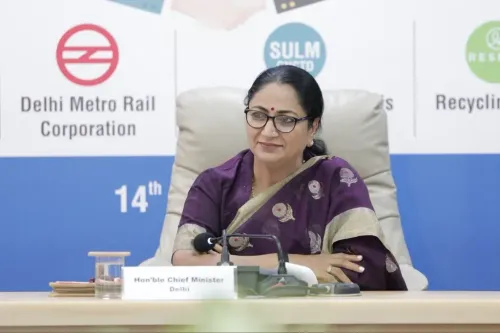
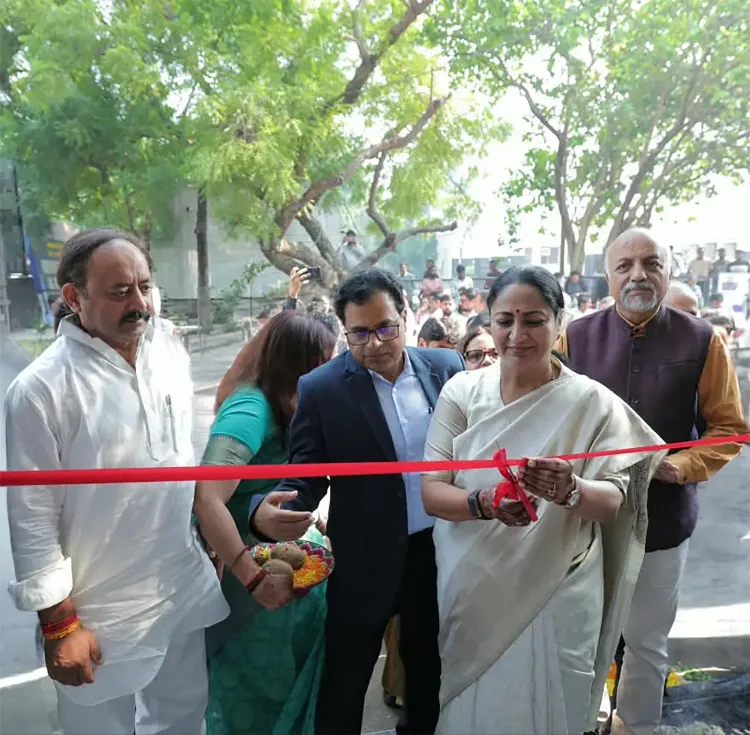
A polytechnic college in northwest Delhi quietly became the launchpad for a city-wide textile recycling push on Saturday, 31 October 2026. Delhi Chief Minister Rekha Gupta inaugurated the first 'Arpan Kendra' — a dedicated cloth-donation and upcycling centre — at the Kasturba Gandhi Polytechnic in Pitampura, and announced that 10 Delhi Metro stations will host similar centres where used garments will be collected, repurposed, and recycled into new products.
What Arpan Kendra actually does
The model is straightforward but consequential. Residents drop off old, usable clothes at designated collection points. Those garments are then either redistributed for direct reuse or processed into new utility items — closing a loop that currently ends at a landfill for most Delhiites. CM Gupta appealed directly to residents: 'apne purane, upyog yogya kapde in kendron par daan kar is sarthak pehel mein sahbhagi banen' ('donate your old, usable clothes at these centres and become a partner in this meaningful initiative').
The Kasturba Gandhi Polytechnic inauguration gives the scheme a credible institutional anchor — a government technical institute is well-positioned to manage sorting, basic processing, and eventual recycling of collected material.
Why Metro stations are the distribution backbone
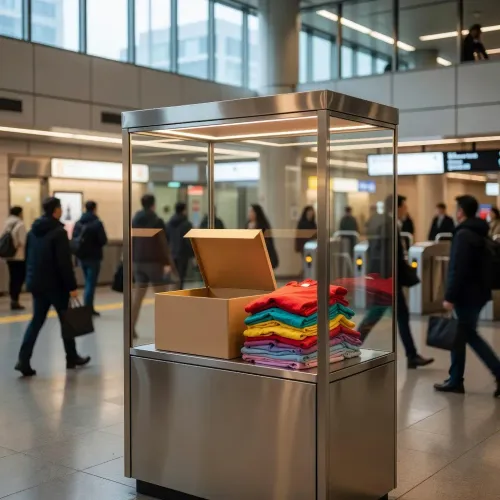
Embedding Arpan Kendras inside Delhi Metro stations is a deliberate design choice. Metro stations draw millions of footfalls daily, making them among the highest-visibility public infrastructure in the capital. Placing donation points there removes the effort barrier — commuters can drop off a bag of old clothes the way they might recycle a newspaper. The initiative does not require building new infrastructure from scratch; it piggybacks on a network Delhiites already trust and use.
Ten stations are earmarked, though specific station names were not disclosed at the inauguration. Expansion scale and public uptake over the coming months will be the real test of whether the pilot achieves meaningful volumes.
Where this fits in Delhi's circular economy push
India's Swachh Bharat Mission, launched in 2014, set waste segregation and urban cleanliness as national priorities. The Arpan Kendra initiative takes that logic a step further — from segregating waste to actively recirculating it. Delhi, one of the world's most densely populated urban centres, generates enormous volumes of textile waste that typically bypasses formal recycling channels entirely. Similar upcycling pilots have appeared in other Indian cities, but anchoring the programme to Metro infrastructure gives Delhi's version unusual reach from day one.
The launch also carries the #ViksitDelhi hashtag, connecting it to the broader 'Viksit Bharat' (Developed India) narrative that frames urban sustainability as a pillar of national progress — not just an environmental footnote.
If the Metro-station model proves even modestly successful, it could serve as a replicable template for other Indian metros grappling with the same textile-waste problem — and that may be the bigger story here.
Point of View
It hands urban planners across India a low-cost, replicable model for tackling fast-fashion waste at scale.
NationPress
31 Oct 2026
Frequently Asked Questions
What is Arpan Kendra in Delhi?
Arpan Kendra is a cloth-donation and recycling centre launched by Delhi CM Rekha Gupta where residents can drop off old, usable garments to be reused or recycled into new products. The first centre opened at Kasturba Gandhi Polytechnic in Pitampura on 31 October 2026.
Which Delhi Metro stations will have Arpan Kendra centres?
Delhi CM Rekha Gupta announced that 10 Delhi Metro stations will host Arpan Kendras, but specific station names have not yet been publicly disclosed.
How can Delhi residents donate clothes at Arpan Kendra?
Residents can bring old, usable clothes to any Arpan Kendra collection point — beginning with the Kasturba Gandhi Polytechnic in Pitampura and expanding to 10 Metro stations — and drop them off for reuse or recycling.
What happens to clothes donated at Arpan Kendra?
Donated garments are either redistributed for direct reuse or processed and recycled into new utility items, reducing textile waste that would otherwise go to landfills.
How does Arpan Kendra connect to Swachh Bharat Mission?
Arpan Kendra builds on the Swachh Bharat Mission's waste-segregation goals launched in 2014, extending them into a circular-economy model that actively recirculates used textiles rather than simply collecting and disposing of them.