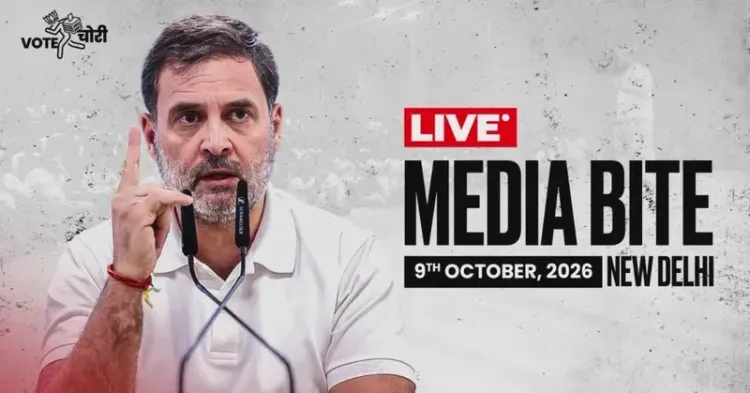
Rahul Gandhi Leads Live Protest Against 'Vote Chori' in Delhi
Synopsis
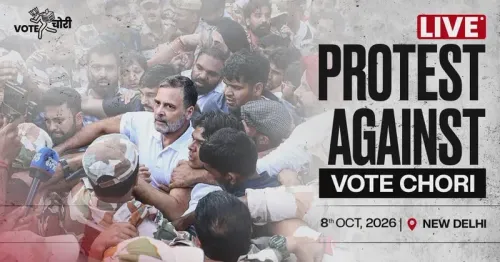
Congress leader Rahul Gandhi staged a live-streamed protest in New Delhi on 9 October 2026, accusing authorities of 'vote chori' — vote theft — and demanding accountability over alleged electoral fraud. The action signals an escalating opposition campaign on India's electoral integrity.
Key Takeaways
Rahul Gandhi held a live media address and protest in New Delhi on 9 October 2026 against alleged 'vote chori'.
The protest was live-streamed directly on X, reflecting the opposition's strategy of public real-time accountability. 'Vote chori' ( vote chori ) refers to alleged manipulation or systematic deletion of voter rolls — a charge Congress has repeatedly raised.
Gandhi, as Leader of the Opposition in Lok Sabha , framed the protest as a democratic accountability exercise targeting the electoral machinery.
The action could escalate into a formal delegation to the Election Commission of India or a parliamentary motion in coming days.
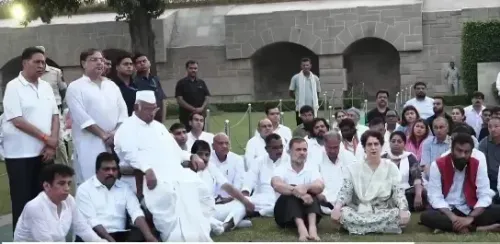
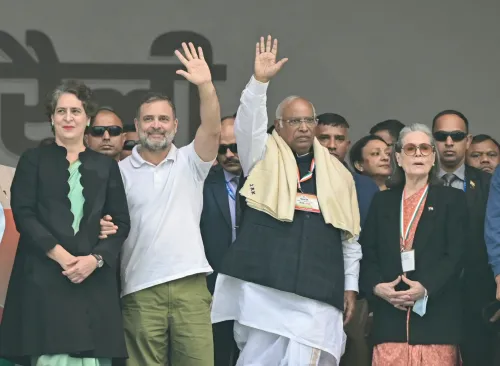
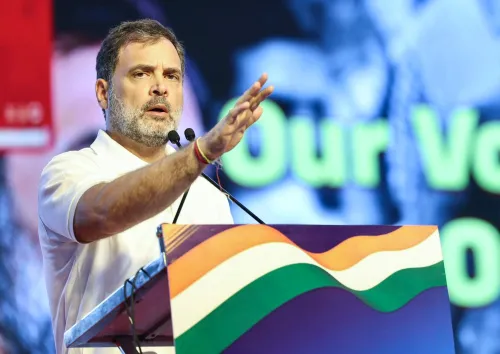
A live media address and street protest over alleged electoral fraud brought Congress leader Rahul Gandhi to the spotlight on Friday, 9 October 2026, as the Leader of the Opposition took to the streets of New Delhi to publicly challenge what his party is calling 'vote chori' — vote chori (vote theft).
What 'Vote Chori' Means — and Why Gandhi Is Raising It Now
The phrase vote chori refers to alleged manipulation or theft of votes — a charge Congress has periodically levelled at the electoral process in India. Gandhi, who holds the Rae Bareli Lok Sabha seat and serves as the principal opposition voice in Parliament, chose a live-streamed media bite as the vehicle, signalling the party's intent to take the issue directly to the public rather than confine it to Parliament's corridors.
By going live from New Delhi and embedding a broadcast link in his post, Gandhi framed the protest as a transparent, real-time accountability exercise — an approach the opposition has increasingly favoured to bypass what it describes as inadequate mainstream coverage of electoral grievances.
Opposition's Escalating Scrutiny of India's Electoral Machinery
Concerns over voter roll deletions, booth-level irregularities, and Electronic Voting Machine integrity have been a recurring flashpoint in Indian politics. Congress and allied opposition parties have argued that systematic exclusion of voters — particularly from marginalised communities — amounts to structural vote theft. Gandhi has previously raised these concerns in Parliament and on public platforms, tying them to what he calls a broader assault on democratic institutions.
The choice of a live street protest, amplified through social media, puts pressure on the Election Commission of India to respond publicly — and puts the ruling Bharatiya Janata Party on the back foot ahead of any upcoming electoral cycles.
The Street as a Political Stage
Gandhi's deployment of live-streaming for a street protest is itself a statement. It collapses the distance between political action and citizen witness — anyone with a phone can watch the opposition leader stand in New Delhi traffic and demand answers. For a party that has worked to rebuild grass-roots credibility since its 2024 Lok Sabha performance, these open-air media bites serve a dual purpose: they document dissent and they recruit attention.
The coming days will test whether this protest translates into a formal parliamentary motion, a delegation to the Election Commission, or a wider campaign across states — the three levers Congress typically pulls when it wants to convert street energy into institutional pressure.
Point of View
The party forces the Election Commission and the ruling dispensation to either respond or absorb the optics of silence. The use of real-time social media broadcast is also a direct answer to the opposition's long-standing complaint that its concerns receive insufficient institutional amplification. Whether this converts into sustained institutional pressure or remains a one-day media moment is the defining question for Congress's strategic trajectory.
NationPress
9 Oct 2026
Frequently Asked Questions
What is 'vote chori' and why is Rahul Gandhi protesting against it?
'Vote chori' literally means vote theft in Hindi. Rahul Gandhi and the Congress party use the term to describe alleged manipulation of voter rolls, booth-level irregularities, and practices they claim systematically disenfranchise voters. Gandhi held a live protest in New Delhi on 9 October 2026 to demand accountability.
Where did Rahul Gandhi hold the protest on 9 October 2026?
The protest and live media address took place in New Delhi . Gandhi live-streamed the event on X (formerly Twitter) for public viewing.
What is Rahul Gandhi's current political position?
Rahul Gandhi is the Leader of the Opposition in the Lok Sabha and a Member of Parliament from Rae Bareli . He is also a senior leader of the Indian National Congress .
Has Congress raised electoral fraud concerns before?
Yes. Congress and allied opposition parties have repeatedly raised concerns about voter roll deletions, Electronic Voting Machine integrity, and booth-level irregularities over multiple election cycles, framing these as structural threats to Indian democracy.
What could follow after Gandhi's vote chori protest?
Based on Congress's past pattern, the protest could escalate into a formal delegation to the Election Commission of India , a parliamentary motion, or a wider state-level campaign — the three main institutional levers the opposition typically uses after street-level demonstrations.