CM Rekha Gupta Launches POCSO Awareness Campaign for Child Safety

Synopsis
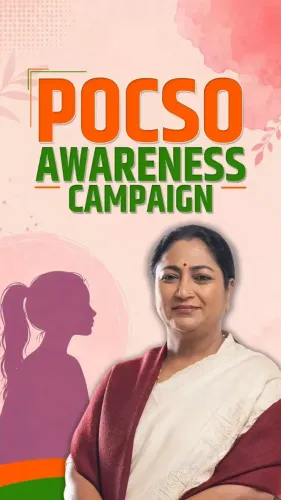
Delhi Chief Minister Rekha Gupta on October 9, 2026 launched a POCSO Awareness Campaign to teach children the difference between safe and unsafe touch, urging parents to listen openly and, above all, believe their children.
Key Takeaways
Delhi CM Rekha Gupta announced the launch of a POCSO Awareness Campaign on October 9, 2026 .
The campaign teaches children the concept of 'Good Touch' and 'Bad Touch' and encourages them to speak up without fear.
Gupta made a direct appeal to parents to talk openly, listen carefully, and — crucially — believe their children .
The initiative is anchored in India's Protection of Children from Sexual Offences (POCSO) Act, 2012 .
A video accompanies the campaign, indicating a multimedia outreach strategy for households and schools.
Every child deserves a childhood free from fear — and Delhi Chief Minister Rekha Gupta is putting that conviction into action. On Friday, October 9, 2026, the BJP leader announced the launch of a POCSO Awareness Campaign aimed at teaching children across Delhi the difference between 'Good Touch' and 'Bad Touch', and empowering them to speak up without fear.
What the POCSO Awareness Campaign sets out to do
The campaign is built around one deceptively simple goal: making sure every child knows the language to describe what is happening to them — and trusts that an adult will believe them. CM Gupta urged parents to talk openly with their children, understand their concerns, and, most critically, 'believe them' — a word choice that carries weight in a country where child abuse frequently goes unreported because victims fear disbelief or blame.
The Protection of Children from Sexual Offences (POCSO) Act, enacted in 2012, is India's primary legal shield against child sexual abuse and exploitation. Yet awareness of its provisions — and of the concept of bodily autonomy itself — remains uneven, particularly at the household level. Rekha Gupta's campaign is designed to bridge precisely that gap, taking the conversation from courtrooms and policy documents into family living rooms.
The parent as the first line of defence
Central to Gupta's appeal is a direct call to parents, not just institutions. 'Talk openly with your children, understand their concerns, listen to them carefully, and most importantly, believe them,' she said. The framing is deliberate: schools and laws can only do so much. A child who knows their parent will listen and act is far more likely to report abuse early — when intervention matters most.
The campaign is accompanied by a video, signalling a multimedia push to reach households beyond policy briefings and press releases. The inclusion of audio-visual material suggests the drive is aimed at children and parents together, in a format accessible to those with limited literacy.
Why Delhi's child-safety message lands now
Child safety has grown into an urgent urban policy flashpoint across Indian metros, with rising concerns about abuse inside homes, schools, and digital spaces. A sitting Chief Minister anchoring a POCSO communication drive — rather than delegating it to a junior ministry — sends a signal about political priority. Whether the campaign translates into structured school programmes, helpline outreach, or community workshops will determine its real reach.
For now, the message from Delhi's top office is unambiguous: a child's voice must be heard, believed, and protected.
Point of View
An issue that cuts across class and party lines. The emphasis on parental belief, not just legal knowledge, reflects a growing recognition among policymakers that under-reporting of abuse is as much a trust deficit as a legal one. For the BJP in Delhi, the campaign also positions Rekha Gupta as an empathetic, governance-focused leader on a non-partisan issue. The real test will be whether the campaign generates measurable outcomes: more POCSO disclosures, trained school counsellors, or functioning child-helpline uptake.
NationPress
9 Oct 2026
Frequently Asked Questions
What is the POCSO Awareness Campaign launched by Delhi CM Rekha Gupta?
It is a child safety initiative launched by Delhi Chief Minister Rekha Gupta to educate children about the difference between 'Good Touch' and 'Bad Touch' under the framework of the POCSO Act, 2012, and to encourage them to report inappropriate behaviour without fear.
What is the POCSO Act in India?
The Protection of Children from Sexual Offences (POCSO) Act, enacted in 2012, is India's primary law protecting children from sexual abuse, harassment, and exploitation, and provides for child-friendly judicial procedures.
What did CM Rekha Gupta urge parents to do?
She urged parents to talk openly with their children, listen to their concerns carefully, and most importantly, believe them when they report discomfort or inappropriate behaviour.
How can parents teach children about safe and unsafe touch?
Experts recommend age-appropriate conversations using correct body-part terminology, explaining the difference between safe and unsafe contact, and consistently reassuring children that they will never be blamed for reporting abuse.
Why is child safety awareness important in Delhi and Indian cities?
Rising concerns about abuse inside homes, schools, and digital spaces in urban India have made child safety a frontline policy issue; most cases go unreported due to fear and lack of awareness, making grassroots campaigns critical.