Rahul Gandhi Questions Uttarakhand Investor Summit Claims

Synopsis
Congress leader Rahul Gandhi accused the Uttarakhand BJP government of fraud over its Global Investors Summit, alleging that ₹100 crore in public funds was spent on roadshows to generate ₹3.56 lakh crore in MoU announcements, with the government then claiming ₹1 lakh crore as realised investment on the ground.
Key Takeaways
Rahul Gandhi on October 18, 2026 accused the Pushkar Singh Dhami -led Uttarakhand government of a 'farziwada' (fraud) in investment promotion.
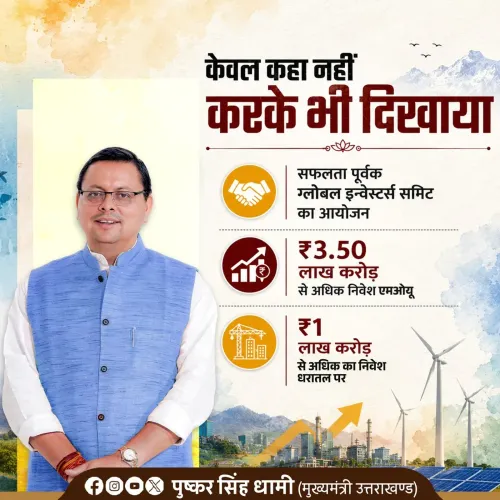
Uttarakhand's Global Investors Summit announced 1,779 MoUs worth a stated ₹3.56 lakh crore .
Gandhi alleges approximately ₹100 crore of public money was spent on roadshows to attract these investments.
The state government reportedly claimed ₹1 lakh crore of the MoU total had been realised on the ground — a figure Gandhi disputes.
Gandhi frames the episode as a failure of the BJP's 'double engine' governance model, which promises accelerated development when the same party governs state and Centre.
Scrutiny of MoU-to-investment conversion rates is a recurring challenge at state investor summits across India.
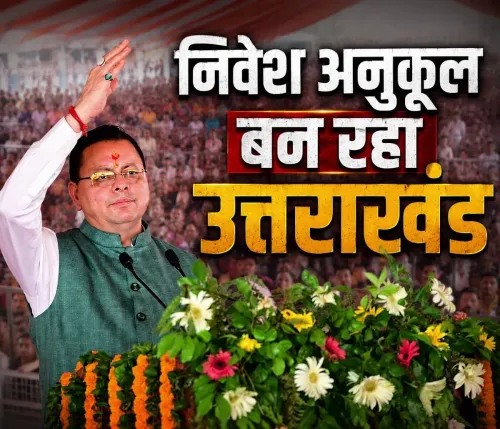
A summit heralded as a landmark for Uttarakhand's economic transformation is now at the centre of a sharp political reckoning. Congress leader Rahul Gandhi, Leader of the Opposition in the Lok Sabha, fired a pointed broadside on Sunday, October 18, 2026, accusing the Pushkar Singh Dhami-led BJP government of orchestrating what he called a 'farziwada' — a fraud — in the name of investment promotion.
Gandhi's post takes direct aim at Uttarakhand's Global Investors Summit, which was promoted with announcements of 1,779 MoUs worth a stated ₹3.56 lakh crore. The government, he alleges, then claimed ₹1 lakh crore of that figure had already reached the ground — even as roadshows to attract these investments reportedly consumed nearly ₹100 crore of public money. The gap between the headline number and the claimed realisation, in his framing, is the story.
The MoU Announcement vs Ground Reality Fault Line
India's state-level investor summits have a well-worn script: grand venue, a parade of industry names, multi-lakh-crore MoU totals announced to cameras. The harder question — how much of that actually flows into factories, jobs, and infrastructure — is one that auditors and opposition benches have pressed across multiple states for over a decade. Uttarakhand is not unique in holding such summits, but Gandhi is using it as a case study in what he calls the BJP's 'double engine' governance model failing to deliver on its promises.
The 'double engine' metaphor — meaning the same party governing both the state and the Centre accelerates development — is a BJP election staple. Gandhi's argument is the inverse: that the model produces coordinated spectacle rather than coordinated delivery. The specific claim that ₹100 crore in taxpayer funds was spent on roadshows before the summit adds a concrete accountability dimension to what is often an abstract policy debate.
What the Scrutiny Means for Dhami's Government
Chief Minister Pushkar Singh Dhami has positioned Uttarakhand's investor outreach as central to his government's growth narrative. State investor summits typically draw their credibility from follow-through: groundbreaking ceremonies, factory inaugurations, employment numbers. If a significant portion of the announced MoUs are seen as non-binding letters of intent rather than live projects, the political cost sharpens quickly — particularly when promotional expenditure is quantified in public money.
Gandhi's framing is combative but structured: spend the public's money, announce a big number, claim a portion as delivered, and call it governance. Whether the state government responds with its own investment realisation data — district-wise project counts, employment figures, capital expenditure logs — will determine whether this debate stays on social media or migrates into a legislative reckoning, potentially via a Comptroller and Auditor General audit or assembly floor scrutiny.
A Pattern Playing Out Across States
This is not an isolated exchange. Opposition leaders across India have routinely challenged the conversion rates of MoU-heavy investor summits — from Tamil Nadu to Gujarat to Madhya Pradesh. The underlying question is structural: MoUs are non-binding, vary enormously in seriousness, and can be signed without regulatory clearances, land acquisition, or financing in place. A large headline figure at signing day and a much smaller ground-level number a year later is not unusual — but when governments cite the headline number as a governance achievement, the credibility of the summit model itself comes under fire.
For Rahul Gandhi, the Uttarakhand summit becomes one more data point in a sustained campaign to hold the BJP's economic governance claims to account ahead of any electoral cycle. The onus now falls on the Dhami government to put its own numbers on the table — verified, granular, and auditable.
Point of View
He moves the debate from ideology to auditable arithmetic. This reflects a broader Congress strategy of demanding granular accountability for flagship investment events rather than contesting them on ideological grounds. If the Dhami government cannot produce credible, verified realisation data, the 'double engine' brand faces a measurable credibility test in Uttarakhand ahead of any future election cycle.
NationPress
18 Oct 2026
Frequently Asked Questions
What is the Uttarakhand Global Investors Summit?
The Uttarakhand Global Investors Summit is a state-government-organised event designed to attract domestic and international investment into Uttarakhand. The summit announced Memoranda of Understanding (MoUs) worth a stated ₹3.56 lakh crore with 1,779 signatories, according to figures cited in Rahul Gandhi's post.
What is Rahul Gandhi's allegation against the Dhami government?
Gandhi alleges the Uttarakhand BJP government spent nearly ₹100 crore of public money on roadshows for the Global Investors Summit, announced inflated MoU figures, and then falsely claimed ₹1 lakh crore of those pledges had translated into ground-level investment — calling it a 'farziwada' (fraud).
What is the BJP's 'double engine' model?
The 'double engine' model is a BJP campaign formulation arguing that when the same party governs both a state and the central government, development is faster due to policy alignment. Gandhi cites the Uttarakhand summit as evidence this model produces promotional spectacle rather than verified economic outcomes.
Are MoUs signed at investor summits legally binding?
Generally, MoUs signed at investor summits are non-binding letters of intent. They signal interest but do not guarantee investment, as they are typically conditional on regulatory approvals, land allocation, financing, and project feasibility — which is why announced totals often differ significantly from verified ground-level deployment.
What would verify the Uttarakhand government's investment claims?
Verification would typically require an official audit — such as a Comptroller and Auditor General report — or government-published data showing district-wise project progress, capital expenditure logs, and employment figures tied to the specific MoUs announced at the summit.