Rahul Gandhi's delimitation warning splits Parliament; BJP fires back
Synopsis
Rahul Gandhi's call to arms against delimitation at Mamallapuram has cracked open one of Indian politics' deepest fault lines: whether redrawing constituencies based on population punishes states that controlled their birth rates. With Congress MPs pledging floor opposition and the BJP framing resistance as dynastic self-interest, the battle lines ahead of the next parliamentary session are now sharply drawn.
Key Takeaways
Rahul Gandhi on 2 August at Mamallapuram called on all parties to oppose the Centre's delimitation exercise, alleging it would 'disenfranchise' Tamil Nadu.
Congress MP Manickam Tagore said all 40 Tamil Nadu MPs previously voted against delimitation and pledged to do so again.
Congress MPs Imran Masood and Sukhdeo Bhagat also opposed the proposal, citing threats to national integrity and concerns about its implementation in Assam .
BJP spokesperson Tuhin Sinha called resistance 'natural for dynastic parties' and assured that southern state seats would increase on a pro-rata basis .
UP Deputy CM Keshav Prasad Maurya alleged Gandhi was working against national interest — a charge Congress has consistently rejected.
JDU MLC Neeraj Kumar Singh urged all parties to debate the issue within the constitutional framework rather than politicise it.
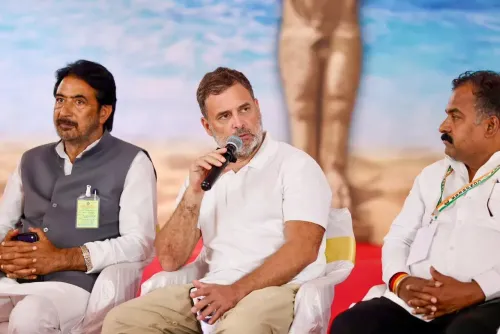
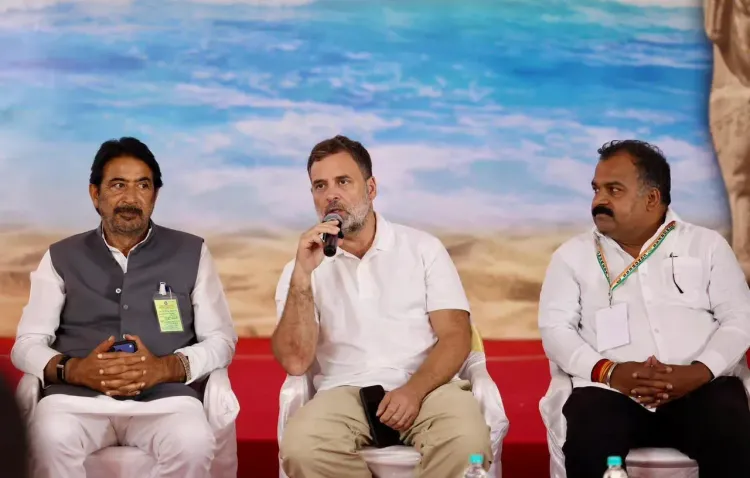
Leader of the Opposition in Lok Sabha, Rahul Gandhi, on Saturday, 2 August, called on political parties across the country to unite against the Centre's proposed delimitation exercise, alleging it would systematically erode the political representation of Tamil Nadu and other southern states. The remarks, made at Mamallapuram near Chennai, triggered a sharp counter-offensive from the Bharatiya Janata Party (BJP), its allies, and drew vocal support from Indian National Congress (Congress) lawmakers.
What Rahul Gandhi Said
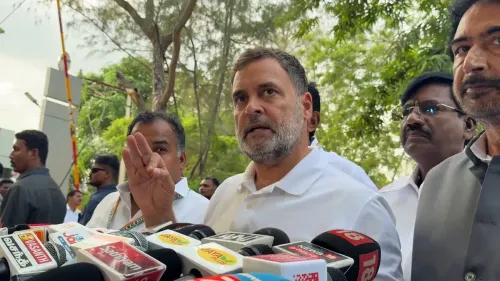
Speaking to reporters, Gandhi alleged that the proposed delimitation exercise was designed to 'disenfranchise' the people of Tamil Nadu and strip the state of its political influence. He urged all regional and national parties to come together in Parliament and defeat any legislation that could adversely affect the state's representation. Gandhi specifically called out the BJP, accusing the ruling party of weaponising the delimitation process to tilt political power away from the South.
His remarks came ahead of what Congress MP Manickam Tagore described as 'an important week in the history of Tamil Nadu.' Tagore told reporters, 'Tamil Nadu's voice should not be reduced. Delimitation is against Tamil Nadu. Previously, all 40 MPs from Tamil Nadu voted against this delimitation.' He added that he personally would vote against it again.
Congress MPs Amplify the Opposition
Congress MP Imran Masood said delimitation would pose a 'major challenge to the country's integrity' and would be 'unfair to all South Indian states.' Congress MP Sukhdeo Bhagat raised concerns about how the exercise had been carried out in Assam, alleging that the BJP government there had conducted it 'from the perspective of votes, not from the perspective of representation.' Bhagat also questioned whether simply increasing the number of seats would translate into fairer representation for underrepresented communities.
This is not the first time delimitation has sparked political friction. The freeze on seat reallocation — in place since 1976 to avoid penalising states that successfully controlled population growth — has long been a fault line between northern and southern states, with the latter arguing that their demographic discipline should not cost them parliamentary weight.
BJP's Counterattack: 'Dynastic Politics' at the Root
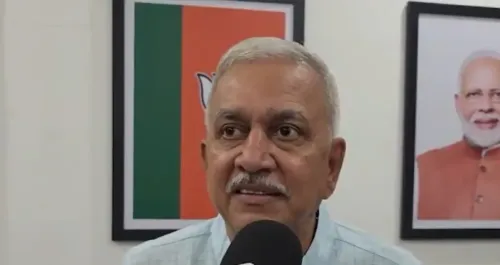
The BJP rejected Gandhi's framing outright. BJP spokesperson Tuhin Sinha argued that opposition to delimitation was 'natural' for 'dynastic political parties,' contending that an expanded Parliament with more seats would bring in youth and women from non-political backgrounds — a development he said such parties feared would loosen their internal grip. Sinha also reassured that seat counts in southern states, as in every other state, would increase 'on a pro-rata basis.'
Uttar Pradesh Deputy Chief Minister Keshav Prasad Maurya went further, alleging that Gandhi was working to block 'any good work or any work in the interest of the country,' and claimed he 'dances to the tune of foreign forces' — a claim Gandhi's party has consistently rejected. Rajasthan BJP President Madan Rathore argued that the exercise was constitutionally necessary, noting that some Lok Sabha constituencies currently have populations of 50 lakh while others have as few as 1 lakh.
BJP leader T.R. Srinivas was more pointed in his criticism of Gandhi personally, calling him 'an immature Leader of the Opposition' who 'acts as leader of propaganda and day in and day out spreads fake news.' Srinivas also took a dig at Gandhi's practice of carrying a copy of the Constitution, saying he 'doesn't read the Indian Constitution properly.'
A Coalition Partner Urges Restraint
Janata Dal-United (JDU) MLC Neeraj Kumar Singh struck a more measured tone, urging all parties to debate the issue within the constitutional framework rather than politicising it. 'Under the constitutional framework in the country's Constitution, delimitation is essential,' he said, implicitly distancing the BJP's key ally from the more combative rhetoric of the ruling party's own spokespersons.
What Comes Next
With Congress signalling a floor fight and southern parties watching closely, the delimitation debate is set to dominate the coming parliamentary session. The core dispute — whether a population-based reallocation of seats is a constitutional correction or a political punishment for southern states — remains unresolved. How the government frames the exercise, and whether it offers credible assurances on seat counts, will determine whether this becomes a lasting north-south fault line heading into the next general election cycle.
Point of View
Independent projection of how seat counts would actually shift — without that data, both sides are arguing in the dark, and voters in southern states are being asked to take the Centre's word for it.
NationPress
16 Sept 2026
Frequently Asked Questions
What is the delimitation controversy that Rahul Gandhi raised?
Rahul Gandhi alleged that the Centre's proposed delimitation exercise would reduce Tamil Nadu's parliamentary representation and weaken southern states' political influence. Speaking at Mamallapuram on 2 August, he called on all parties to unite in Parliament against any legislation that could adversely affect the state's seat count.
Why do southern states fear delimitation?
Southern states argue that delimitation based on current population figures would penalise them for successfully controlling population growth over decades, shifting parliamentary seats toward more populous northern states. The current freeze on seat reallocation has been in place since 1976 for this reason.
What is the BJP's position on delimitation?
The BJP maintains that delimitation is a constitutional necessity and that seats in every state, including southern ones, will increase on a pro-rata basis. Spokesperson Tuhin Sinha argued that opposition to the exercise stems from dynastic parties fearing a more open political landscape with greater youth and women participation.
Which Congress MPs have come out against delimitation?
Congress MPs Manickam Tagore, Imran Masood, and Sukhdeo Bhagat have all publicly opposed the proposed exercise. Tagore noted that all 40 Tamil Nadu MPs previously voted against delimitation and pledged to do so again; Masood called it a threat to national integrity; Bhagat raised specific concerns about how it was implemented in Assam.
What happens next in the delimitation debate?
The issue is expected to be a flashpoint in the coming parliamentary session, with Congress signalling a floor fight. The outcome will depend on whether the government provides credible assurances on how seat counts will change and whether southern parties, including BJP allies, hold a united front.