BJP's A.N.S. Prasad Critiques Rahul Gandhi's Views on Women's Reservation Bill
Synopsis
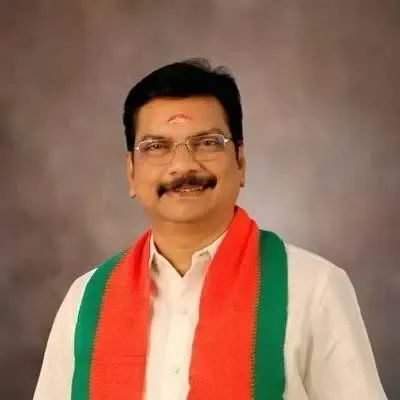
A.N.S. Prasad of the Tamil Nadu BJP has sharply criticized Rahul Gandhi for his remarks on the women's reservation bill, claiming they disrespect women and parliamentary dignity. This exchange highlights a deeper political struggle regarding women's representation in India.
Key Takeaways
Prasad criticizes Rahul Gandhi's comments on women's reservation.
Accusations of disrespect towards women and undermining democracy.
The Nari Shakti Vandan Adhiniyam aims for 33% reservation for women .
Political tensions between NDA and INDIA bloc continue to escalate.
Women's representation is a central issue in current political discourse.
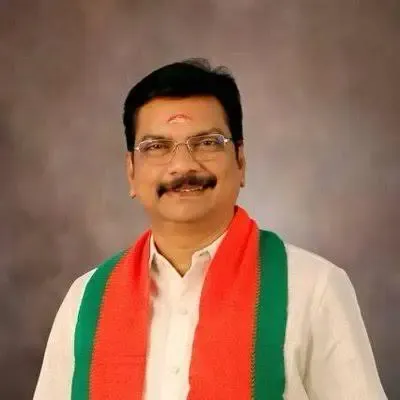
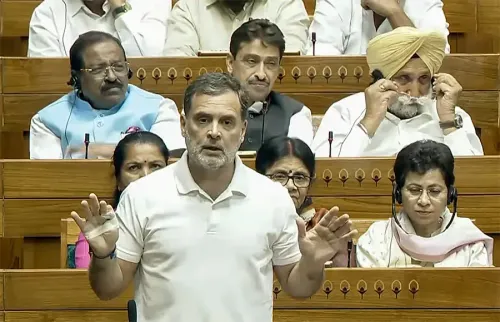
Chennai, April 17 (NationPress) A.N.S. Prasad, the spokesperson for the Tamil Nadu BJP, fiercely criticized Rahul Gandhi, the Leader of Opposition, for his recent remarks in Parliament regarding the women’s reservation bill. He accused Gandhi of showing disrespect towards women and diminishing the principles of democracy.
In a strong denunciation, Prasad claimed that Gandhi’s comments were “highly disrespectful to women” and tarnished the integrity of Parliament. He deemed the speech as “unacceptable” and suggested it surpassed the boundaries of parliamentary propriety.
Pointing fingers at the Opposition coalition, which includes the Congress and the DMK, Prasad asserted that they are trying to obstruct the enactment of the Nari Shakti Vandan Adhiniyam, aimed at allocating 33 percent reservation for women in legislative assemblies.
He contended that their opposition to both the Bill and the delimitation process was motivated by narrow political agendas designed to hinder the increased political involvement of women.
Prasad also took aim at Tamil Nadu’s Chief Minister M.K. Stalin, accusing the DMK of hypocrisy regarding women's empowerment. He noted that the party's actions contradict its proclaimed commitment to gender equality, especially in light of protests against the legislation.
Reiterating the Centre’s stance, Prasad emphasized that this legislation, supported by PM Modi and Home Minister Shah, marks a significant advancement toward inclusive governance and women-driven development.
He added that assurances have been made in Parliament that southern states, including Tamil Nadu, will not see a decrease in representation due to delimitation.
According to Prasad, Tamil Nadu might actually experience an increase in Lok Sabha seats, thereby amplifying its voice on the national stage.
He insisted that women voters will significantly influence the outcome, asserting that any resistance to the Bill would be dismissed by the public.
Prasad concluded by stating that the ongoing discussions reflect a larger political struggle over the future of women’s representation and electoral reforms in India.
These comments arise amidst a heightened national dialogue concerning the women’s reservation Bill and delimitation, with the ruling NDA and Opposition INDIA alliance exchanging sharp political jabs.
Point of View
A.N.S. Prasad's critique of Rahul Gandhi underscores the ongoing tensions within Indian politics regarding women's representation. The debate highlights broader issues of political accountability and the need for inclusive governance, particularly in the context of the Nari Shakti Vandan Adhiniyam.
NationPress
20 Sept 2026
Frequently Asked Questions
What is the Nari Shakti Vandan Adhiniyam?
The Nari Shakti Vandan Adhiniyam is legislation aimed at providing 33 percent reservation for women in legislative bodies in India.
Who is A.N.S. Prasad?
A.N.S. Prasad is the spokesperson for the Tamil Nadu BJP and a vocal critic of opposition leaders regarding women's issues.
What did Rahul Gandhi say about the women's reservation bill?
Rahul Gandhi's remarks in Parliament regarding the women's reservation bill have been criticized by A.N.S. Prasad for being disrespectful to women.
What does the women's reservation bill aim to achieve?
The bill aims to enhance women's representation in legislative assemblies by reserving 33 percent of seats for them.
Why is the discussion of women's reservation important?
The discussion is crucial as it reflects the ongoing struggle for gender equality in political representation and governance in India.