Rahul Gandhi Challenges Women’s Reservation Bill as Political Maneuver
Synopsis
In a fiery debate, Rahul Gandhi contests the government's women’s reservation bill, labeling it a deceptive scheme to alter India's political landscape rather than a genuine effort for women’s empowerment.
Key Takeaways
Rahul Gandhi contests the women’s reservation bill as a political tactic.
The bill is seen as a diversion from caste census discussions.
Concerns raised about the representation of marginalized and OBC communities.
The Congress party vows to resist the current legislative proposals.
Gandhi criticizes the government for inadequate representation of Dalits and OBCs .
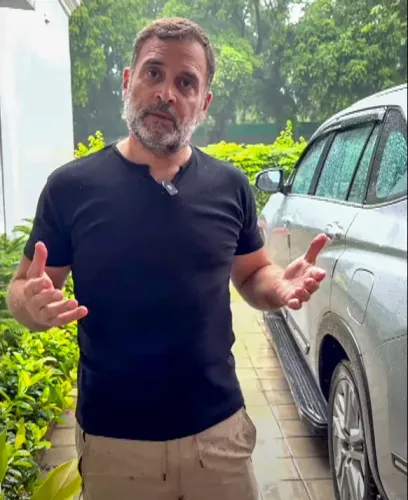
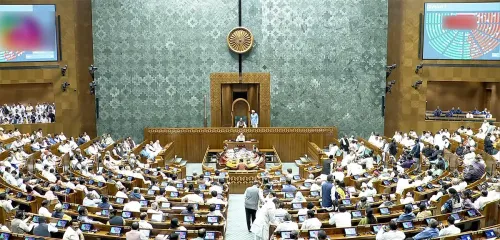
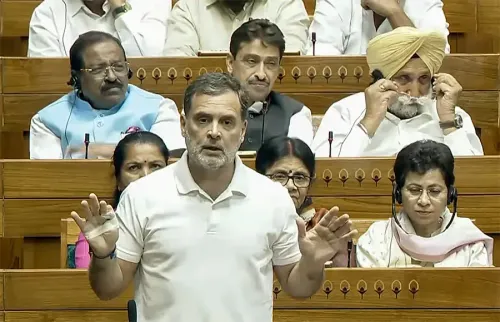
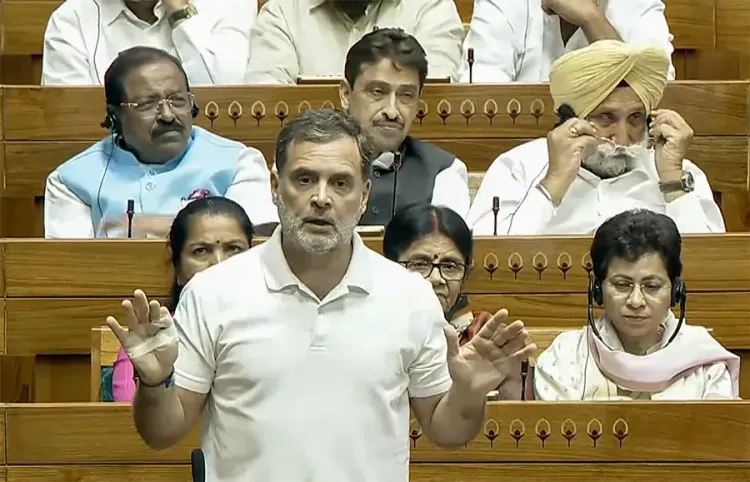
New Delhi, April 17 (NationPress) In a recent debate on three legislative proposals, Lok Sabha's Leader of Opposition (LoP) Rahul Gandhi accused the Central Government of using the women’s reservation bill as a cover to advance its own agenda. He asserted that this bill is merely a ‘mask’ that does not genuinely promote women’s empowerment.
"This is not a women's reservation bill, nor does it pertain to empowering women. Instead, it represents a strategy to alter India's electoral landscape under the pretense of supporting women's rights. The genuine Women’s Reservation Bill was enacted in 2023. If you restore the original bill, we will extend our support," he stated.
Gandhi further claimed that the women’s quota was being exploited to divert attention from the caste census, thus undermining the representation rights of marginalized and OBC communities within the legislative assembly.
“It’s a disgrace that instead of providing them with reservations, the government is concealing behind the facade of reservations to achieve its political aims,” he remarked.
He accused the ruling party of attempting to strip power away from these communities and bypassing their rightful representation.
According to Gandhi, the BJP is frightened by the diminishing of its political power, which is why it is attempting to reshape the country’s electoral framework.
“This has already been witnessed in Assam and Jammu & Kashmir, and the same approach is unfolding across India,” he noted.
Expressing concerns over the diminishing representation of Southern states in the Lok Sabha following the delimitation exercise, he emphasized that the Congress party is resolutely opposed to these bills, pledging that they will not pass.
Reiterating his stance, he denounced this as an “anti-national act.”
“The message to Southern, Northern, and smaller states is clear: to maintain BJP’s hold on power, we are diminishing your representation,” he asserted.
He also criticized the government for its inadequate representation of OBCs and Dalits in various sectors and questioned the measures taken to guarantee their fair representation.
“Where are the Dalits and OBCs in India's bureaucracy, judiciary, private sector, and corporate world? You identify them as Hindus but fail to provide them with a place in the legislative system,” he concluded with sharp criticism.
Point of View
This debate highlights the ongoing tensions between political parties over representation and empowerment issues. It reflects a broader concern about the integrity of legislative processes and the potential ramifications for marginalized communities.
NationPress
19 Sept 2026
Frequently Asked Questions
What is the women’s reservation bill?
The women’s reservation bill aims to ensure a certain percentage of seats in legislative bodies are reserved for women to enhance their representation.
Why does Rahul Gandhi oppose the current bill?
Gandhi argues that the bill is merely a façade for political maneuvering and does not genuinely support women's empowerment.
What are the implications of changing the electoral map?
Altering the electoral map can shift power dynamics and representation, potentially marginalizing certain communities.
How does this issue relate to OBC and Dalit representation?
Gandhi highlights that prioritizing the women’s quota could sideline the needs and rights of OBCs and Dalits in legislative representation.
What was the outcome of the debate?
The outcome remains uncertain as the Congress party has pledged to oppose the current bills and advocate for the original women’s reservation bill.