Telangana CM Revanth Reddy demands special Parliament session on 33% women's reservation
Synopsis
Telangana CM Revanth Reddy has put the Centre on notice: convene a special Parliament session on 33% women's reservation or own the delay. By tying the demand to Rajiv Gandhi's death anniversary and invoking INDIA bloc solidarity, he is turning a legislative stall into a live political flashpoint — with the delimitation clause as the target.
Key Takeaways
Revanth Reddy demanded an immediate special Parliament session on 33% women's reservation on 21 May .
He accused the Modi government of stalling the bill by linking it to delimitation of Parliamentary constituencies.
The INDIA bloc , he said, is ready to support the women's reservation bill in Parliament.
The 2023 women's reservation law defers implementation until after a fresh census and delimitation — a condition critics say could push enforcement to 2029 or later.
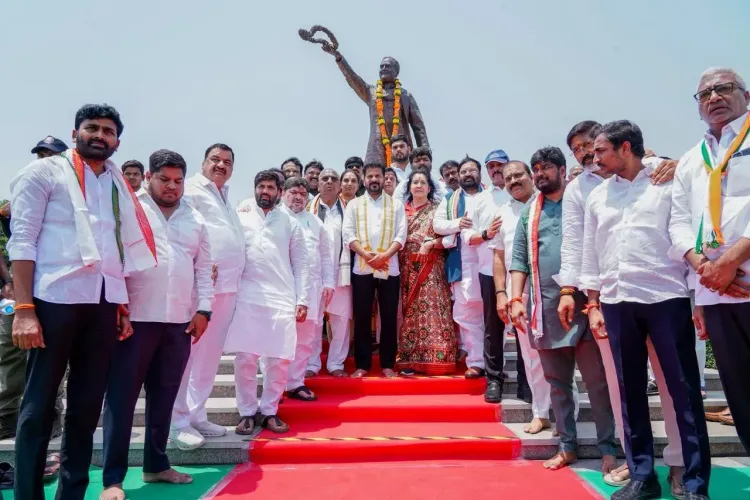
The demand was made at a tribute event for former PM Rajiv Gandhi near the State Secretariat in Hyderabad .
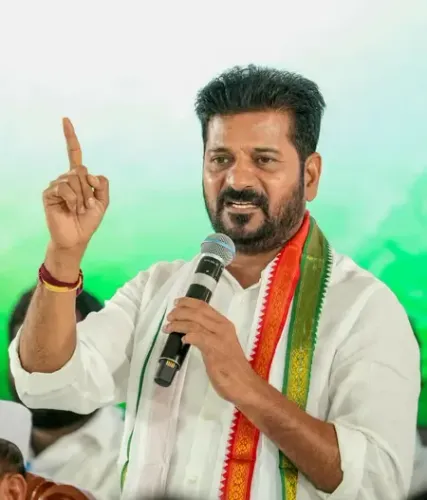
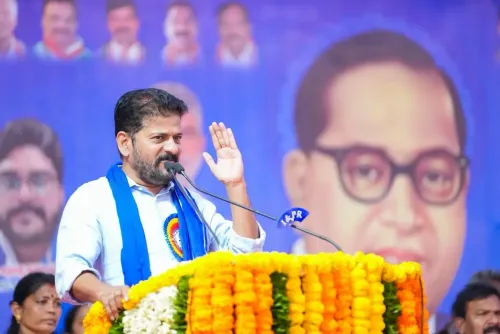
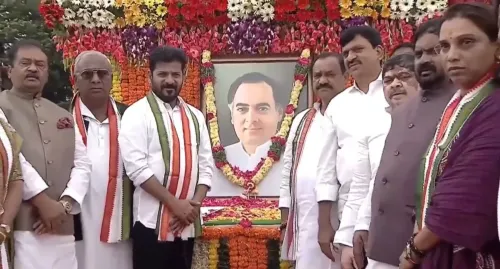
Telangana Chief Minister A. Revanth Reddy on Thursday, 21 May demanded that the Centre convene an immediate special session of Parliament to legislate 33 per cent reservation for women in legislative bodies. The demand was made during a tribute event for former Prime Minister Rajiv Gandhi on his death anniversary in Hyderabad.
The Core Demand
Revanth Reddy declared that the INDIA bloc is fully prepared to back the women's reservation bill in Parliament, signalling cross-party support if the Centre tables it. He urged the Modi government not to politicise the issue and specifically criticised the decision to link implementation of the bill to the delimitation of Parliamentary constituencies — a condition critics argue could delay the legislation by years.
The Chief Minister asserted that women's reservation in legislative bodies should be enacted drawing inspiration from Rajiv Gandhi, who introduced a women's quota in local bodies to advance their political empowerment.
Rajiv Gandhi's Legacy Invoked
Paying tribute to the late leader, Revanth Reddy described Rajiv Gandhi as a visionary who introduced information technology to India and steered the country toward development through liberalised economic policies. 'It was Rajiv Gandhi who ushered in the era of technology in the country and also steered the country onto the path of development through liberalised policies,' he said.
He also recalled that Sonia Gandhi took a 'courageous decision' to fulfil the dream of a separate Telangana state, and affirmed the state's enduring bond with the Gandhi family. State ministers and senior Indian National Congress (INC) leaders attended the event, at which Revanth Reddy garlanded a statue of Rajiv Gandhi near the State Secretariat.
The Delimitation Hurdle
The women's reservation law — passed by Parliament in 2023 — contains a clause that defers its implementation until after a delimitation exercise and fresh census. Critics, including several opposition leaders, argue this effectively postpones meaningful enforcement to 2029 or beyond. Revanth Reddy's demand for a special session is aimed squarely at removing that conditionality.
This is not an isolated call. Several opposition-ruled states and women's rights groups have repeatedly pressed the Centre to delink reservation from delimitation, making Thursday's statement part of a broader, sustained campaign.
What Comes Next
The Centre has not responded publicly to the latest demand. With the next delimitation exercise and census timelines still uncertain, the political pressure on the government to act through a special session is likely to intensify — particularly as the 2026 state assembly election cycle approaches across multiple states where women voters are a decisive constituency.
Point of View
The Congress is also reinforcing its ownership of the women's reservation narrative, a space it needs to reclaim ahead of state elections. The INDIA bloc's stated readiness to back the bill in a special session puts the onus squarely on the Centre: if the political will exists, the legislative path is clear. The question is whether the government treats this as pressure to deflect or a mandate to act.
NationPress
5 Oct 2026
Frequently Asked Questions
What did Telangana CM Revanth Reddy demand regarding women's reservation?
Revanth Reddy demanded that the Centre convene an immediate special session of Parliament to legislate 33% reservation for women in legislative bodies. He made the demand on 21 May in Hyderabad, on the death anniversary of former PM Rajiv Gandhi.
Why is the women's reservation bill yet to be implemented despite being passed in 2023?
The 2023 women's reservation law contains a clause that ties its implementation to a fresh delimitation of Parliamentary constituencies and a new census. Critics argue this effectively delays enforcement to 2029 or beyond, as both exercises have no confirmed timeline.
What is the INDIA bloc's position on the women's reservation bill?
According to Revanth Reddy, the INDIA bloc is fully prepared to support the women's reservation bill in Parliament. He urged the Centre to call a special session and not politicise the issue.
How does the delimitation clause affect women's reservation?
The delimitation clause requires that reserved seats for women be identified only after Parliamentary constituencies are redrawn in a fresh delimitation exercise. Since delimitation depends on a new census — itself without a confirmed date — the clause is widely seen as an indefinite deferral mechanism.
What is the significance of invoking Rajiv Gandhi in this context?
Rajiv Gandhi introduced reservations for women in local bodies through the 73rd and 74th Constitutional Amendments in 1992-93, which is widely credited as the foundation of women's political representation in India. Revanth Reddy invoked this legacy to frame the demand as a continuation of Congress's historical commitment to women's empowerment.