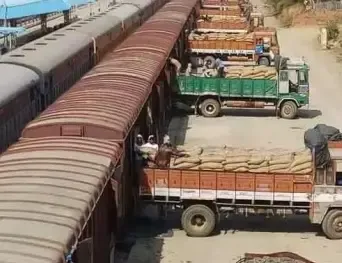
Giriraj Singh Flags Indian Railways' 145 MT May Freight Record
Synopsis
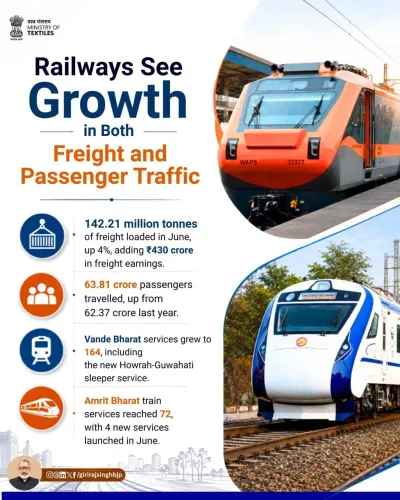
Union Textiles Minister Giriraj Singh on June 2, 2026, highlighted Indian Railways' achievement of 145 million tonnes of freight loading in May, citing resilience against global economic pressures. The figure underscores sustained momentum from infrastructure upgrades including the Dedicated Freight Corridors and the 2022 National Logistics Policy.
Key Takeaways
Indian Railways recorded 145 million tonnes of freight loading in May 2026 , according to the post shared by Union Textiles Minister Giriraj Singh .
The achievement was described as coming 'despite global headwinds,' signalling resilience in India's rail logistics sector.
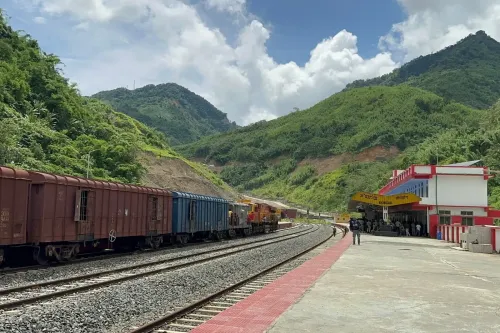
The Dedicated Freight Corridors project, approved in 2006 and under construction from 2010 , is central to India's strategy to raise rail freight capacity.
The National Logistics Policy (2022) aims to integrate rail with other transport modes and reduce India's overall logistics costs as a share of GDP.
Monthly freight figures are routinely highlighted by government representatives as indicators of economic and infrastructure performance.
Upcoming June–July 2026 data and the monsoon session of Parliament will be key moments to assess whether the trend holds.
Union Textiles Minister Giriraj Singh on Tuesday, June 2, 2026, shared a post highlighting that Indian Railways achieved 145 million tonnes of freight loading in May 2026, describing the milestone as a demonstration of resilience against prevailing global economic headwinds.
Context
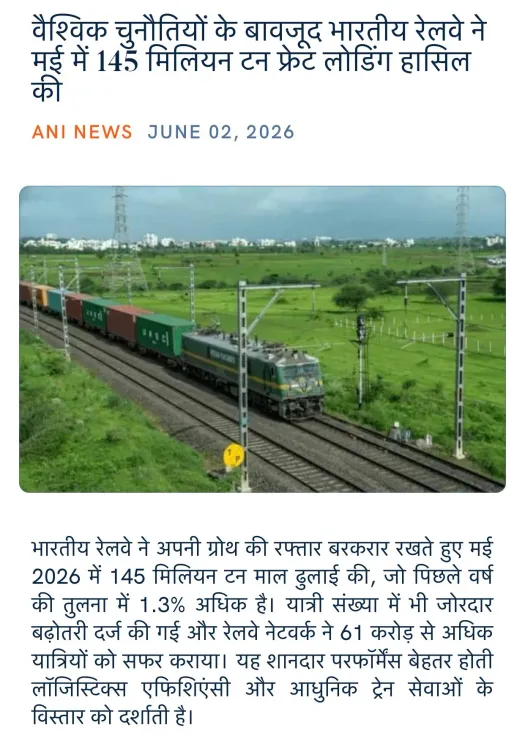
Giriraj Singh, sharing the update via the NaMo App, amplified the freight loading figure as a signal of the Indian economy's underlying strength. The post — originally in Hindi — reads: 'वैश्विक चुनौतियों के बावजूद भारतीय रेलवे ने मई में 145 मिलियन टन फ्रेट लोडिंग हासिल की' ['Despite global challenges, Indian Railways achieved 145 million tonnes of freight loading in May']. While Singh heads the Ministry of Textiles, senior ruling-party leaders routinely amplify cross-ministry achievements, particularly those touching on infrastructure and economic momentum.
Policy Backdrop
Indian Railways has pursued a sustained push to raise its share of the national freight market, backed by two landmark policy interventions. The Dedicated Freight Corridors (DFC) project — approved in 2006 and under construction from 2010 — creates exclusive freight lines that separate cargo trains from passenger services, enabling higher speeds and heavier axle loads. The National Logistics Policy, launched in 2022, further sought to integrate rail with road, air, and waterway transport to lower overall logistics costs for Indian industry.
Monthly freight loading figures have become a standard metric cited by government representatives to track the railways' commercial health. Sustained high volumes are seen as evidence that infrastructure investments and operational reforms are translating into real capacity gains, even as global trade disruptions weigh on demand.
Stakeholders and Impact
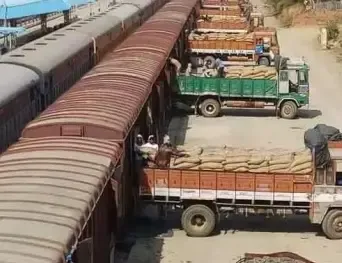
The freight loading number carries direct significance for logistics companies, freight shippers, and bulk commodity sectors such as coal, steel, cement, and fertilisers — all of which rely heavily on rail for cost-effective movement of goods. A strong monthly figure reduces pressure on road freight, which remains more expensive and carbon-intensive for long-haul cargo.
For the broader economy, higher rail freight volumes support the government's stated goal of reducing India's logistics cost as a share of GDP, a target embedded in the National Logistics Policy. Industry bodies tracking supply-chain efficiency will watch whether the May 2026 figure marks a seasonal peak or a sustained trend heading into the monsoon quarter.
What's Next
Attention will turn to June and July 2026 freight loading data, as the monsoon season historically introduces operational challenges for rail movement of certain commodities. Parliamentary scrutiny of railway performance is also expected during the upcoming monsoon session, where opposition members may seek granular breakdowns of freight revenue and DFC utilisation rates. Sustained freight momentum would strengthen the government's case for continued capital expenditure in rail infrastructure in the next budget cycle.
Point of View
If sustained, would represent a meaningful data point in the government's long-running effort to rebalance India's freight mix away from roads and toward rail. Framing the number against 'global headwinds' is also politically significant: it positions domestic infrastructure policy as a buffer against external economic volatility, a narrative the ruling party has leaned on heavily since the post-pandemic supply-chain disruptions. Analysts will watch whether the figure is corroborated by official railway board releases and whether it translates into higher freight revenue, which is the more consequential metric for the railways' financial health.
NationPress
20 Oct 2026
Frequently Asked Questions
How much freight did Indian Railways load in May 2026?
According to the post shared by Union Textiles Minister Giriraj Singh, Indian Railways achieved 145 million tonnes of freight loading in May 2026.
What is the Dedicated Freight Corridor and how does it help?
The Dedicated Freight Corridor (DFC) is an infrastructure project approved in 2006 that creates exclusive rail lines for cargo trains, separating them from passenger services to allow higher speeds and heavier loads, thereby increasing overall freight capacity.
Why is Giriraj Singh, a Textiles Minister, posting about Indian Railways?
Senior ruling-party leaders routinely share achievements across government ministries to project a unified message of governance performance, even when the subject falls outside their own portfolio.
What is India's National Logistics Policy?
The National Logistics Policy , launched in 2022 , aims to integrate rail, road, air, and waterway transport and reduce India's logistics costs as a share of GDP, with rail freight expansion as a core component.
What challenges could affect Indian Railways freight in the coming months?
The monsoon season, typically covering June through September, historically introduces operational challenges for certain freight categories. Parliamentary scrutiny during the monsoon session may also bring additional focus on railway performance metrics.